
What Is the Starting Dose of Tirzepatide | Buy Tirzepatide UK
The FDA-approved starting dose of tirzepatide is 2.5 mg injected subcutaneously once weekly for the first four weeks. This initiation dose applies to both Mounjaro (for type 2 diabetes management) and Zepbound (for body composition management) and is designed to help your body adjust to the medication while minimizing gastrointestinal side effects. After the initial four-week period, the dose is typically increased to 5 mg once weekly, with further adjustments made in 2.5 mg increments every four weeks based on your response and tolerance.
Key Takeaways
- The standard starting dose of tirzepatide is 2.5 mg once weekly for four weeks, regardless of whether you’re using it for metabolic health support or type 2 diabetes management.
- You should not skip the 2.5 mg starting dose and begin at a higher strength, as gradual titration reduces the risk of nausea, vomiting, and other digestive side effects.
- After the initial four weeks on 2.5 mg, most people increase to 5 mg once weekly, then continue dose escalation every four weeks if needed.
- The maximum approved dose is 15 mg once weekly for adults, though pediatric patients aged 10 and older have a maximum dose of 10 mg.
- Tirzepatide can be injected at any time of day, with or without meals, making it flexible for your schedule.
- Common side effects at the starting dose include mild nausea, reduced appetite, and occasional digestive discomfort, which typically improve as your body adjusts.
- Starting at the proper dose and following the recommended titration schedule is essential for both safety and achieving your body transformation goals.

What Is Tirzepatide Used For
Tirzepatide is a dual GIP and GLP-1 receptor agonist approved for two primary purposes: managing type 2 diabetes (under the brand name Mounjaro) and supporting body composition management (under the brand name Zepbound). The medication works by mimicking natural hormones in your body that regulate appetite, blood sugar levels, and metabolic function.
For individuals seeking metabolic health support, tirzepatide helps reduce hunger and keeps you feeling fuller for longer when paired with a balanced diet and exercise routine. This makes it an effective tool for those on a body transformation journey who have struggled with traditional approaches.
For type 2 diabetes management, tirzepatide improves glycemic control by enhancing insulin secretion when blood sugar is elevated and reducing the amount of glucose your liver produces. The dual mechanism targeting both GIP and GLP-1 receptors sets it apart from single-receptor medications.
Key benefits include:
- Significant appetite reduction and prolonged satiety
- Improved blood sugar control in people with type 2 diabetes
- Support for sustainable body composition changes
- Once-weekly dosing for convenience
- Flexible injection timing that fits your schedule
At Tirzeparo, we provide affordable access to tirzepatide through our network of trusted EU partners, offering the same active ingredient found in Mounjaro at transparent, budget-friendly pricing. Our 2.5 mg starting dose is delivered discreetly to your door, helping you begin your metabolic health journey without the long waiting lists or inflated fees of traditional UK clinics.
Understanding the Starting Dose: Why 2.5 mg Matters
What is the starting dose of tirzepatide, and why is this specific amount so important? The 2.5 mg once-weekly dose serves as a treatment-initiation dose specifically designed to help your body adapt to the medication gradually. This starting dose is not intended to provide the full therapeutic effect but rather to minimize side effects while your system adjusts to the medication’s mechanism.
Starting at 2.5 mg significantly reduces the likelihood of experiencing severe gastrointestinal symptoms such as nausea, vomiting, diarrhea, and abdominal discomfort. These side effects are the most common reasons people discontinue GLP-1 and dual-agonist medications, so proper dose escalation is critical for long-term success.
The four-week period at 2.5 mg allows your digestive system to adapt to slower gastric emptying, one of the primary ways tirzepatide works. By gradually introducing this effect, you’re more likely to tolerate the medication well as doses increase.
Why you shouldn’t skip the starting dose:
- Jumping to 5 mg or higher without titration dramatically increases the risk of severe nausea and vomiting
- Your body needs time to adjust to changes in gastric emptying and appetite regulation
- Gradual dose escalation improves long-term adherence and success rates
- The starting dose establishes a foundation for safe, effective treatment
For those beginning their journey with tirzepatide, understanding that the 2.5 mg dose is a necessary first step helps set realistic expectations. You may notice some appetite reduction even at this lower dose, but the full effects typically emerge as you progress through the dosing schedule.
Tirzepatide Starting Dose for Type 2 Diabetes vs Body Composition Management
Is the tirzepatide starting dose different for type 2 diabetes and body composition management? No, the starting dose is identical at 2.5 mg once weekly for four weeks, regardless of which condition you’re addressing. Both Mounjaro (for diabetes) and Zepbound (for body composition support) follow the same initiation protocol.
However, there are important distinctions in how the starting dose is characterized for each indication. For type 2 diabetes management, the FDA label explicitly states that 2.5 mg is “not intended for glycemic control” but rather serves purely as an initiation dose to improve tolerability. The therapeutic doses for diabetes begin at 5 mg and may go up to 15 mg based on blood sugar response.
For body composition management, the 2.5 mg dose similarly serves as a tolerance-building phase, with therapeutic effects becoming more pronounced at 5 mg and higher. The maintenance doses commonly used are 5 mg, 10 mg, or 15 mg once weekly, depending on individual response and goals.
Key similarities:
- Both indications start at 2.5 mg once weekly
- Both require four weeks at the starting dose before escalation
- Both follow the same titration schedule (2.5 mg increments every four weeks)
- Both can be injected at any time of day, with or without food
Key differences:
- Diabetes treatment focuses on HbA1c reduction and glycemic control
- Body composition management emphasizes appetite reduction and feeling fuller for longer
- Target maintenance doses may vary based on individual treatment goals
- Monitoring parameters differ (blood sugar vs body composition changes)
Whether you’re using tirzepatide for metabolic health support or diabetes management, the starting dose protocol remains consistent. This standardized approach has been validated through extensive clinical trials and ensures the safest possible introduction to the medication.
How Long Do You Stay on 2.5 mg Tirzepatide Before Increasing
You should stay on the 2.5 mg starting dose of tirzepatide for exactly four weeks before increasing to the next dose level. This four-week period is the FDA-approved standard and is based on clinical trial data showing optimal tolerability with this timeline.
The four-week duration at each dose level serves several important purposes. First, it allows your body sufficient time to adapt to the medication’s effects on gastric emptying and appetite regulation. Second, it provides a window to assess how well you tolerate the current dose before adding more medication. Third, it helps identify any side effects that may emerge, giving you and your healthcare provider time to address them before escalation.
Week-by-week breakdown of the starting phase:
- Weeks 1-4: 2.5 mg once weekly (starting dose)
- Weeks 5-8: 5 mg once weekly (first increase)
- Weeks 9-12: 7.5 mg once weekly (if additional effect needed)
- Weeks 13-16: 10 mg once weekly (if additional effect needed)
- Weeks 17-20: 12.5 mg once weekly (if additional effect needed)
- Week 21+: 15 mg once weekly (maximum dose, if needed)
Some people wonder if they can stay on 2.5 mg longer than four weeks if they’re experiencing side effects. While this isn’t the standard protocol, it’s a decision that should be made with healthcare guidance. Extending the time at a lower dose may help if you’re having difficulty tolerating the medication, but it also delays reaching therapeutic doses.
Conversely, you should never shorten the four-week period and increase sooner. Rapid dose escalation is one of the most common mistakes people make when starting tirzepatide, and it significantly increases the risk of severe gastrointestinal side effects that may force you to discontinue treatment.
For a complete overview of the entire dosing progression, refer to our tirzepatide dosage chart, which provides detailed guidance on each dose level and when to progress.
Can You Start Tirzepatide at 5 mg or Do You Need 2.5 mg First
You should not start tirzepatide at 5 mg without first completing the four-week period at 2.5 mg. Beginning at a higher dose significantly increases your risk of experiencing severe nausea, vomiting, diarrhea, and other gastrointestinal side effects that may make the medication intolerable.
The 2.5 mg starting dose is not optional or merely a suggestion; it’s the FDA-approved initiation protocol designed to maximize your chances of successfully tolerating the medication long-term. Clinical trials that established tirzepatide’s safety and efficacy used this exact titration schedule, and deviating from it means you’re operating outside the evidence-based protocol.
Risks of starting at 5 mg without titration:
- Severe nausea and vomiting that may last several days
- Increased risk of dehydration from gastrointestinal side effects
- Higher likelihood of discontinuing treatment due to intolerance
- Potential for more severe side effects as doses increase further
- No established safety data for this approach
Some people mistakenly believe that starting at a higher dose will produce faster results, but this is counterproductive. If severe side effects force you to stop taking the medication or reduce your dose, you’ll actually delay reaching your goals. The gradual titration approach, while requiring patience, provides the most reliable path to success.
There are no circumstances under which starting at 5 mg is recommended for treatment-naive patients. Even if you’ve previously used other GLP-1 medications like semaglutide, you should still begin tirzepatide at 2.5 mg because it’s a different medication with a dual mechanism of action.
To understand what to expect at each dose level, explore our guides on the effects of 2.5 mg and effects of 5 mg tirzepatide.
What Happens If You Skip the Starting Dose and Take a Higher Amount
Skipping the starting dose and taking a higher amount of tirzepatide dramatically increases your risk of severe gastrointestinal side effects and may result in an intolerable experience that forces you to discontinue treatment. This is one of the most significant mistakes people make when beginning tirzepatide therapy.
When you bypass the 2.5 mg starting dose, your digestive system doesn’t have time to adapt to the medication’s effects on gastric emptying. Tirzepatide slows how quickly food moves through your stomach, which contributes to feeling fuller for longer. However, when this effect is introduced too rapidly at higher doses, it can cause severe nausea, persistent vomiting, painful abdominal cramping, and significant digestive distress.
Potential consequences of skipping titration:
- Severe, persistent nausea lasting several days or longer
- Frequent vomiting that may lead to dehydration
- Inability to eat or drink normally
- Emergency room visits for dehydration or severe symptoms
- Forced discontinuation of treatment
- Negative psychological association with the medication
- Wasted medication and financial resources
Beyond the immediate discomfort, starting at too high a dose can create a situation where you’re unable to continue treatment at all. If you experience severe side effects, you may need to stop the medication entirely and start over with proper titration, or you may decide the medication isn’t right for you based on an experience that could have been avoided.
There’s also a safety consideration. While tirzepatide has been extensively studied at the approved doses with proper titration, there’s limited data on what happens when people start at higher doses without the gradual introduction period. You’re essentially conducting an uncontrolled experiment on your own body.
If you’ve already taken a higher dose without proper titration and are experiencing severe side effects, contact a healthcare provider immediately. Dehydration from vomiting and diarrhea can be serious and may require medical intervention.
Tirzepatide Dosing Schedule Week by Week
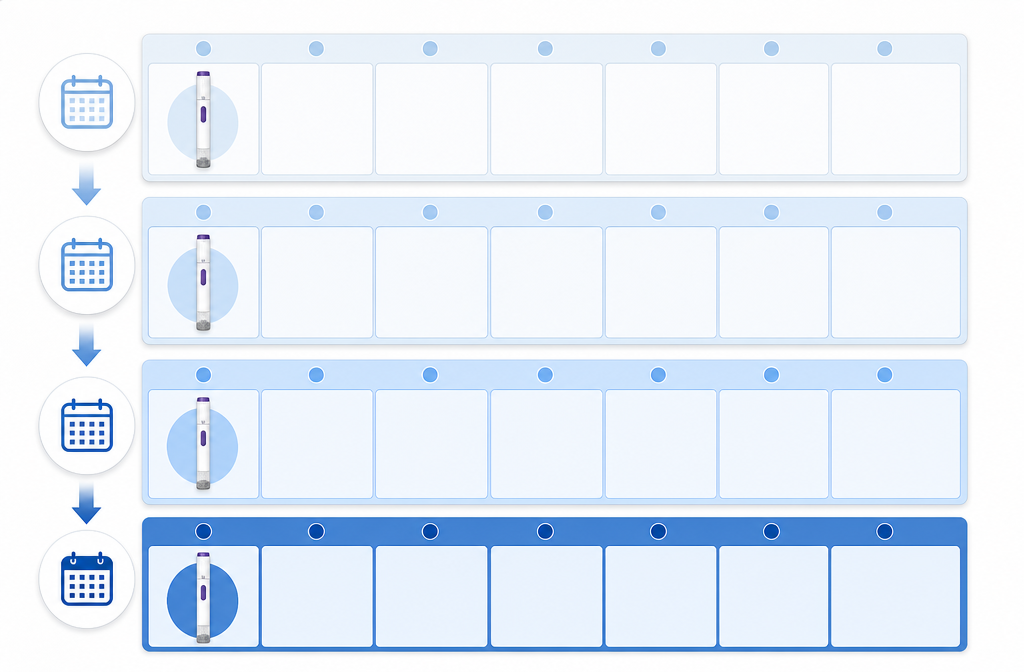
What is the starting dose of tirzepatide, and how does the complete dosing schedule progress week by week? The standard protocol begins at 2.5 mg and increases in 2.5 mg increments every four weeks, with each dose level maintained for a full month before escalation.
Complete week-by-week dosing schedule:
Weeks 1-4 (Month 1):
- Dose: 2.5 mg once weekly
- Purpose: Treatment initiation and tolerance building
- What to expect: Mild appetite reduction, possible minor nausea, adjustment period
- Action: Inject the same day each week, monitor side effects
Weeks 5-8 (Month 2):
- Dose: 5 mg once weekly
- Purpose: First therapeutic dose level
- What to expect: More noticeable appetite reduction, feeling fuller for longer, potential mild digestive changes
- Action: Continue weekly injections, assess response
Weeks 9-12 (Month 3):
- Dose: 7.5 mg once weekly
- Purpose: Increased therapeutic effect
- What to expect: Stronger appetite control, continued body composition changes
- Action: Evaluate whether additional dose increases are needed
Weeks 13-16 (Month 4):
- Dose: 10 mg once weekly
- Purpose: Higher therapeutic dose for enhanced effect
- What to expect: Significant appetite management, sustained metabolic support
- Action: Consider whether this is your optimal maintenance dose
Weeks 17-20 (Month 5):
- Dose: 12.5 mg once weekly
- Purpose: Near-maximum therapeutic dose
- What to expect: Strong appetite control and metabolic effects
- Action: Assess response and tolerability
Week 21+ (Month 6 and beyond):
- Dose: 15 mg once weekly (maximum approved dose)
- Purpose: Maximum therapeutic effect
- What to expect: Peak appetite management and metabolic support
- Action: Maintain at this dose or step down to lower maintenance dose if appropriate
Not everyone needs to reach the maximum 15 mg dose. Many people find their optimal maintenance dose at 5 mg, 7.5 mg, or 10 mg. The decision to continue increasing should be based on your response, tolerance, and goals, ideally with healthcare guidance.
For detailed information about what to expect at higher doses, see our guides on 7.5 mg effects and 10 mg effects.
Tirzepatide vs Semaglutide Starting Dose Comparison
How does the starting dose of tirzepatide compare to semaglutide? Tirzepatide starts at 2.5 mg once weekly, while semaglutide (Wegovy for body composition management) starts at 0.25 mg once weekly. Despite the numerical difference, both medications follow a similar philosophy of gradual dose escalation to minimize side effects.
Tirzepatide starting protocol:
- Starting dose: 2.5 mg once weekly for 4 weeks
- First increase: 5 mg once weekly
- Escalation: 2.5 mg increments every 4 weeks
- Maximum dose: 15 mg once weekly
Semaglutide starting protocol:
- Starting dose: 0.25 mg once weekly for 4 weeks
- First increase: 0.5 mg once weekly
- Escalation: Gradual increases every 4 weeks
- Maximum dose: 2.4 mg once weekly (Wegovy)
The doses aren’t directly comparable because tirzepatide and semaglutide are different molecules with different potencies. Tirzepatide’s dual GIP/GLP-1 mechanism means it works differently than semaglutide’s single GLP-1 mechanism, so the dosing scales are independent.
Key similarities:
- Both require four weeks at each dose level
- Both start with a sub-therapeutic initiation dose
- Both prioritize gradual titration to reduce side effects
- Both can be injected at any time of day
Key differences:
- Tirzepatide has a dual mechanism (GIP and GLP-1)
- Semaglutide targets only GLP-1 receptors
- Tirzepatide may produce greater effects on body composition in head-to-head studies
- The dosing scales are not directly comparable
For a comprehensive comparison of these two medications, including efficacy, side effects, and cost considerations, see our detailed guide on tirzepatide vs semaglutide.
Side Effects of Tirzepatide at the Starting Dose
What side effects can you expect at the 2.5 mg starting dose of tirzepatide? The most common side effects are gastrointestinal and typically mild to moderate, including nausea, reduced appetite, occasional diarrhea, and mild abdominal discomfort. These effects are generally less severe at the starting dose compared to higher doses and often improve as your body adjusts.
Most common side effects at 2.5 mg:
- Nausea: Mild to moderate queasiness, especially in the first few days after injection
- Reduced appetite: Noticeable decrease in hunger, which is part of the therapeutic effect
- Diarrhea: Occasional loose stools or increased bowel movements
- Constipation: Some people experience the opposite effect
- Abdominal discomfort: Mild bloating or fullness
- Fatigue: Temporary tiredness as your body adjusts
- Injection site reactions: Minor redness, itching, or swelling at the injection site
Most people find these side effects manageable at the 2.5 mg starting dose. The symptoms typically peak within the first few days after each injection and gradually diminish as the week progresses. By the time you’re ready for your next injection, many side effects have subsided.
Tips for managing starting dose side effects:
- Eat smaller, more frequent meals rather than large portions
- Avoid high-fat, greasy, or spicy foods that may worsen nausea
- Stay well-hydrated, especially if experiencing diarrhea
- Take your injection in the evening if nausea is problematic
- Avoid lying down immediately after eating
- Consider ginger tea or other natural remedies for mild nausea
Serious side effects are rare at the starting dose but require immediate medical attention if they occur. These include severe abdominal pain, persistent vomiting, signs of pancreatitis, or allergic reactions.
For a comprehensive overview of potential side effects across all dose levels, consult our guide on tirzepatide side effects. If you experience persistent nausea and vomiting, our article on managing nausea and vomiting provides practical strategies.
Who Should Not Take Tirzepatide
Tirzepatide is not appropriate for everyone, and certain medical conditions or circumstances make it unsafe to use. You should not take tirzepatide if you have a personal or family history of medullary thyroid carcinoma (MTC) or Multiple Endocrine Neoplasia syndrome type 2 (MEN 2), as animal studies have shown an increased risk of thyroid tumors.
Absolute contraindications (do not use):
- Personal or family history of medullary thyroid carcinoma
- Multiple Endocrine Neoplasia syndrome type 2 (MEN 2)
- Known serious hypersensitivity to tirzepatide or any components
- Pregnancy (tirzepatide should be discontinued at least 2 months before planned pregnancy)
- Age under 18 (except for pediatric type 2 diabetes patients aged 10+)
Conditions requiring caution and medical supervision:
- History of pancreatitis
- Severe gastrointestinal disease
- Diabetic retinopathy (may worsen with rapid blood sugar improvements)
- Kidney disease or impairment
- History of eating disorders
- Severe depression or suicidal ideation
- Concurrent use of insulin or insulin secretagogues (increased hypoglycemia risk)
Tirzepatide should be used with extreme caution if you have a history of pancreatitis, as GLP-1 receptor agonists have been associated with acute pancreatitis in some cases. If you develop severe abdominal pain that doesn’t resolve, seek medical attention immediately.
For those with type 2 diabetes taking insulin or sulfonylureas, starting tirzepatide requires careful monitoring and often dose adjustments of other medications to prevent dangerously low blood sugar levels.
Important Medical Warning: Contact your healthcare provider promptly if you notice a lump or swelling in your neck, persistent hoarseness, difficulty swallowing, or shortness of breath. These symptoms may require medical evaluation. In animal studies, tirzepatide and similar medications were associated with thyroid tumors. It is not known whether tirzepatide causes thyroid tumors or medullary thyroid carcinoma (MTC) in humans. You must be 18+ to use our service.
For more information about specific safety concerns, see our article on tirzepatide thyroid cancer risk.
Common Mistakes When Starting Tirzepatide
What are the most common mistakes people make when starting tirzepatide, and how can you avoid them? The biggest errors involve improper dosing, inadequate preparation for side effects, and unrealistic expectations about the timeline for results.
Most common mistakes:
1. Skipping the 2.5 mg starting dose
Many people want to “speed up” results by starting at 5 mg or higher. This almost always backfires, causing severe side effects that may force discontinuation. Always begin at 2.5 mg for four weeks.
2. Increasing doses too quickly
The four-week interval between dose increases exists for a reason. Rushing through titration increases side effects without improving outcomes. Patience during dose escalation leads to better long-term success.
3. Not preparing for side effects
Going into treatment without understanding potential side effects leaves you unprepared to manage them. Stock up on bland foods, anti-nausea remedies, and hydration solutions before your first injection.
4. Inconsistent injection timing
While you can inject at any time of day, consistency matters. Pick the same day each week and stick to it. If you miss a dose, take it within 4 days; otherwise, skip it and resume your schedule.
5. Poor injection technique
Not rotating injection sites or injecting too quickly can cause unnecessary discomfort and skin reactions. Learn proper technique before your first dose.
6. Expecting immediate dramatic results
The 2.5 mg starting dose is not therapeutic. You won’t see significant body composition changes in the first month. Results typically become noticeable at 5 mg and higher doses.
7. Not adjusting eating habits
Tirzepatide reduces appetite, but you still need to make nutritious food choices. Some people eat too little, leading to nutrient deficiencies, while others continue poor eating patterns and see limited results.
8. Stopping too soon due to side effects
Mild nausea and digestive changes in the first few weeks are normal and usually improve. Many people who push through the adjustment period go on to tolerate the medication well.
9. Not staying hydrated
Reduced appetite can lead to decreased fluid intake. Dehydration worsens side effects and can be dangerous, especially if you’re experiencing diarrhea.
10. Ignoring serious warning signs
Severe abdominal pain, persistent vomiting, vision changes, or signs of allergic reaction require immediate medical attention. Don’t dismiss serious symptoms as “normal side effects.”
For guidance on proper injection technique and site rotation, see our articles on where to inject tirzepatide in the stomach and how to rotate injection sites.
Do You Need to Titrate Tirzepatide or Can You Stay at the Starting Dose
You cannot stay at the 2.5 mg starting dose of tirzepatide long-term because it’s not designed to provide therapeutic effects. The starting dose is specifically labeled as a treatment-initiation dose intended only to help your body adjust to the medication, not to deliver the full benefits for body composition management or diabetes control.
For type 2 diabetes, the FDA label explicitly states that 2.5 mg is “not intended for glycemic control.” The therapeutic doses begin at 5 mg and range up to 15 mg based on individual response. Staying at 2.5 mg would mean you’re not receiving adequate treatment for your condition.
For body composition management, while you may notice some appetite reduction at 2.5 mg, the clinically significant effects that support sustainable body transformation occur at higher doses. Clinical trials demonstrating tirzepatide’s efficacy used maintenance doses of 5 mg, 10 mg, and 15 mg, not the starting dose.
Why titration is necessary:
- The 2.5 mg dose provides sub-therapeutic levels of medication
- Clinical benefits increase with higher doses (up to a point)
- Staying at 2.5 mg means missing out on the medication’s full potential
- The gradual increase allows you to find your optimal maintenance dose
- Individual response varies, so titration helps identify your ideal dose
That said, not everyone needs to reach the maximum 15 mg dose. Many people find their optimal balance of efficacy and tolerability at 5 mg, 7.5 mg, or 10 mg. The goal is to titrate up until you reach a dose that provides the desired effects with manageable side effects, then maintain that dose.
Some people do well at lower maintenance doses, while others require higher doses for optimal results. This individual variation is why the titration process is important. It allows you to discover your personal optimal dose rather than assuming everyone needs the same amount.
For information about the highest approved dose, see our guide on the maximum dose of tirzepatide.
Where to Inject Tirzepatide for Beginners

Tirzepatide should be injected subcutaneously (under the skin) in one of three approved areas: your abdomen, thigh, or upper arm. For beginners, the abdomen is often the easiest and most comfortable injection site because it provides good access and typically has adequate subcutaneous tissue.
Approved injection sites:
Abdomen (stomach area):
- Inject at least 2 inches away from your belly button
- Avoid the area directly around the navel
- Use the entire abdominal area, rotating between left, right, upper, and lower quadrants
- Most people find this the easiest site for self-injection
Thigh:
- Use the front and outer areas of your thigh
- Inject in the middle section between your knee and hip
- Avoid the inner thigh where there are more blood vessels
- Good alternative if abdominal injection becomes uncomfortable
Upper arm:
- Use the back of your upper arm where there’s fatty tissue
- This site is harder to reach for self-injection
- May require assistance from another person
- Less commonly used for self-administration
Proper injection technique for beginners:
- Wash your hands thoroughly with soap and water
- Clean the injection site with an alcohol wipe and let it dry completely
- Remove the pen cap and check that the solution is clear and colorless
- Pinch a fold of skin at the injection site
- Insert the needle at a 90-degree angle (straight in)
- Press the injection button and hold for 5-10 seconds
- Remove the needle and release the skin fold
- Dispose of the pen safely in a sharps container
Important injection tips:
- Rotate injection sites with each dose to prevent lipodystrophy (changes in fat tissue)
- Never inject into areas that are tender, bruised, red, or hard
- Don’t inject through clothing
- Allow the medication to reach room temperature before injecting (reduces discomfort)
- Don’t rub the injection site after injecting
The timing of your injection is flexible. You can inject tirzepatide at any time of day, with or without meals. However, consistency helps you remember your weekly dose. Many people choose to inject on the same day each week at roughly the same time.
For more detailed guidance on injection technique and timing, see our articles on what time of day to inject tirzepatide and rotating injection sites.
How Much Does Tirzepatide Cost Per Month
The cost of tirzepatide varies significantly depending on where you source it and which dose you’re taking. Traditional UK private clinics often charge £300 or more per month for branded Mounjaro, making it financially out of reach for many people who could benefit from the medication.
At Tirzeparo, we provide transparent, affordable pricing that makes tirzepatide accessible without the inflated fees of traditional clinics:
Tirzeparo pricing:
- 2.5 mg (starting dose): £169 per month
- 5 mg: £179 per month
- 7.5 mg: £189 per month
- 10 mg: £199 per month
- 12.5 mg: £209 per month
- 15 mg (maximum dose): £229 per month
These prices include discreet home delivery in plain, unbranded packaging with tracked shipping. There are no hidden consultation fees, no complicated approval processes, and no long waiting lists.
Cost comparison:
Traditional UK clinics typically charge:
- Initial consultation: £50-150
- Monthly medication: £250-350
- Follow-up appointments: £30-100 each
- Total monthly cost: £300-500+
Tirzeparo provides:
- No consultation fees
- Straightforward ordering process
- Direct access through EU partner network
- Total monthly cost: £169-229 (depending on dose)
Over a six-month treatment period, the savings can be substantial. At traditional clinics, you might spend £1,800-3,000 or more. With Tirzeparo, the same period costs approximately £1,100-1,400, saving you £700-1,600 or more.
Sourcing Disclaimer: Tirzeparo acts as a bridge, providing direct access to affordable tirzepatide by fulfilling orders through our network of EU partners. We are not a medical clinic; we are your sourcing solution.
For more information about pricing and how we keep costs low, visit our tirzepatide cost guide.
Frequently Asked Questions
Can I take tirzepatide if I’m not diabetic?
Yes, tirzepatide is approved for body composition management in adults without diabetes under the brand name Zepbound. The same active ingredient and dosing schedule apply whether you’re using it for metabolic health support or type 2 diabetes management.
How quickly will I see results from the starting dose?
The 2.5 mg starting dose is not therapeutic, so you shouldn’t expect significant body composition changes during the first four weeks. Most people begin noticing meaningful appetite reduction and early results after increasing to 5 mg or higher doses.
What if I miss a dose of tirzepatide?
If you miss a dose, take it as soon as you remember if it’s within 4 days (96 hours) of the missed dose. If more than 4 days have passed, skip the missed dose and take your next dose on the regularly scheduled day. Never take two doses at once to make up for a missed dose.
Can I drink alcohol while taking tirzepatide?
Moderate alcohol consumption is generally considered acceptable while taking tirzepatide, but alcohol may worsen gastrointestinal side effects like nausea. If you have diabetes, alcohol can also affect blood sugar levels, so monitor carefully and drink in moderation.
Will I regain body composition changes if I stop tirzepatide?
Many people experience some regain after discontinuing tirzepatide, as the appetite-suppressing effects diminish. Maintaining results long-term typically requires either continued medication or significant lifestyle changes to manage appetite and eating habits without pharmaceutical support.
Can I take tirzepatide with other medications?
Tirzepatide can interact with certain medications, particularly insulin, sulfonylureas, and oral contraceptives. Because it slows gastric emptying, it may affect the absorption of oral medications. Discuss all medications and supplements with a healthcare provider before starting tirzepatide.
Is tirzepatide safe for long-term use?
Clinical trials have studied tirzepatide for up to two years with generally favorable safety profiles. However, as a relatively new medication (approved in 2022), long-term safety data beyond a few years is still being collected. For more information, see our article on tirzepatide long-term side effects.
Do I need a prescription for tirzepatide in the UK?
Tirzepatide is a prescription medication in the UK. At Tirzeparo, we provide access through our EU partner network, offering a straightforward sourcing solution without the lengthy clinic approval processes. We are not a medical clinic but a bridge to affordable access.
Can I split my weekly dose into smaller daily doses?
No, tirzepatide is specifically formulated for once-weekly dosing and should not be split or taken more frequently. The medication’s pharmacokinetics are designed for weekly administration, and altering the schedule may affect both efficacy and safety.
What should I do if side effects become unbearable?
If side effects are severe, contact a healthcare provider before taking your next dose. You may need to stay at your current dose longer, reduce to a previous dose, or discontinue the medication. Never simply push through severe symptoms without medical guidance.
Can I exercise while taking tirzepatide?
Yes, exercise is encouraged and can enhance the body composition benefits of tirzepatide. The medication may reduce your energy levels initially, so listen to your body and adjust workout intensity as needed. For guidance on combining tirzepatide with exercise, see our article on tirzepatide and exercise.
How do I store tirzepatide pens?
Store unused tirzepatide pens in the refrigerator at 2-8°C (36-46°F). Once in use, pens can be stored at room temperature (up to 30°C/86°F) for up to 21 days. Never freeze tirzepatide, and protect it from direct sunlight and heat.
Conclusion
Understanding what the starting dose of tirzepatide is and why it matters sets the foundation for a successful treatment journey. The 2.5 mg once-weekly dose for four weeks is not optional or negotiable; it’s the evidence-based protocol that maximizes your chances of tolerating the medication well as doses increase.
Starting at the proper dose and following the recommended titration schedule significantly reduces the risk of severe gastrointestinal side effects while allowing your body to adapt gradually to the medication’s effects. This patient approach, though it requires discipline and realistic expectations, leads to better long-term outcomes than attempting to rush the process.
The key takeaways for anyone beginning tirzepatide are straightforward: start at 2.5 mg, stay at each dose for four weeks before increasing, prepare for manageable side effects, and understand that therapeutic effects emerge at higher doses. The starting dose is your foundation, not your destination.
At Tirzeparo, we make beginning your metabolic health journey affordable and accessible. Our 2.5 mg starting dose is available at transparent pricing with discreet home delivery, eliminating the barriers of expensive clinic fees and long waiting lists. We provide the same active ingredient found in Mounjaro through our trusted EU partner network, offering you a straightforward sourcing solution for body composition management.
Ready to begin your journey? Explore our complete range of tirzepatide doses and take the first step toward your body transformation goals with affordable, accessible tirzepatide from Tirzeparo.