Planning to take Tirzepatide? What Is the Maximum Dose of Tirzepatide your body can handle
Quick Answer: The maximum approved dose of tirzepatide is 15mg once weekly. This ceiling applies across both its licensed indications — blood sugar management in type 2 diabetes and chronic body composition management. Doses are always started low (2.5mg weekly) and increased gradually over several months. Exceeding 15mg per week is not supported by clinical evidence and carries meaningful safety risks.
Key Takeaways
- 15mg per week is the maximum dose of tirzepatide supported by clinical trial data and regulatory approval.
- Dosing always begins at 2.5mg weekly and increases in 2.5mg increments, typically every four weeks.
- The full escalation from starting dose to maximum dose takes a minimum of 20 weeks.
- Higher doses produce stronger appetite-reducing effects but also increase the likelihood of gastrointestinal side effects.
- The 15mg dose is not appropriate for everyone — individual tolerance, age, kidney function, and other medications all influence the right ceiling for each person.
- Tirzepatide works by activating both GIP and GLP-1 receptors, making it distinct from semaglutide-based options.
- Seniors and people with moderate kidney impairment may need to stay at lower maintenance doses.
- Never increase your dose faster than clinically recommended — doing so is one of the most common mistakes users make.
What Is the Maximum Dose of Tirzepatide and Why Does It Matter?
The maximum dose of tirzepatide is 15mg once weekly, and this figure is not arbitrary. It represents the highest dose tested in large-scale Phase 3 clinical trials — specifically the SURPASS programme for type 2 diabetes and the SURMOUNT programme for body composition management — where both efficacy and safety were rigorously evaluated.
Understanding this ceiling matters for two practical reasons. First, it tells you what the evidence actually supports. Second, it helps you plan a realistic dosing timeline so you know what to expect at each stage of your journey.
Tirzepatide is a dual GIP and GLP-1 receptor agonist, meaning it activates two separate hormone pathways simultaneously. This dual action is why it tends to produce stronger appetite management effects than single-pathway options. But that same potency is also why dose escalation must be gradual — the body needs time to adapt.
For anyone exploring affordable access to tirzepatide in the UK, understanding the full dosing picture — from the 2.5mg starting point right up to the 15mg maximum — is essential before beginning. You can explore the full range of Tirzeparo dosage options to see how each step fits into a structured plan.
What Is the Typical Starting Dose and How Do You Increase It?
Start at 2.5mg weekly. This is the universal starting dose for tirzepatide, regardless of whether it is being used for blood sugar management or body composition goals. The 2.5mg dose is not a therapeutic dose in the traditional sense — it is a tolerability dose, designed to let the body adjust before stepping up.
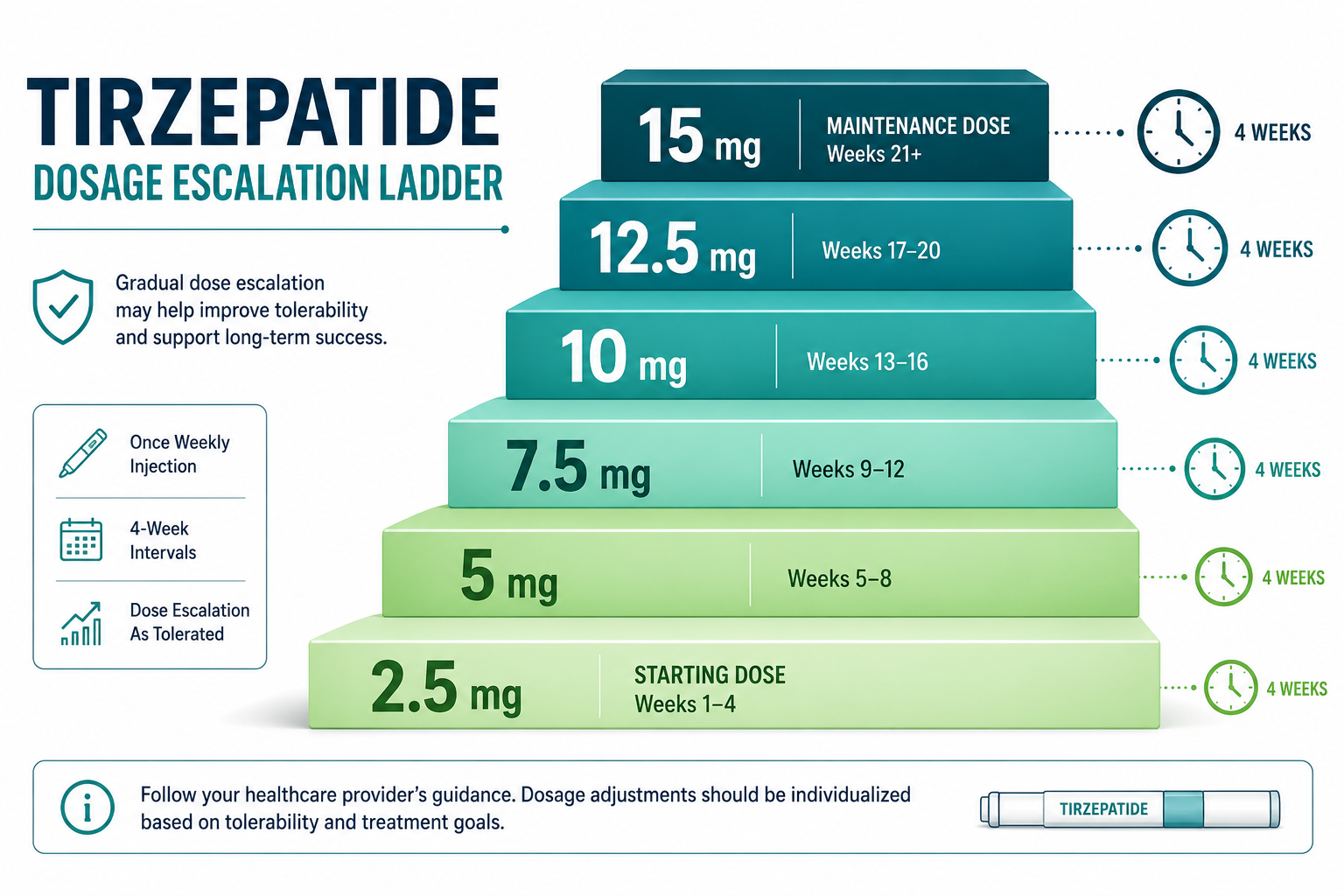
The standard escalation schedule looks like this:
| Week | Dose | Stage |
|---|---|---|
| Weeks 1–4 | 2.5mg | Starting dose |
| Weeks 5–8 | 5mg | Step-up dose |
| Weeks 9–12 | 7.5mg | Maintenance option |
| Weeks 13–16 | 10mg | Maintenance option |
| Weeks 17–20 | 12.5mg | High dose |
| Week 21+ | 15mg | Maximum dose |
Each step up happens roughly every four weeks, provided the previous dose is being tolerated well. If side effects are significant at any stage, staying at the current dose for an additional four weeks before increasing is a sensible approach — and is clinically supported.
- What are the effects of Tirzepatide 2.5mg — useful reading before you begin
- What are the effects of Tirzepatide 5mg — what to expect at the first step-up
Common mistake: Rushing the escalation. Jumping from 2.5mg to 7.5mg in two weeks to “speed up results” significantly increases the risk of nausea and vomiting. Patience during the ramp-up phase pays off in the long run.
How Much Tirzepatide Can You Take Per Week?
The answer is straightforward: no more than 15mg in a seven-day period. Tirzepatide has a long half-life of approximately five days, which is why it is dosed once weekly rather than daily. Taking more than one injection per week, or injecting a higher concentration than prescribed, does not produce proportionally better results — it simply increases the risk of adverse effects.
The once-weekly schedule is one of tirzepatide’s practical advantages. There is no daily dosing to remember, and the steady-state blood levels it produces help maintain consistent appetite management throughout the week.
Key point for UK users: Whether you are using branded Mounjaro or an affordable alternative like Tirzeparo, the dosing schedule is the same. The active ingredient and its pharmacology do not change based on the product source.
Are There Different Dosage Recommendations for Diabetes vs Body Composition Management?
The dosing schedule is largely the same for both indications, but the target maintenance dose can differ based on individual response and clinical context.
For type 2 diabetes management, the approved maintenance doses in clinical guidelines are typically 5mg, 10mg, or 15mg — with 15mg being the maximum. Some individuals achieve adequate blood sugar control at 5mg or 10mg and never need to escalate further.
For body composition management, the SURMOUNT trials demonstrated that higher doses (10mg and 15mg) tended to produce greater reductions in body mass. However, tolerability remains the governing factor — someone who achieves their body composition goals at 7.5mg and tolerates it well has no clinical reason to push to 15mg.
The practical rule: Use the lowest effective dose that achieves your goals with acceptable tolerability. The 15mg maximum is a ceiling, not a target everyone needs to reach.
For a deeper comparison of how tirzepatide stacks up against semaglutide-based options across different use cases, see this Tirzepatide vs Semaglutide comparison guide.
What Are the Side Effects of High-Dose Tirzepatide?
Higher doses of tirzepatide — particularly 10mg, 12.5mg, and 15mg — are associated with a greater frequency of gastrointestinal side effects. This is the most consistent finding across the SURPASS and SURMOUNT trial programmes.
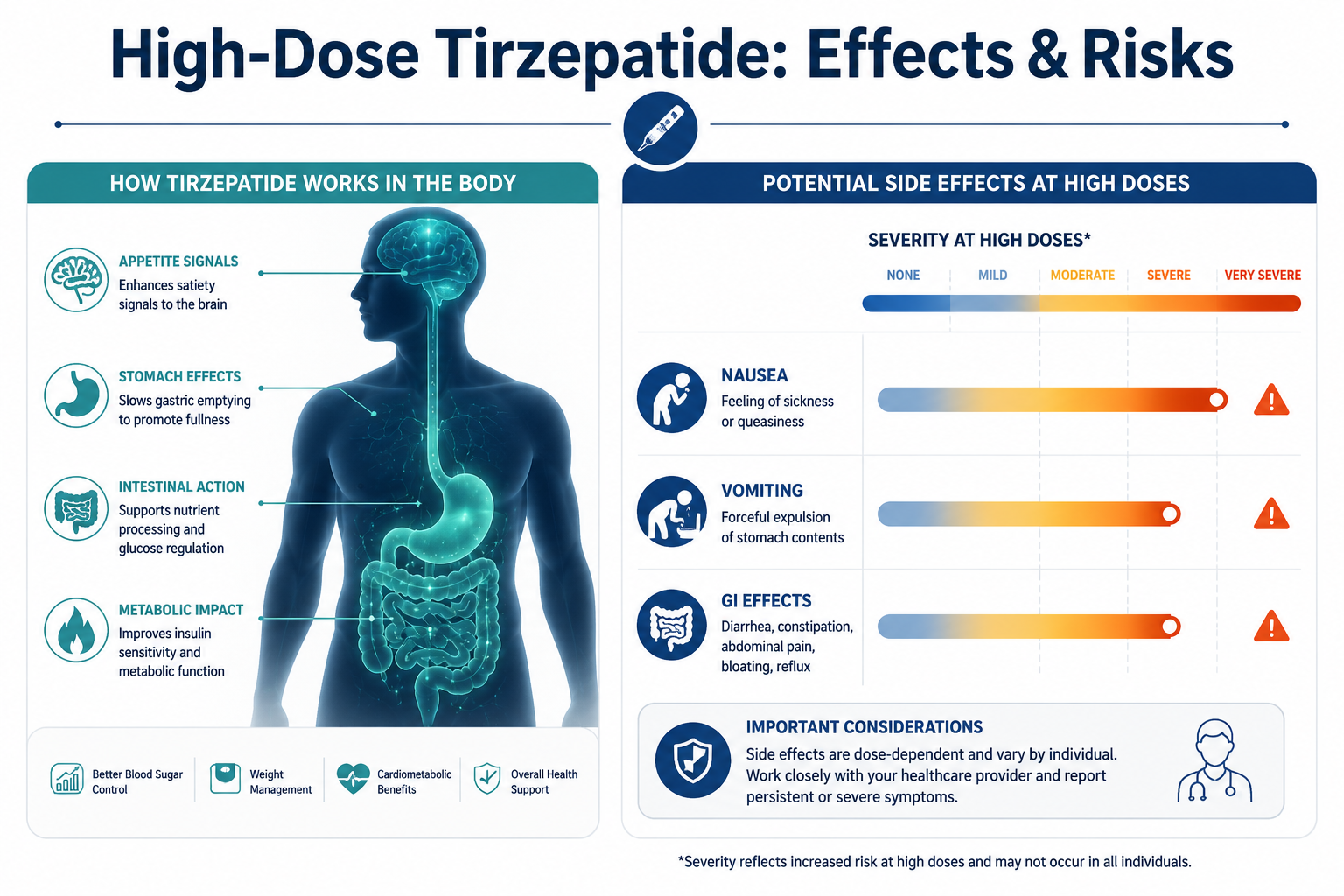
Most common side effects at higher doses:
- Nausea — the most frequently reported, especially in the first few weeks after a dose increase
- Vomiting — less common than nausea but more likely at 10mg+ compared to lower doses
- Diarrhoea — can occur, particularly early in dose escalation
- Constipation — paradoxically, some users experience this instead of diarrhoea
- Reduced appetite — technically an intended effect, but can become pronounced at high doses
- Injection site reactions — redness or mild discomfort at the injection site
Less common but important:
- Hypoglycaemia (low blood sugar), primarily relevant when tirzepatide is combined with insulin or sulphonylureas
- Acute pancreatitis — rare but has been reported; seek medical attention for persistent severe abdominal pain
- Gallbladder issues — including gallstones, which have been observed in GLP-1 class medications
For more detail on what to expect at the 7.5mg and 10mg levels specifically, the guides on Tirzepatide 7.5mg effects and Tirzepatide 10mg effects provide useful context.
Important Medical Warning: Contact your healthcare provider promptly if you notice a lump or swelling in your neck, persistent hoarseness, difficulty swallowing, or shortness of breath. These symptoms may require medical evaluation. In animal studies, tirzepatide and similar medications were associated with thyroid tumours. It is not known whether tirzepatide causes thyroid tumours or medullary thyroid carcinoma (MTC) in humans. You must be 18+ to use our service.
What Happens If You Take Too Much Tirzepatide?
Taking more tirzepatide than recommended — whether by injecting twice in one week or using a dose higher than 15mg — is not safe and does not produce better outcomes. The risks include:
- Severe nausea and vomiting, potentially leading to dehydration
- Hypoglycaemia, especially if combined with other glucose-lowering medications
- Acute pancreatitis — a serious condition requiring immediate medical attention
- Cardiovascular stress — heart rate increases have been observed with tirzepatide, and overdose may amplify this
If an accidental overdose occurs, contact a healthcare professional or emergency services promptly. Do not attempt to manage severe symptoms at home.
Edge case: Some users mistakenly believe that taking a “double dose” after missing an injection will compensate for the missed week. This is incorrect. If more than four days have passed since the missed dose, skip it and resume the normal schedule on the next scheduled day.
Who Should Not Take High Doses of Tirzepatide?
Not everyone is a suitable candidate for the 15mg maximum dose. Several groups require either a lower ceiling or additional medical supervision:
Groups that may need a lower maximum dose or closer monitoring:
- People with a personal or family history of medullary thyroid carcinoma (MTC) — tirzepatide is contraindicated in this group entirely
- People with Multiple Endocrine Neoplasia syndrome type 2 (MEN 2) — also a contraindication
- Those with a history of pancreatitis — higher doses carry elevated risk
- People with severe kidney impairment — while mild-to-moderate kidney disease does not require dose adjustment per current guidance, severe impairment warrants caution
- Individuals on insulin or sulphonylureas — the combination significantly increases hypoglycaemia risk at higher doses
- Pregnant or breastfeeding individuals — tirzepatide is not recommended during pregnancy
Choose a lower maintenance dose if: you achieve your body composition or metabolic goals at 7.5mg or 10mg with good tolerability. There is no benefit to escalating further simply because a higher dose exists.
Can Seniors Take the Same Maximum Dose as Younger Adults?
Older adults can use tirzepatide, but the 15mg maximum dose requires more careful consideration in this group. Age itself is not a disqualifying factor, but several age-related considerations apply:
- Kidney function tends to decline with age. Since tirzepatide is cleared renally, reduced kidney function can affect how long the drug remains active in the body.
- Polypharmacy is more common in older adults. Interactions with blood pressure medications, diuretics, or diabetes drugs need to be assessed.
- Muscle mass preservation becomes more critical with age. The appetite-suppressing effects of high-dose tirzepatide can lead to reduced calorie intake, which — without adequate protein and resistance exercise — may accelerate muscle loss.
- Dehydration risk from GI side effects is higher in older adults and can have more serious consequences.
The practical guidance: seniors can often achieve excellent results at 7.5mg or 10mg without needing to push to 15mg. For older adults focused on body composition, pairing tirzepatide with structured exercise is particularly important — see this guide on Tirzepatide and exercise for practical advice.
How Does Tirzepatide Dosage Compare to Other Diabetes Medications?
Tirzepatide’s dosing structure is distinct from most other glucose-lowering medications because of its dual-receptor mechanism and its once-weekly administration.
| Medication | Class | Dosing Frequency | Max Dose |
|---|---|---|---|
| Tirzepatide (Mounjaro) | Dual GIP/GLP-1 agonist | Once weekly | 15mg/week |
| Semaglutide (Ozempic) | GLP-1 agonist | Once weekly | 2mg/week |
| Semaglutide (Wegovy) | GLP-1 agonist | Once weekly | 2.4mg/week |
| Liraglutide (Victoza) | GLP-1 agonist | Once daily | 1.8mg/day |
| Dulaglutide (Trulicity) | GLP-1 agonist | Once weekly | 4.5mg/week |
The numerical difference in milligrams between tirzepatide and semaglutide does not reflect relative potency — these are different molecules with different receptor targets and cannot be compared on a mg-for-mg basis. Tirzepatide’s dual action on both GIP and GLP-1 receptors is what distinguishes it mechanistically from all other currently available options.
How Quickly Can You Increase Your Tirzepatide Dose?
The minimum recommended interval between dose increases is four weeks. This is not a suggestion — it is the clinically validated minimum that allows the body to adapt and gives a fair assessment of whether the current dose is being tolerated.
Practical timeline to reach the maximum dose:
- Minimum time from 2.5mg to 15mg: approximately 20 weeks (five dose steps, four weeks each)
- Realistic time for many users: 24–32 weeks, accounting for extended time at doses where tolerability needs to settle
When to slow down the escalation:
- Persistent nausea lasting more than a week after a dose increase
- Vomiting more than twice per week
- Significant disruption to daily eating patterns
- Any new or unexplained symptoms
Staying at a comfortable dose for an extra four to eight weeks is far better than pushing to a higher dose and experiencing side effects severe enough to discontinue entirely.
What Are the Long-Term Risks of Maximum Dose Tirzepatide?
Long-term data on tirzepatide is still accumulating, as the medication received regulatory approval relatively recently. Based on available evidence from multi-year clinical trial extensions and post-marketing surveillance, the following considerations apply at the 15mg dose level:
Areas of ongoing monitoring:
- Thyroid: Animal studies showed thyroid C-cell tumours at high doses. Human relevance remains under investigation, and regulatory bodies continue to monitor this signal.
- Cardiovascular outcomes: The SURPASS-CVOT trial data suggested cardiovascular benefit in high-risk type 2 diabetes patients, but long-term data in the general body composition management population is still being gathered.
- Gallbladder disease: GLP-1 class medications as a group have been associated with increased gallstone formation over time. This risk appears to be related to rapid changes in body composition rather than the drug itself, but it remains a consideration.
- Muscle mass: Sustained appetite suppression at high doses, without adequate dietary protein and resistance training, can lead to lean mass reduction over time. This is manageable with the right lifestyle approach but requires active attention.
- Rebound after discontinuation: Some users experience a return of appetite and body composition changes after stopping tirzepatide. This is not a long-term risk of the drug per se, but it is a practical consideration for anyone planning their wellness journey.
The current clinical consensus is that the benefit-risk profile at 15mg is favourable for appropriately selected individuals — but “appropriately selected” is the key phrase.
Common Mistakes People Make With Tirzepatide Dosing
These are the dosing errors that come up most frequently, and they are all avoidable:
- Escalating too fast. Moving up a dose level every one or two weeks instead of four is the single biggest driver of unnecessary side effects.
- Treating 15mg as the goal rather than the ceiling. Many people achieve excellent body composition results at 7.5mg or 10mg. The maximum dose is not a badge of progress.
- Injecting twice in one week to “make up” for a missed dose. This is incorrect and potentially harmful. Skip the missed dose and resume the normal schedule.
- Not adjusting injection timing when side effects are food-related. Injecting on a day when a large meal is planned can amplify nausea. Many users find injecting in the evening, or on a lighter eating day, reduces GI discomfort.
- Stopping abruptly at high doses. While tirzepatide does not require tapering in the same way some medications do, abrupt discontinuation at 15mg can lead to a rapid return of hunger signals. A gradual step-down is often a more comfortable approach.
- Ignoring hydration. GI side effects at higher doses can cause fluid loss. Staying well hydrated is a simple but often overlooked part of managing the high-dose experience.
FAQ: What Is the Maximum Dose of Tirzepatide?
Q: What is the maximum dose of tirzepatide approved for use?
A: 15mg once weekly. This is the highest dose tested in clinical trials and approved by regulatory authorities for both type 2 diabetes management and chronic body composition management.
Q: Can I take 20mg of tirzepatide if 15mg isn’t working?
A: No. 20mg is not an approved or clinically studied dose. Taking more than 15mg per week carries significant safety risks and is not supported by any published evidence.
Q: How long does it take to reach the 15mg maximum dose?
A: A minimum of 20 weeks, escalating in 2.5mg increments every four weeks. Many people take longer, which is perfectly appropriate.
Q: Is 15mg of tirzepatide safe for everyone?
A: No. People with a history of medullary thyroid carcinoma, MEN 2, severe pancreatitis, or certain other conditions should not use tirzepatide at any dose. Others may need to stay at a lower maintenance dose based on tolerability and individual health factors.
Q: Does a higher tirzepatide dose always produce better results?
A: Not necessarily. Many users achieve their body composition and metabolic goals at 7.5mg or 10mg. Higher doses increase both efficacy potential and side effect risk — the right dose is the lowest one that works for you.
Q: What should I do if I accidentally take too much tirzepatide?
A: Contact a healthcare professional or emergency services promptly. Monitor for severe nausea, vomiting, signs of low blood sugar (shakiness, confusion, sweating), or abdominal pain.
Q: Is the maximum dose the same for body composition management and diabetes?
A: Yes — 15mg weekly is the ceiling for both indications. However, the dose at which individuals achieve their goals may differ between the two use cases.
Q: Can I stay at 12.5mg instead of going to 15mg?
A: Absolutely. 12.5mg is a recognised high-dose option. If it provides good results with acceptable tolerability, there is no requirement to escalate to 15mg.
Q: How does tirzepatide’s maximum dose compare to Ozempic?
A: They cannot be directly compared on a milligram basis — they are different molecules. Ozempic’s maximum dose is 2mg weekly; tirzepatide’s is 15mg weekly. The higher number does not mean tirzepatide is “stronger” in a simple sense; it reflects different molecular weights and receptor targets.
Q: Where can I find affordable tirzepatide at the correct doses in the UK?
A: Tirzeparo offers the full dosing range from 2.5mg through to 15mg, sourced through trusted EU partners and delivered discreetly to your door. See the Tirzeparo product range or check current UK pricing for a full breakdown.
Conclusion: Taking a Measured Approach to Tirzepatide Dosing
The maximum dose of tirzepatide — 15mg once weekly — represents the upper boundary of what clinical science has validated as both effective and reasonably safe. But reaching that ceiling is a journey, not a starting point.
The structured four-week escalation schedule exists for good reason: it gives the body time to adapt, minimises unnecessary side effects, and allows each person to find their own effective maintenance dose — which may well be 7.5mg or 10mg rather than 15mg.
Actionable next steps for 2026:
- Start at 2.5mg and commit to the four-week escalation schedule — no shortcuts.
- Track your tolerance at each dose level before increasing. Keep a simple log of any side effects.
- Prioritise protein and hydration, especially at higher doses, to support body composition and manage GI effects.
- Combine with movement — the Tirzepatide and exercise guide is a practical resource for building this habit.
- Don’t treat 15mg as the goal. The right dose is the one that supports your body composition and metabolic goals with the fewest side effects.
- Explore your options — if UK clinic costs have been a barrier, Tirzeparo’s affordable access model provides the full dosing range through trusted EU partners, with discreet home delivery and transparent pricing.
Understanding the maximum dose of tirzepatide is the foundation of a safe, effective, and sustainable metabolic health journey. Use that knowledge to plan carefully — and progress at the pace your body dictates.
Tirzeparo acts as a bridge, providing direct access to affordable Tirzepatide by fulfilling orders through our network of EU partners. We are not a medical clinic; we are your sourcing solution. Always consult a qualified healthcare professional before starting or adjusting any medication.
References
- Jastreboff, A.M., et al. (2022). Tirzepatide Once Weekly for the Treatment of Obesity. New England Journal of Medicine, 387(3), 205–216. https://doi.org/10.1056/NEJMoa2206038
- Ludvik, B., et al. (2021). Tirzepatide versus Insulin Degludec in Type 2 Diabetes. New England Journal of Medicine, 385(23), 2149–2160. https://doi.org/10.1056/NEJMoa2108891
- Eli Lilly and Company. (2022). Mounjaro (tirzepatide) Prescribing Information. U.S. Food and Drug Administration. https://www.accessdata.fda.gov/drugsatfda_docs/label/2022/215866s000lbl.pdf
- Rosenstock, J., et al. (2021). Efficacy and Safety of a Novel Dual GIP and GLP-1 Receptor Agonist Tirzepatide in Patients With Type 2 Diabetes (SURPASS-1). Diabetes Care, 44(9), 1970–1980. https://doi.org/10.2337/dc21-0174
- European Medicines Agency. (2023). Mounjaro: EPAR – Product Information. https://www.ema.europa.eu/en/medicines/human/EPAR/mounjaro