Do you Need to Refrigerated Tirzepatide or Ozempic? Get to know if you use them
Quick Answer
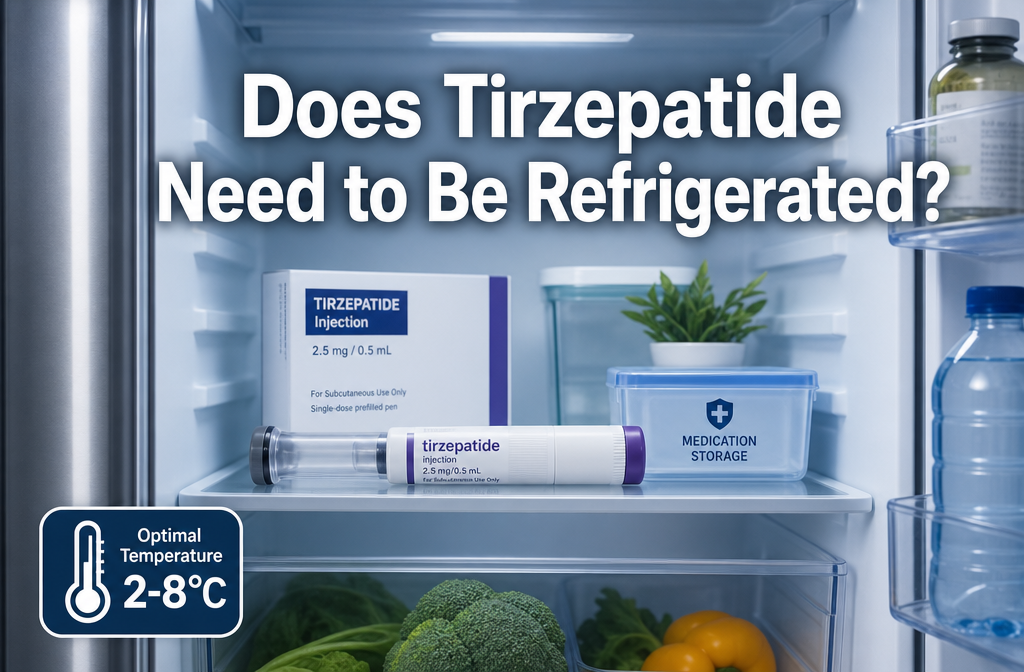
Yes, tirzepatide must be refrigerated at 36°F–46°F (2°C–8°C) until use to maintain its effectiveness through the labeled expiration date. However, unopened pens and vials can be kept at room temperature (below 86°F/30°C) for up to 21 days without returning to the fridge, and Zepbound multi-dose KwikPens may stay unrefrigerated for up to 30 days. Proper storage is essential because tirzepatide is a temperature-sensitive peptide that degrades when exposed to heat, light, or freezing conditions.
Key Takeaways
- Refrigeration is required: Store unopened tirzepatide at 36°F–46°F (2°C–8°C) until the expiration date printed on the packaging
- Limited room temperature window: Single-dose pens and vials can stay unrefrigerated for up to 21 days at temperatures below 86°F (30°C)
- Multi-dose pens differ: Zepbound multi-dose KwikPens may be stored at room temperature for up to 30 days
- Never freeze: Freezing destroys tirzepatide; discard any product that has been frozen
- No re-refrigeration: Once kept at room temperature, do not return the product to the fridge
- Compounded products vary: Compounded tirzepatide must stay refrigerated at all times and follows a shorter Beyond-Use Date (BUD)
- Protect from light: Keep tirzepatide in its original packaging to shield it from direct sunlight
- Travel-friendly options exist: Insulated cooling cases maintain proper temperature during short trips
- Visual inspection matters: Discard tirzepatide if it appears cloudy, discolored, or contains particles
How Do I Store Tirzepatide at Home?
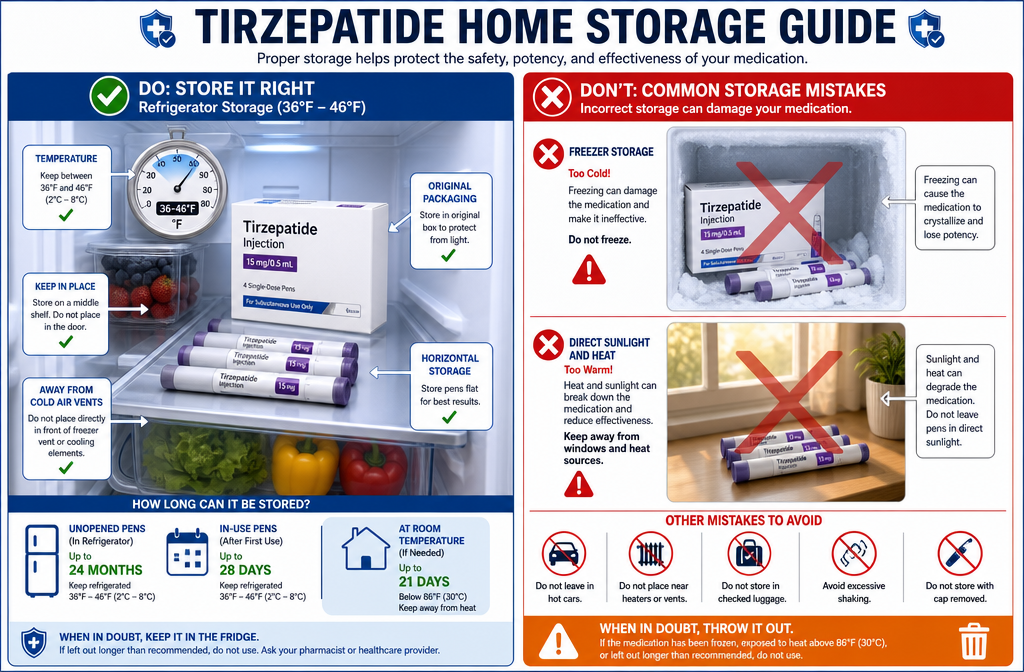
Store unopened tirzepatide pens or vials in your household refrigerator at 36°F–46°F (2°C–8°C), away from the freezer compartment and not touching the back wall where temperatures can drop below freezing. Keep the product in its original carton to protect it from light, and place it on a middle shelf where temperature remains most stable.
Step-by-step home storage:
- Choose the right spot: Use a middle refrigerator shelf, not the door (which experiences temperature fluctuations) or near the freezer
- Keep it boxed: Leave tirzepatide in its original packaging until you’re ready to use it
- Check your fridge temperature: Use a refrigerator thermometer to verify your appliance maintains 36°F–46°F consistently
- Avoid the freezer: Never store tirzepatide in the freezer or allow it to touch frozen items
- Separate from food: Store medication away from raw foods or items that might leak
Common mistake: Many people store medications in the refrigerator door for convenience, but this area experiences the most temperature variation when the door opens and closes. This can compromise tirzepatide’s stability over time.
Decision rule: If you live in a household with children, store tirzepatide on a higher shelf or in a locked medication box inside the refrigerator to prevent accidental access while maintaining proper temperature.
When you’re ready to use your tirzepatide, you can remove it from the refrigerator and let it reach room temperature for 30 minutes before injection. This makes the injection more comfortable and reduces injection site reactions.[1][3]
Can Tirzepatide Be Left Out at Room Temperature?
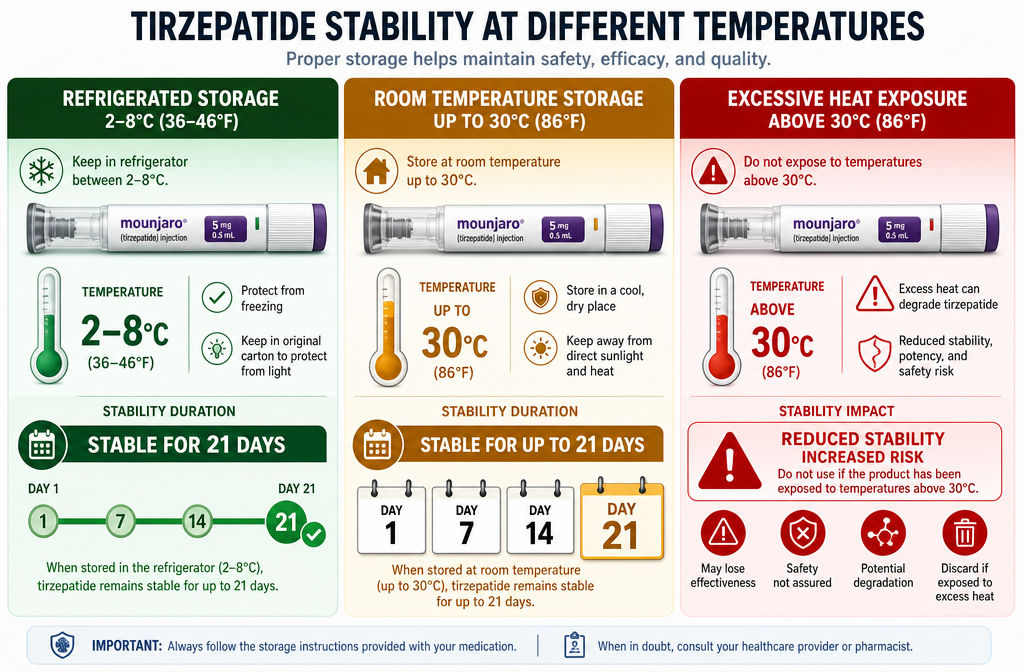
Yes, tirzepatide can be left at room temperature below 86°F (30°C) for up to 21 days for single-dose pens and vials, or up to 30 days for Zepbound multi-dose KwikPens. After this window expires, you must discard the product even if it appears normal, and you should never return it to the refrigerator once it has been kept at room temperature.[3][5]
This room-temperature allowance provides flexibility for daily use and short-term travel. The manufacturer’s stability studies demonstrate that tirzepatide maintains its potency within these specific timeframes and temperature limits.
Key constraints for room temperature storage:
- Temperature ceiling: Must stay below 86°F (30°C) at all times
- Time limits: 21 days for standard products, 30 days for Zepbound multi-dose KwikPens
- One-way decision: Once removed from refrigeration, the product cannot go back
- Light protection: Continue storing in the original carton even at room temperature
- Tracking required: Mark the date when you first removed the product from the fridge
Choose room temperature storage if:
- You inject tirzepatide weekly and prefer keeping your current pen accessible
- You’re traveling for less than three weeks and want to avoid refrigeration logistics
- You find room-temperature injections more comfortable than cold ones
Keep it refrigerated if:
- You have multiple pens and won’t use them within 21-30 days
- Your home temperature regularly exceeds 86°F
- You want maximum shelf life and stability
The 21-day window applies to branded Mounjaro and standard Zepbound single-dose pens. If you’re using the newer Zepbound multi-dose KwikPen, you have an extended 30-day room-temperature window based on additional stability data.[5]
What Happens If Tirzepatide Gets Warm?
If tirzepatide is exposed to temperatures above 86°F (30°C), the peptide structure begins to degrade, reducing its effectiveness for appetite management and metabolic health support. Brief exposure to slightly elevated temperatures may not completely destroy the medication, but prolonged heat exposure or temperatures significantly above 86°F will compromise the product and it should be discarded.[1][4]
Heat causes the peptide bonds in tirzepatide to break down, altering the molecular structure that allows it to activate GIP and GLP-1 receptors. This degradation is irreversible and cannot be corrected by returning the product to proper storage conditions.
Temperature exposure scenarios:
Mild overheating (87°F–95°F for a few hours):
- May still be usable but effectiveness could be reduced
- Contact your pharmacist or supplier for guidance
- Monitor for reduced appetite management effects
Significant overheating (above 95°F or prolonged exposure):
- Discard the product immediately
- Do not attempt to use it
- Request a replacement from your supplier
Extreme heat (left in hot car, direct sunlight):
- Product is compromised and unsafe to use
- Temperatures in cars can exceed 130°F in summer
- Always discard and replace
Edge case: If you accidentally left tirzepatide out overnight in a room that stayed below 86°F, and you’re still within the 21-day (or 30-day for multi-dose pens) room-temperature window, the product should remain effective. However, if the room temperature exceeded 86°F or you’re unsure of the exact temperature, err on the side of caution and discard it.
Visual inspection alone cannot determine if heat has degraded tirzepatide. The solution may still appear clear even after heat damage has occurred.[6]
How Long Can Tirzepatide Stay Unrefrigerated?
Tirzepatide can stay unrefrigerated for up to 21 days for single-dose pens and vials, or up to 30 days for Zepbound multi-dose KwikPens, provided the temperature remains below 86°F (30°C) throughout this period. These timeframes are based on manufacturer stability testing and represent the maximum safe duration outside refrigeration.[3][5][6]
Product-specific unrefrigerated timeframes:
| Product Type | Maximum Room Temp Duration | Temperature Limit | Can Return to Fridge? |
|---|---|---|---|
| Mounjaro single-dose pens | 21 days | Below 86°F (30°C) | No |
| Zepbound single-dose pens | 21 days | Below 86°F (30°C) | No |
| Zepbound multi-dose KwikPens | 30 days | Below 86°F (30°C) | No |
| Tirzepatide vials (branded) | 21 days | Below 86°F (30°C) | No |
| Compounded tirzepatide | Varies (check label) | Usually must stay refrigerated | Check pharmacy instructions |
Tracking your unrefrigerated time:
- Mark the date: Write the date you removed the product from the fridge on the carton
- Calculate the deadline: Add 21 days (or 30 for multi-dose pens) to determine the discard date
- Set a reminder: Use your phone calendar to alert you before the deadline
- Monitor temperature: If your home experiences a heat wave above 86°F, the product must be discarded immediately
Common mistake: People often assume they can “pause” the room-temperature countdown by returning tirzepatide to the fridge. This is incorrect and not supported by stability data. Once you remove the product from refrigeration, the 21-day or 30-day clock runs continuously until the deadline or until you discard it.[3]
For those using affordable tirzepatide through Tirzeparo, understanding these storage windows helps you plan your supply and avoid waste.
Do I Need a Special Refrigerator for Tirzepatide?
No, you do not need a special refrigerator for tirzepatide. Any standard household refrigerator that maintains a consistent temperature between 36°F–46°F (2°C–8°C) is suitable for storing tirzepatide safely and effectively.[1][4]
However, you should verify that your refrigerator maintains this temperature range consistently, as some older or poorly maintained units may have temperature fluctuations that could affect medication stability.
Refrigerator checklist for tirzepatide storage:
✅ Temperature accuracy: Place a refrigerator thermometer on the middle shelf to verify 36°F–46°F range
✅ Stable temperature: Check that temperature doesn’t fluctuate more than a few degrees
✅ No freezing zones: Ensure the back wall and areas near freezer compartments don’t drop below 32°F
✅ Adequate space: Have room on middle shelves away from the door
✅ Clean and dry: Keep storage area free from spills and moisture
You do NOT need:
- Medical-grade refrigerators (unless required by your workplace or institution)
- Dedicated medication refrigerators (though they can be convenient)
- Temperature-controlled safes (standard fridge is sufficient)
- Backup power systems (though helpful during extended outages)
When a specialized solution might help:
- Frequent travelers: A portable medication cooler maintains proper temperature during trips
- Unreliable home fridge: If your refrigerator frequently malfunctions, consider a small dedicated unit
- Shared living spaces: A lockable medication box inside the fridge adds security
- Power outage concerns: An insulated cooler with ice packs provides temporary backup
Cost consideration: Standard household refrigerators cost nothing extra since you already own one. Small dedicated medication refrigerators range from £50–£200 if you want a separate unit, but this is optional for most users.
The key is consistent temperature, not specialized equipment. A basic fridge thermometer (£5–£10) is the only additional purchase most people need to ensure proper tirzepatide storage.
What’s the Difference Between Mounjaro and Other Diabetes Medications Storage?
Tirzepatide (Mounjaro, Zepbound) requires refrigeration at 36°F–46°F until use and can stay at room temperature for up to 21-30 days, which differs from many oral diabetes medications that can be stored at room temperature indefinitely, but is similar to other injectable GLP-1 medications like semaglutide (Ozempic, Wegovy) that also require refrigeration.[1][3]
Storage comparison across diabetes medications:
| Medication Type | Refrigeration Required? | Room Temp Allowance | Freezing Allowed? |
|---|---|---|---|
| Tirzepatide (Mounjaro/Zepbound) | Yes (36°F–46°F) | 21-30 days below 86°F | No – discard if frozen |
| Semaglutide (Ozempic/Wegovy) | Yes (36°F–46°F) | 56 days below 86°F | No – discard if frozen |
| Dulaglutide (Trulicity) | Yes (36°F–46°F) | 14 days below 86°F | No – discard if frozen |
| Liraglutide (Victoza/Saxenda) | Yes (36°F–46°F) | 30 days below 86°F | No – discard if frozen |
| Metformin (oral) | No | Store at room temp | Not applicable |
| Insulin (most types) | Yes (36°F–46°F) | 28 days at room temp | No – discard if frozen |
Key differences:
Tirzepatide vs. Semaglutide:
- Semaglutide offers a longer room-temperature window (56 days vs. 21-30 days for tirzepatide)
- Both require identical refrigerated storage conditions
- Both are peptide-based injectables with similar stability profiles
- For a detailed comparison, see our guide on tirzepatide vs semaglutide
Tirzepatide vs. Oral Medications:
- Oral diabetes drugs like metformin can be stored at room temperature in medicine cabinets
- Tirzepatide’s peptide structure requires cold storage to prevent degradation
- Oral medications are generally more travel-friendly due to no refrigeration needs
Tirzepatide vs. Insulin:
- Similar refrigeration requirements (36°F–46°F)
- Insulin typically allows 28 days at room temperature for in-use vials
- Both must never be frozen
- Insulin has been available longer, so storage protocols are more widely understood
Why the difference? Peptide-based medications like tirzepatide and semaglutide are large, complex molecules that are sensitive to temperature changes. Oral medications are typically smaller, more stable molecules that withstand room temperature storage. This is a fundamental difference in molecular structure, not a manufacturing choice.
How Much Does Refrigeration for Tirzepatide Cost?
Refrigerating tirzepatide in your existing household refrigerator costs virtually nothing extra, as the medication takes up minimal space and adds negligible energy consumption. If you need specialized storage solutions like a portable medication cooler for travel, expect to spend £20–£60 for a quality insulated case with ice packs.[4]
Cost breakdown for tirzepatide storage:
Using your existing refrigerator:
- Additional electricity cost: Less than £1 per year (medication occupies minimal space)
- Refrigerator thermometer: £5–£10 (one-time purchase, optional but recommended)
- Total annual cost: Under £2
Optional storage enhancements:
- Portable medication cooler: £20–£60 (for travel, reusable)
- Reusable ice packs: £8–£15 (if not included with cooler)
- Small dedicated medication fridge: £50–£200 (unnecessary for most users)
- Lockable medication box: £15–£30 (for shared living spaces)
Travel storage solutions:
For short trips (1-3 weeks), an insulated medication cooler with ice packs maintains proper temperature and costs £20–£60. These coolers are TSA-approved for air travel and reusable for years, making them a one-time investment.
For longer trips or frequent travel, some people invest in portable electric coolers (£80–£150) that plug into car outlets or USB power banks, though this is excessive for most users.
Cost comparison to medication waste:
The real cost consideration isn’t refrigeration—it’s the cost of replacing tirzepatide that was improperly stored. A single pen of tirzepatide costs significantly more than any storage solution. When you buy tirzepatide through Tirzeparo, prices range from £169–£229 per pen depending on dosage, making proper storage a critical investment protection.
Decision rule: If you travel more than once per month, invest in a quality medication cooler (£40–£60). If you rarely travel and have a reliable home refrigerator, you need no additional storage equipment beyond a basic thermometer.
Can Traveling with Tirzepatide Be Complicated?
Traveling with tirzepatide is straightforward for trips under 21-30 days because the medication can stay at room temperature during this period, eliminating the need for constant refrigeration. For longer trips or destinations with extreme heat, you’ll need an insulated medication cooler with ice packs to maintain proper temperature, which adds minor planning but remains manageable.[4][6]
Travel scenarios and solutions:
Short trips (1-7 days):
- Remove tirzepatide from refrigeration before departure
- Pack in carry-on luggage (never checked baggage)
- Keep in original packaging for light protection
- No cooling equipment needed if temperature stays below 86°F
- Mark the date removed from fridge to track the 21-30 day window
Medium trips (1-3 weeks):
- Use an insulated medication cooler with ice packs
- Replace ice packs daily at your destination
- Keep cooler in the coolest part of your accommodation
- Still within the 21-30 day room-temperature window
- Request refrigerator access at hotels when possible
Long trips (over 3 weeks):
- Must arrange refrigeration at your destination
- Contact hotels in advance to confirm in-room refrigerators
- For extended stays, consider Airbnb or accommodations with kitchen facilities
- Bring a refrigerator thermometer to verify proper temperature
- Plan medication refills if trip exceeds supply
Air travel tips:
✈️ TSA and security:
- Tirzepatide is allowed in carry-on bags with no quantity restrictions
- Keep medication in original packaging with prescription label
- Inform security officers you’re carrying refrigerated medication
- Ice packs and gel packs are permitted if frozen solid at checkpoint
✈️ During the flight:
- Cabin temperature is typically 65°F–75°F, well within safe range
- Keep medication in your personal item under the seat for temperature stability
- Avoid overhead bins where temperature can fluctuate
- Flight duration (even long-haul) is well within the 21-30 day window
International travel considerations:
When traveling to the EU or other international destinations, carry documentation showing your tirzepatide prescription. Some countries have specific regulations about importing medications, so research your destination’s requirements in advance.
Common travel mistake: Packing tirzepatide in checked luggage where it may freeze in the cargo hold or overheat on the tarmac. Always keep medication in your carry-on bag where you can monitor conditions.
Edge case: If you’re traveling to extremely hot climates (desert regions, tropical destinations in summer), even indoor temperatures may exceed 86°F. In these situations, you must arrange refrigerated storage at your accommodation or use a portable electric cooler.
For those managing their body transformation journey with affordable tirzepatide from Tirzeparo, planning travel around your injection schedule and storage needs ensures uninterrupted progress toward your goals.
Who Shouldn’t Use Tirzepatide If Refrigeration Is Tricky?
Individuals without reliable access to refrigeration, those experiencing homelessness or housing instability, people living in regions with frequent extended power outages, and those with cognitive impairments that make temperature monitoring difficult may face significant challenges safely storing tirzepatide and should discuss alternative body composition management options with their healthcare provider.[1][4]
Situations where refrigeration challenges may affect tirzepatide use:
Unstable housing:
- Temporary accommodations without refrigeration access
- Shared living spaces where medication security is a concern
- Frequent moves that disrupt consistent storage
Infrastructure limitations:
- Areas with unreliable electricity supply
- Regions experiencing regular power outages lasting over 24 hours
- Remote locations without refrigeration access
Cognitive or physical limitations:
- Memory impairments that make temperature monitoring difficult
- Physical disabilities that limit refrigerator access
- Conditions affecting ability to track storage timeframes
Occupational challenges:
- Long-haul truck drivers without refrigeration access
- Maritime workers on extended voyages
- Field workers in remote locations for extended periods
Alternative options to consider:
If refrigeration is genuinely problematic, discuss these alternatives with your healthcare provider:
- Oral medications: Metformin and other oral diabetes or metabolic medications that don’t require refrigeration
- Different GLP-1 options: Some formulations may have different storage requirements (though most require refrigeration)
- Modified dosing schedule: Adjusting injection frequency to minimize storage complexity
- Support services: Community health programs that may offer medication storage assistance
Decision rule: If you can access a refrigerator at least once every 21-30 days and maintain room temperature below 86°F between refrigeration periods, tirzepatide remains a viable option. If you cannot meet these minimum requirements consistently, explore alternatives with your healthcare provider.
Important note: Lack of refrigeration access is a practical barrier, not a medical contraindication. If your housing or infrastructure situation improves, tirzepatide may become a suitable option in the future.
For those in the UK and Ireland with stable housing but concerned about tirzepatide costs, Tirzeparo offers affordable access starting at £169, making the medication more accessible even if you need to invest in basic storage equipment.
What Are Common Mistakes People Make Storing Tirzepatide?
The most common tirzepatide storage mistakes include storing pens in the refrigerator door where temperature fluctuates, returning medication to the fridge after room-temperature storage, allowing the product to freeze by placing it too close to the freezer compartment, and failing to track how long the medication has been unrefrigerated.[1][4][6]
Top 10 storage mistakes and how to avoid them:
1. Storing in the refrigerator door
- ❌ Mistake: Placing tirzepatide in door shelves for easy access
- ✅ Solution: Use middle shelves where temperature remains most stable
- Why it matters: Door temperature fluctuates 5°F–10°F with each opening
2. Returning to fridge after room temperature storage
- ❌ Mistake: Thinking you can “reset” the storage clock by re-refrigerating
- ✅ Solution: Once removed from fridge, keep at room temp until use or discard
- Why it matters: Temperature cycling may affect stability beyond manufacturer testing
3. Allowing medication to freeze
- ❌ Mistake: Placing tirzepatide against the back wall or near freezer
- ✅ Solution: Store in the middle of shelves, away from cold zones
- Why it matters: Freezing permanently destroys the peptide structure
4. Not tracking room temperature duration
- ❌ Mistake: Forgetting when you removed medication from refrigeration
- ✅ Solution: Write the date on the carton immediately when removed
- Why it matters: Using tirzepatide beyond 21-30 days unrefrigerated may reduce effectiveness
5. Removing from original packaging
- ❌ Mistake: Taking pens out of the carton for easier storage
- ✅ Solution: Keep in original packaging until ready to use
- Why it matters: Packaging protects from light exposure that degrades the medication
6. Storing in checked luggage
- ❌ Mistake: Packing tirzepatide in checked bags during travel
- ✅ Solution: Always carry medication in your carry-on bag
- Why it matters: Cargo holds can freeze or overheat, destroying the medication
7. Not verifying refrigerator temperature
- ❌ Mistake: Assuming your fridge maintains proper temperature
- ✅ Solution: Use a refrigerator thermometer to verify 36°F–46°F
- Why it matters: Many refrigerators run too cold or too warm without obvious signs
8. Leaving in hot cars
- ❌ Mistake: Leaving tirzepatide in vehicles during errands
- ✅ Solution: Take medication inside with you or use an insulated cooler
- Why it matters: Car interiors can reach 130°F+ in summer, destroying medication in minutes
9. Using after visual changes
- ❌ Mistake: Continuing to use cloudy or discolored tirzepatide
- ✅ Solution: Inspect before each use and discard if appearance changes
- Why it matters: Visual changes indicate degradation or contamination
10. Ignoring power outages
- ❌ Mistake: Assuming medication is fine after refrigerator loses power
- ✅ Solution: If power is out over 4 hours and fridge warms above 46°F, start the 21-day room temp countdown
- Why it matters: Extended warm periods count toward the unrefrigerated time limit
Edge case: If you discover you’ve made one of these mistakes, don’t automatically discard the medication. Contact your pharmacist or supplier to assess whether the product is still safe to use based on the specific circumstances.
How Do I Know If My Tirzepatide Has Gone Bad?
Tirzepatide that has gone bad may appear cloudy, discolored (yellowish or brownish), contain visible particles or crystals, or show changes in consistency, though some degraded medication may still look normal, making it essential to track storage conditions and timeframes rather than relying solely on visual inspection.[6][7]
Visual inspection checklist before each injection:
✅ Normal tirzepatide appearance:
- Clear and colorless to slightly yellow solution
- No visible particles or cloudiness
- Consistent liquid texture
- No unusual odor
❌ Signs of degraded tirzepatide:
- Cloudy or murky appearance
- Dark yellow, brown, or other discoloration
- Visible particles, crystals, or floating matter
- Gel-like consistency or separation
- Cracked or damaged pen
When to discard tirzepatide regardless of appearance:
Even if the medication looks normal, discard it if:
- Exceeded storage timeframes:
- More than 21 days at room temperature (30 days for multi-dose pens)
- Past the printed expiration date
- Beyond the Beyond-Use Date (for compounded products)
- Improper temperature exposure:
- Frozen at any point
- Exposed to temperatures above 86°F for any duration
- Left in hot car or direct sunlight
- Compromised packaging:
- Pen cap is missing or damaged
- Seal is broken on unused product
- Packaging shows signs of tampering
- Unknown storage history:
- Found medication with unclear storage timeline
- Received product that wasn’t properly refrigerated during shipping
- Cannot verify temperature conditions during storage
Important limitation: Visual inspection alone cannot detect all forms of degradation. Heat-damaged tirzepatide may still appear clear and normal while having reduced potency. This is why tracking storage conditions and timeframes is more reliable than appearance alone.[6]
What to do if you suspect degraded medication:
- Stop using it immediately: Do not inject tirzepatide you suspect has degraded
- Contact your supplier: Report the issue to your pharmacy or supplier for guidance
- Request replacement: Most suppliers will replace medication damaged due to shipping or manufacturing issues
- Document the problem: Take photos of the medication and packaging for your records
For those using Tirzeparo’s affordable tirzepatide, contact our support team if you have any concerns about product quality or storage issues. We provide discreet, tracked shipping with proper temperature control to ensure your medication arrives in optimal condition.
Are There Any Alternatives That Don’t Need Refrigeration?
Currently, no GLP-1 or dual GIP/GLP-1 receptor agonist medications (the class that includes tirzepatide) are available in formulations that don’t require refrigeration, though oral semaglutide (Rybelsus) can be stored at room temperature as a tablet alternative that works through a similar mechanism but with different efficacy and dosing requirements.[1][3]
Comparison of refrigeration-free alternatives:
| Medication | Type | Refrigeration Needed? | Storage Conditions | Mechanism |
|---|---|---|---|---|
| Oral semaglutide (Rybelsus) | Oral tablet | No | Room temperature (68°F–77°F) | GLP-1 agonist |
| Metformin | Oral tablet | No | Room temperature | Insulin sensitizer |
| SGLT2 inhibitors | Oral tablet | No | Room temperature | Glucose excretion |
| DPP-4 inhibitors | Oral tablet | No | Room temperature | Incretin enhancer |
| Tirzepatide (Mounjaro/Zepbound) | Injectable | Yes | 36°F–46°F (2°C–8°C) | Dual GIP/GLP-1 agonist |
Oral semaglutide as an alternative:
Oral semaglutide (Rybelsus) is the closest alternative to tirzepatide that doesn’t require refrigeration. It’s a GLP-1 agonist (similar mechanism to half of tirzepatide’s dual action) available as a daily tablet.
Key differences:
- Dosing: Daily tablet vs. weekly injection
- Efficacy: Generally less effective for body composition management than injectable GLP-1s
- Convenience: No refrigeration needed but must be taken on empty stomach with specific timing
- Cost: Often more expensive than injectable options in the UK market
Why no room-temperature injectable GLP-1s exist:
The peptide structure of GLP-1 and GIP agonists is inherently temperature-sensitive. Pharmaceutical companies have invested heavily in developing stable formulations, but the molecular complexity of these medications currently requires refrigeration to maintain potency through their shelf life.
Future developments:
Research is ongoing into more stable peptide formulations and alternative delivery methods (oral, transdermal patches, longer-acting depot injections) that might reduce or eliminate refrigeration requirements. However, as of 2026, no such products have reached the UK market.
Decision rule: If refrigeration is genuinely impossible in your situation, oral semaglutide or traditional oral diabetes medications may be more practical options. However, if you can manage refrigeration even with some inconvenience, injectable tirzepatide typically offers superior results for body composition management and metabolic health support.
For those comparing options, our guide on tirzepatide effects at different dosages can help you understand what to expect from this medication if you decide refrigeration is manageable.
What Temperature Range Is Safe for Tirzepatide?
The safe temperature range for tirzepatide is 36°F–46°F (2°C–8°C) for long-term refrigerated storage, with a temporary allowance for room temperature storage at or below 86°F (30°C) for up to 21-30 days depending on the product type. Temperatures below 32°F (freezing) or above 86°F permanently damage the medication and require immediate disposal.[1][3][5]
Complete temperature safety guide:
Optimal storage zone (36°F–46°F / 2°C–8°C):
- ✅ Maintains full potency until expiration date
- ✅ Recommended for all unopened and long-term storage
- ✅ Standard household refrigerator temperature
- ✅ No time limit when stored in this range
Acceptable temporary zone (47°F–86°F / 8°C–30°C):
- ⚠️ Safe for up to 21 days (single-dose) or 30 days (multi-dose pens)
- ⚠️ Must track duration carefully
- ⚠️ Cannot return to refrigeration after entering this zone
- ⚠️ Discard after time limit even if medication looks normal
Danger zone (above 86°F / 30°C):
- ❌ Immediate degradation begins
- ❌ Discard medication exposed to these temperatures
- ❌ Common in hot cars, direct sunlight, near heating vents
- ❌ No safe duration at these temperatures
Freezing zone (below 32°F / 0°C):
- ❌ Permanently destroys peptide structure
- ❌ Discard immediately if frozen
- ❌ Cannot be salvaged by thawing
- ❌ Common near freezer compartments or against back refrigerator wall
Temperature monitoring strategies:
For home storage:
- Place a refrigerator thermometer on the shelf where you store tirzepatide
- Check temperature weekly to ensure 36°F–46°F range
- Adjust refrigerator settings if temperature drifts outside this range
- Keep medication away from vents and cold spots
For travel:
- Use a small thermometer inside your medication cooler
- Monitor temperature if traveling to hot climates
- Check hotel room temperature before storing medication
- Request refrigerator access when room temperature exceeds 80°F
Seasonal considerations:
Summer challenges:
- Room temperatures may exceed 86°F in homes without air conditioning
- Cars heat rapidly in sun (can reach 130°F+ in 30 minutes)
- Power outages during storms may affect refrigeration
- Solution: Use insulated coolers with ice packs during outages, never leave medication in vehicles
Winter challenges:
- Medication may freeze if left in unheated spaces
- Shipping delays in cold weather risk freezing during transit
- Solution: Bring packages inside immediately upon delivery, don’t store in garages or unheated rooms
Edge case: If your refrigerator temperature fluctuates between 44°F–48°F (slightly above ideal but below room temperature), your tirzepatide should remain stable, though you may want to have your refrigerator serviced to maintain optimal conditions.
Frequently Asked Questions
Can I use tirzepatide if it was left out overnight?
Yes, if the room temperature stayed below 86°F and you’re still within the 21-day (or 30-day for multi-dose pens) room-temperature window. Mark the date it was first removed from refrigeration and discard after the time limit expires. If the temperature exceeded 86°F or you’re unsure, discard the medication.
What should I do if my refrigerator breaks while storing tirzepatide?
Transfer the medication to an insulated cooler with ice packs immediately, or move it to another working refrigerator. If the refrigerator was non-functional for less than 4 hours and the internal temperature stayed below 46°F, the medication should be fine. If temperature rose above 46°F, start counting the 21-30 day room-temperature window.
Can I store tirzepatide in a mini-fridge in my bedroom?
Yes, as long as the mini-fridge maintains a consistent temperature between 36°F–46°F. Use a refrigerator thermometer to verify the temperature, as some mini-fridges have less precise temperature control than full-size refrigerators. Avoid mini-fridges with only “cold/colder/coldest” settings without specific temperature indicators.
Is it safe to inject cold tirzepatide straight from the refrigerator?
Yes, it’s safe but may be uncomfortable. Cold injections can cause more injection site discomfort and reactions. For a more comfortable experience, remove the pen from the refrigerator 30 minutes before injection to let it reach room temperature. Never use external heat sources like microwaves or hot water to warm the medication.
How do I travel internationally with tirzepatide?
Pack tirzepatide in your carry-on bag with the original prescription label, use an insulated medication cooler with ice packs for temperature control, and carry a letter from your healthcare provider explaining your need for the medication. Research your destination country’s medication import regulations in advance, as some countries have restrictions on importing prescription medications.
Does compounded tirzepatide have different storage requirements?
Yes, compounded tirzepatide typically must stay refrigerated at all times and has a much shorter Beyond-Use Date (BUD) than branded products, often 28-90 days from preparation. Follow the specific storage instructions provided by your compounding pharmacy, as requirements vary based on the formulation and preparation method.[2]
Can I freeze tirzepatide to extend its shelf life?
No, never freeze tirzepatide. Freezing permanently destroys the peptide structure and makes the medication ineffective and unsafe to use. If tirzepatide freezes accidentally, discard it immediately and obtain a replacement. Freezing cannot extend shelf life for any peptide-based medication.
What happens if I inject tirzepatide that was stored improperly?
Improperly stored tirzepatide may have reduced effectiveness, meaning you won’t experience the expected appetite management and metabolic health support. In rare cases, degraded medication could cause injection site reactions. If you suspect you’ve used improperly stored medication, monitor for reduced effectiveness and contact your healthcare provider if you have concerns.
How can I tell if my tirzepatide froze?
Frozen tirzepatide may appear cloudy, contain ice crystals, or show separation when thawed. However, once thawed, it may look normal despite being damaged. If you suspect freezing occurred (medication was near the freezer, refrigerator malfunctioned, or shipping occurred in freezing weather), discard the product even if it looks normal.
Can I store multiple tirzepatide pens together in the refrigerator?
Yes, you can store multiple pens together as long as they all fit comfortably on a middle shelf away from the freezer compartment and door. Keep them in their original cartons to protect from light. This is common for people who order multiple months’ supply at once from affordable suppliers like Tirzeparo.
Do I need to refrigerate tirzepatide after opening the pen?
Once you start using a tirzepatide pen, you can keep it at room temperature (below 86°F) for up to 21 days (or 30 days for multi-dose pens) or continue refrigerating it. Many people find room-temperature storage more convenient for their current pen while keeping backup pens refrigerated. Track the date you first used the pen and discard after the time limit.
What’s the best way to dispose of expired or improperly stored tirzepatide?
Remove the needle and dispose of it in a sharps container, then place the pen in a medication take-back program or pharmacy disposal bin. Do not throw tirzepatide in household trash or flush it down the toilet. Many pharmacies and local authorities offer medication disposal services. For specific disposal guidance in the UK, check with your local council or pharmacy.
Conclusion
Proper storage is essential for maintaining tirzepatide’s effectiveness in supporting your body composition management and metabolic health journey. The key requirements are straightforward: refrigerate at 36°F–46°F for long-term storage, allow up to 21-30 days at room temperature below 86°F when needed, never freeze the medication, and track storage timeframes carefully.
For most people in the UK and Ireland, storing tirzepatide requires no special equipment beyond a standard household refrigerator and an optional thermometer to verify temperature. The medication’s storage requirements are manageable with basic planning, even for those who travel regularly or have active lifestyles.
Your next steps:
- Verify your refrigerator temperature: Purchase a refrigerator thermometer (£5–£10) and confirm your fridge maintains 36°F–46°F
- Organize your storage space: Clear a spot on a middle refrigerator shelf away from the freezer and door
- Set up tracking: Create a system to mark dates when you remove medication from refrigeration
- Plan for travel: If you travel frequently, invest in an insulated medication cooler (£20–£60)
- Inspect before each use: Check tirzepatide appearance before every injection and discard if you notice changes
If you’re ready to begin your body transformation journey with affordable tirzepatide, Tirzeparo offers transparent pricing starting at £169 with discreet home delivery throughout the UK and Ireland. Our straightforward sourcing solution connects you with trusted EU partners, providing high-quality tirzepatide without the inflated fees and long waiting lists of traditional UK clinics.
Understanding proper storage ensures you protect your investment and maintain the medication’s effectiveness throughout your wellness journey. With the right storage practices, tirzepatide’s refrigeration requirements become a simple routine rather than a barrier to achieving your body composition goals.
Important Medical Warning: Contact your healthcare provider promptly if you notice a lump or swelling in your neck, persistent hoarseness, difficulty swallowing, or shortness of breath. These symptoms may require medical evaluation. In animal studies, tirzepatide and similar medications were associated with thyroid tumors. It is not known whether TIRZEPARO® causes thyroid tumors or medullary thyroid carcinoma (MTC) in humans. You must be 18+ to use our service.
Sourcing Disclaimer: Tirzeparo acts as a bridge, providing direct access to affordable Tirzepatide by fulfilling orders through our network of EU partners. We are not a medical clinic; we are your sourcing solution.
References
[1] Does Tirzepatide Have To Be Refrigerated – https://www.fellahealth.com/guide/does-tirzepatide-have-to-be-refrigerated
[2] Does Compounded Tirzepatide Need To Be Refrigerated – https://www.gobymeds.com/articles/does-compounded-tirzepatide-need-to-be-refrigerated
[3] Does Tirzepatide Need To Be Refrigerated – https://ro.co/weight-loss/does-tirzepatide-need-to-be-refrigerated/
[4] Tips For Storing And Refrigerating Tirzepatide – https://www.trimbodymd.com/faqs/tips-for-storing-and-refrigerating-tirzepatide/
[5] Refrigerate How To Store – https://www.goodrx.com/zepbound/refrigerate-how-to-store
[6] How Long Does Tirzepatide Last In The Fridge – https://www.doctronic.ai/blog/how-long-does-tirzepatide-last-in-the-fridge/
[7] How Long Does Tirzepatide Last In The Fridge – https://bluespa.com/blog/how-long-does-tirzepatide-last-in-the-fridge