
Are you taking Tirzepatide in the UK? Are there any Tirzepatide side effects
Quick Answer
Tirzepatide side effects are most commonly gastrointestinal — nausea, diarrhoea, vomiting, and constipation affect a significant proportion of users, particularly during the early weeks of treatment or after a dose increase. Most of these effects are mild to moderate and tend to ease as the body adjusts. Rare but serious risks, including pancreatitis, gallbladder problems, and thyroid concerns, require prompt medical attention if symptoms arise.
Key Takeaways
- Nausea is the most reported side effect, affecting up to 18% of users in clinical trials, followed by diarrhoea (up to 17%) [1]
- Gastrointestinal symptoms are usually temporary and tend to reduce as the body adapts to the medication
- Higher doses carry a greater risk of side effects — slow, gradual dose escalation is the standard approach to minimise discomfort
- Serious side effects are rare but include pancreatitis, gallbladder disease, acute kidney injury, and severe allergic reactions [2]
- Tirzepatide carries a boxed warning for potential thyroid C-cell tumours, based on animal study data [2]
- Hair thinning has been reported but is generally temporary and likely linked to rapid body composition changes rather than the drug itself [3]
- Diabetic users face additional hypoglycaemia risk, especially when combining tirzepatide with insulin or sulfonylureas [1]
- Tirzepatide and semaglutide (Ozempic) share similar GI side effect profiles, but tirzepatide may produce slightly more nausea at equivalent therapeutic stages
- Age and sex can influence tolerability — older adults and women report GI symptoms slightly more frequently
- Staying well-hydrated and eating smaller meals are the two most effective practical strategies for managing stomach-related side effects
What Are the Most Common Side Effects of Tirzepatide?
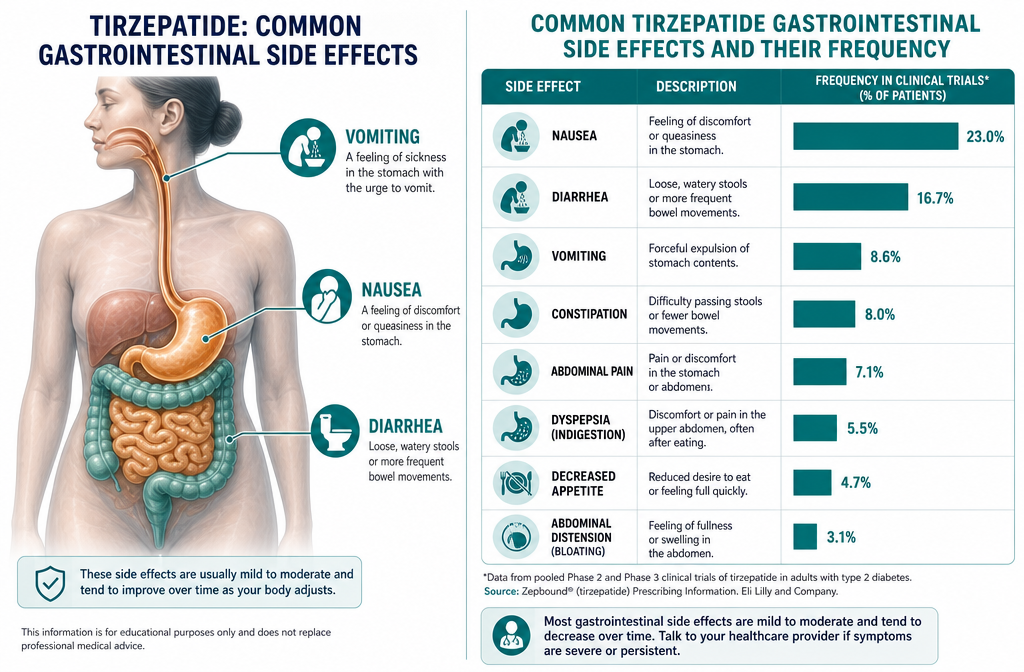
The most common tirzepatide side effects are digestive in nature. Nausea, diarrhoea, vomiting, constipation, and abdominal discomfort account for the majority of reported complaints, particularly in the first four to eight weeks of use or following a dose step-up.
According to clinical trial data, the breakdown looks like this [1]:
| Side Effect | Approximate Frequency |
|---|---|
| Nausea | Up to 18% |
| Diarrhoea | Up to 17% |
| Vomiting | Up to 12% |
| Constipation | Up to 11% |
| Dyspepsia (indigestion) | Up to 9% |
| Abdominal pain | Up to 9% |
| Injection site reactions | 1–10% |
| Fatigue | Reported; frequency varies [4] |
| Dizziness | Reported; frequency varies [4] |
Beyond the gut, some users experience injection site reactions — redness, bruising, swelling, or itching — in roughly 1 to 10% of cases [1]. Fatigue and dizziness are also reported, typically mild and self-resolving [4].
Common mistake: Many users assume these symptoms mean the medication isn’t working or that they should stop immediately. In most cases, the symptoms are a sign the body is adjusting. Speak to a healthcare provider before discontinuing.
How Bad Are the Gastrointestinal Side Effects with Tirzepatide (Mounjaro)?
For most people, GI side effects are uncomfortable but manageable — not severe enough to stop treatment. They tend to peak in the first few days after a new dose and then gradually fade over one to two weeks.
That said, a minority of users do experience more persistent or intense symptoms. Vomiting and diarrhoea, if prolonged, can lead to dehydration, which in turn raises the risk of acute kidney injury [2]. This is why hydration is consistently emphasised as a practical priority.
What makes GI symptoms worse:
- Eating large, fatty, or heavily spiced meals
- Eating too quickly
- Drinking alcohol
- Jumping dose levels too fast without a proper escalation schedule
What tends to help:
- Eating smaller portions, more slowly
- Choosing bland, low-fat foods during the adjustment period
- Staying well-hydrated throughout the day
- Timing injections so the peak effect doesn’t coincide with a main meal
If GI symptoms are severe, persistent beyond two weeks, or accompanied by signs of dehydration (dark urine, dizziness, reduced urination), contact a healthcare provider promptly.
For a closer look at how the starting dose behaves, the effects of Tirzepatide 2.5mg guide covers what to expect in the early weeks.
Can Tirzepatide Support Body Composition Management Without Serious Side Effects?
For the majority of users, yes — tirzepatide can support body composition management and appetite control without triggering serious adverse events. Clinical trials show that most people tolerate the medication well, with side effects being predominantly mild to moderate and temporary [1].
Serious side effects — pancreatitis, gallbladder disease, severe allergic reactions, significant hypoglycaemia — do occur, but they are relatively uncommon. The key is knowing the warning signs and acting on them quickly.
The realistic picture:
- Most users experience some GI discomfort, especially early on
- Serious adverse events are rare but real
- The risk-benefit balance for many people is favourable, particularly when used alongside a balanced diet and regular activity
For context on how tirzepatide supports appetite management and metabolic health, see the guide on Tirzepatide and exercise for a broader view of how lifestyle factors interact with the medication.
Are There Long-Term Risks of Taking Tirzepatide?
Long-term safety data for tirzepatide is still accumulating, as the medication has only been in widespread clinical use for a few years. Based on current evidence, the most discussed long-term concerns are thyroid health, cardiovascular effects, and antibody development.
Thyroid risk: Tirzepatide carries a boxed warning — the most serious type issued — for the potential risk of thyroid C-cell tumours, including medullary thyroid carcinoma (MTC). This warning is based on animal studies. It is not yet confirmed whether this risk applies to humans, but people with a personal or family history of MTC or Multiple Endocrine Neoplasia syndrome type 2 (MEN 2) should not use tirzepatide [2].
Important Medical Warning: Contact your healthcare provider promptly if you notice a lump or swelling in your neck, persistent hoarseness, difficulty swallowing, or shortness of breath. These symptoms may require medical evaluation. In animal studies, tirzepatide and similar medications were associated with thyroid tumours. It is not known whether TIRZEPARO® causes thyroid tumours or medullary thyroid carcinoma (MTC) in humans. You must be 18+ to use our service.
Cardiovascular effects: Tirzepatide has been associated with a mean heart rate increase of 2 to 4 beats per minute. Episodes of sinus tachycardia (a heart rate increase of at least 15 bpm above baseline) were reported in up to 23% of patients in trials. The clinical significance of this is currently uncertain [1].
Antibody development: Up to 51% of patients developed anti-drug antibodies during treatment. The long-term implications of this immune response are not yet fully understood [1].
Edge case: Patients with pre-existing kidney disease should be particularly cautious, as dehydration from GI side effects can accelerate kidney stress [2].
How Do Tirzepatide Side Effects Compare to Ozempic (Semaglutide)?
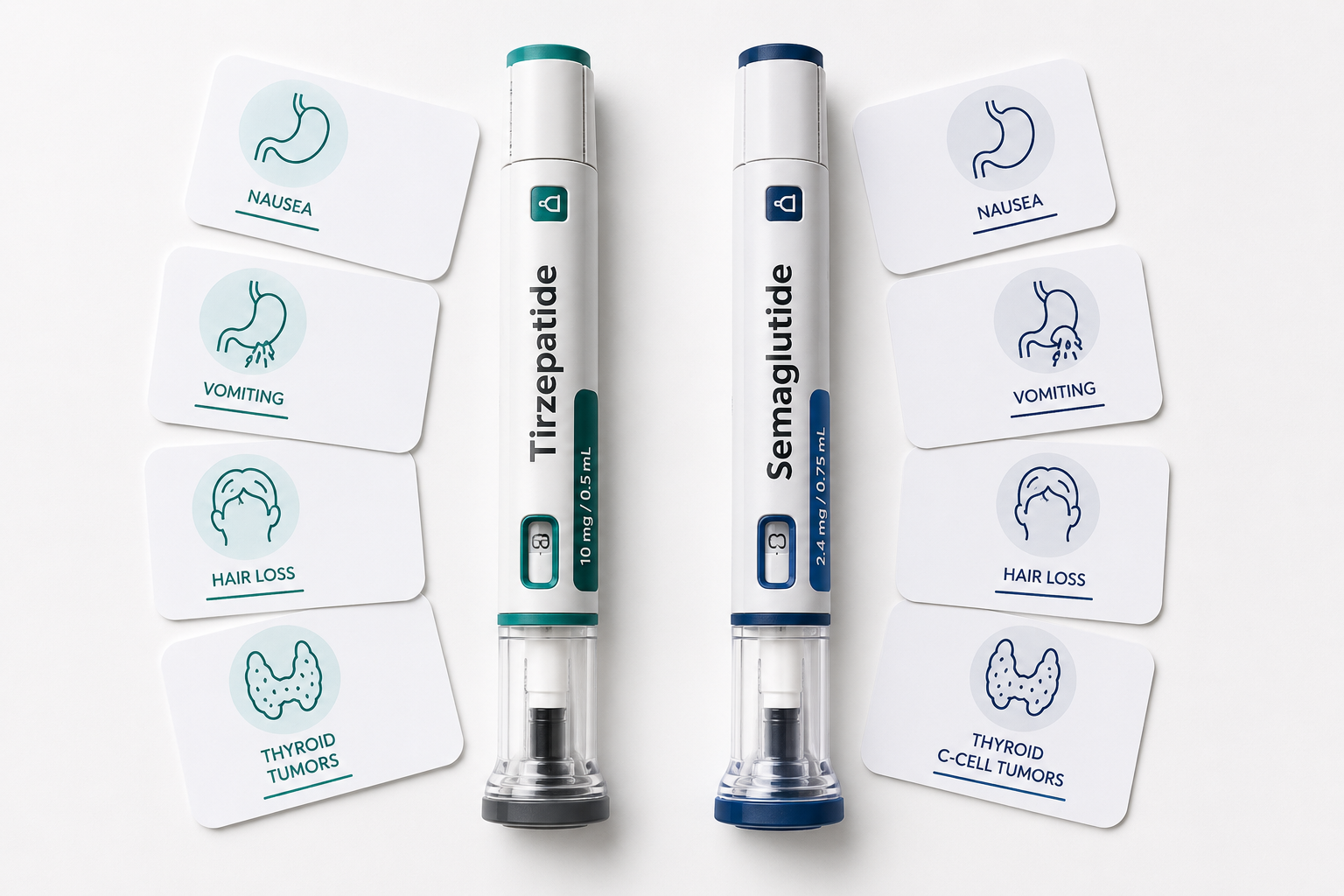
Both tirzepatide and semaglutide (the active ingredient in Ozempic and Wegovy) work on the GLP-1 receptor, so their side effect profiles overlap considerably. The key difference is that tirzepatide also activates the GIP receptor, making it a dual agonist — and this distinction may influence tolerability.
For a detailed head-to-head breakdown, the Tirzepatide vs Semaglutide comparison guide covers the differences in depth.
| Side Effect Category | Tirzepatide | Semaglutide (Ozempic/Wegovy) |
|---|---|---|
| Nausea | Up to 18% [1] | Broadly similar range |
| Diarrhoea | Up to 17% [1] | Broadly similar range |
| Vomiting | Up to 12% [1] | Broadly similar range |
| Constipation | Reported | Reported |
| Heart rate increase | 2–4 bpm mean [1] | Similar reported |
| Thyroid C-cell warning | Yes (boxed) [2] | Yes (boxed) |
| Pancreatitis risk | Yes [2] | Yes |
Choose tirzepatide if: You’ve tried semaglutide and found the appetite management insufficient, or if your prescriber has identified a clinical reason for the dual-mechanism approach.
Choose semaglutide if: You have a documented intolerance to tirzepatide specifically, or if cost and availability are the primary deciding factors.
Both medications carry similar serious risk warnings. Neither is categorically “safer” — individual response varies.
What Side Effects Are Different for Diabetic Users vs. Those on a Slimming Journey?
The core side effect profile is largely the same regardless of why someone is taking tirzepatide. However, diabetic users face one additional and significant risk: hypoglycaemia (low blood sugar).
When tirzepatide is used alongside insulin or sulfonylureas (common diabetes medications), the combined glucose-lowering effect can push blood sugar too low. Clinical trials found hypoglycaemia in up to 13% of patients in this situation, with severe cases in up to 6% [1].
Signs of hypoglycaemia to watch for:
- Shakiness or trembling
- Sweating
- Confusion or difficulty concentrating
- Rapid heartbeat
- Feeling faint or dizzy
People using tirzepatide purely for body composition management (without diabetes medications) have a much lower hypoglycaemia risk, as tirzepatide’s glucose-lowering effect is glucose-dependent — meaning it works more gently when blood sugar is already in a normal range.
Practical note for diabetic users: Discuss dose adjustments to insulin or sulfonylureas with your prescriber before starting tirzepatide. Do not self-adjust diabetes medications.
Who Should Not Take Tirzepatide?
Tirzepatide is not suitable for everyone. Certain medical histories and conditions make the risks outweigh the potential benefits.
Do not use tirzepatide if you have:
- A personal or family history of medullary thyroid carcinoma (MTC)
- Multiple Endocrine Neoplasia syndrome type 2 (MEN 2)
- A history of serious allergic reactions to tirzepatide or any of its ingredients
- A history of pancreatitis (discuss carefully with a prescriber)
- Severe gastrointestinal disease, such as gastroparesis
Use with caution if you have:
- Kidney disease (dehydration risk from GI side effects)
- Gallbladder disease or a history of gallstones
- Diabetic retinopathy (rapid glucose changes can temporarily worsen this)
- Cardiovascular conditions where a modest heart rate increase is clinically relevant
Age restriction: Tirzepatide is for adults aged 18 and over.
If you’re unsure whether tirzepatide is appropriate for your situation, taking the eligibility test is a useful starting point before proceeding.
What Are the Rare but Serious Side Effects to Watch For?
Rare but serious tirzepatide side effects require immediate medical attention. Knowing the warning signs can make a meaningful difference in outcomes.
Pancreatitis: Sudden, severe abdominal pain — often radiating to the back — with or without vomiting is the hallmark symptom. Stop the medication and seek emergency care immediately [2].
Gallbladder disease: Tirzepatide has been linked to gallstones (cholelithiasis) and gallbladder inflammation (cholecystitis). Symptoms include severe upper-right abdominal pain, fever, nausea, and vomiting [2].
Acute kidney injury: Usually a downstream consequence of severe dehydration from prolonged vomiting or diarrhoea. Signs include significantly reduced urination, swelling in the legs or ankles, and extreme fatigue [2].
Severe allergic reactions: Anaphylaxis and angioedema have been reported. Symptoms include facial or throat swelling, difficulty breathing, rapid heartbeat, and hives. Call emergency services immediately [2].
Thyroid tumours: As noted, a boxed warning exists. Monitor for neck lumps, persistent hoarseness, difficulty swallowing, or unexplained shortness of breath [2].
Diabetic retinopathy complications: Rapid changes in blood glucose control can temporarily worsen diabetic eye disease in some patients.
How to Manage Nausea and Stomach Issues with Tirzepatide
Nausea and stomach discomfort are the side effects most likely to affect day-to-day life, but they are also the most manageable with the right approach. Most users find symptoms become significantly more tolerable within two to four weeks of a stable dose.
Practical strategies that work:
- Eat smaller meals — Large portions stretch the stomach and worsen nausea. Aim for smaller, more frequent meals.
- Slow down at mealtimes — Eating quickly increases discomfort. Take your time.
- Avoid trigger foods — Fatty, greasy, heavily spiced, or very sweet foods are the most common culprits.
- Stay hydrated — Sip water consistently throughout the day. Don’t wait until you feel thirsty.
- Time your injection — Some users find injecting in the evening means peak side effects occur during sleep.
- Avoid alcohol — Alcohol irritates the stomach lining and amplifies nausea.
- Don’t lie down immediately after eating — Give your digestive system 30 to 60 minutes upright after meals.
For users stepping up to a higher dose, reviewing what to expect at each stage — such as the effects of Tirzepatide 5mg or the effects of Tirzepatide 7.5mg — can help set realistic expectations.
Does Tirzepatide Cause Hair Loss or Other Unexpected Side Effects?
Hair thinning (alopecia) has been reported by some tirzepatide users, and it’s one of the more surprising and distressing side effects people mention [3]. The current evidence suggests this is likely not caused directly by the medication itself, but rather by the physical stress of rapid body composition changes — a phenomenon known as telogen effluvium, where significant metabolic shifts push hair follicles into a resting phase.
What this means in practice:
- Hair thinning is generally temporary
- It typically begins two to four months after significant body composition changes start
- Hair usually regrows once the body stabilises
- Ensuring adequate protein intake and micronutrient levels (particularly iron, zinc, and biotin) may help reduce the effect
Other unexpected side effects that users report:
- Reduced appetite for alcohol — Some users notice a decreased desire for alcohol, possibly linked to GLP-1 receptor activity in the brain
- Acid reflux or heartburn — Slowed gastric emptying can increase reflux symptoms
- Burping — A commonly reported but rarely discussed symptom
- Mood changes — A small number of users report changes in mood; the mechanism is not fully established
Are Tirzepatide Side Effects Worse at Higher Dosages?
Yes, side effect intensity generally increases with dose, which is why the standard escalation schedule starts at 2.5mg and increases gradually over several months. The dose-dependent nature of GI side effects is well-documented [1].
The standard escalation schedule typically looks like this:
- 2.5mg — Starting dose, four weeks minimum
- 5mg — Step-up dose
- 7.5mg — Continued escalation
- 10mg — Maintenance range
- 12.5mg — Higher maintenance
- 15mg — Maximum dose
Each step-up carries a temporary increase in GI symptoms as the body adjusts. Users who rush the escalation or skip steps tend to experience more severe and prolonged discomfort.
For those considering higher doses, the effects of Tirzepatide 10mg guide provides specific information on what to expect at that stage.
Decision rule: If side effects at a current dose haven’t settled after four weeks, it’s generally not the right time to increase. Staying at the current dose longer is a legitimate and sensible strategy.
What Side Effects Might Mean You Need to Stop Tirzepatide?
Most side effects don’t require stopping the medication — but some do. Knowing the difference is important.
Stop immediately and seek emergency care for:
- Severe abdominal pain (possible pancreatitis) [2]
- Signs of a serious allergic reaction: throat swelling, difficulty breathing, rapid heartbeat [2]
- Symptoms of severe hypoglycaemia that don’t resolve with glucose intake
- Signs of acute kidney injury: dramatically reduced urination, severe swelling
Contact a healthcare provider promptly for:
- A lump or swelling in the neck, hoarseness, or difficulty swallowing (thyroid warning signs) [2]
- Persistent vomiting or diarrhoea lasting more than 48 hours
- Signs of gallbladder problems: severe upper-right abdominal pain, fever, jaundice
- Injection site reactions that worsen rather than improve
You do not need to stop for:
- Mild nausea in the first one to two weeks of a new dose
- Temporary fatigue or dizziness
- Mild constipation or loose stools that are manageable
How Do Age and Gender Affect Tirzepatide Side Effects?
Age and sex can influence how tirzepatide is tolerated, though the medication’s core side effect profile remains consistent across groups.
Older adults (65+):
- More susceptible to dehydration from GI side effects, increasing kidney injury risk
- May experience more pronounced dizziness, raising fall risk
- Slower metabolic adaptation may mean GI symptoms persist slightly longer
- Dose escalation should generally be more cautious and gradual
Women:
- Clinical trial data and post-market reports suggest women tend to report GI side effects — particularly nausea — at slightly higher rates than men
- This pattern is consistent with other GLP-1 receptor agonists and may relate to differences in gastric motility
Younger adults:
- Generally tolerate the medication well
- May escalate doses more quickly, which can increase the risk of GI side effects if not managed carefully
Practical note: These are tendencies, not rules. Individual response varies significantly. Regardless of age or sex, the same principles apply: start low, escalate slowly, stay hydrated, and communicate openly with a healthcare provider.
Frequently Asked Questions (FAQ)
Q: How long do tirzepatide side effects last?
A: Most GI side effects — nausea, diarrhoea, constipation — are temporary. They typically peak in the first one to two weeks after starting or increasing a dose and ease significantly within four weeks as the body adjusts [1].
Q: Is nausea from tirzepatide constant or does it come and go?
A: For most users, nausea is intermittent rather than constant. It often peaks in the 24 to 48 hours following an injection and then subsides. Eating smaller, bland meals during this window helps considerably.
Q: Can tirzepatide cause heart problems?
A: Tirzepatide has been associated with a modest heart rate increase (2 to 4 bpm on average) and episodes of sinus tachycardia in up to 23% of patients. The long-term cardiovascular significance of this is currently under investigation [1]. People with existing heart conditions should discuss this with a cardiologist before starting.
Q: Does tirzepatide affect the kidneys?
A: Tirzepatide doesn’t directly damage the kidneys, but severe dehydration from prolonged vomiting or diarrhoea can cause acute kidney injury. Staying well-hydrated is the key preventive measure [2].
Q: Can I take anti-nausea medication alongside tirzepatide?
A: Some healthcare providers do recommend short-term anti-nausea medication during the adjustment period. Do not self-prescribe — discuss this with a prescriber who is aware of your full medication list.
Q: Is hair loss from tirzepatide permanent?
A: In most cases, no. Hair thinning associated with tirzepatide use is generally temporary and linked to rapid body composition changes rather than the drug itself. Hair typically regrows once the body stabilises [3].
Q: What should I eat to reduce tirzepatide side effects?
A: Bland, low-fat, easily digestible foods work best during the adjustment period. Think plain rice, boiled chicken, toast, bananas, and cooked vegetables. Avoid fatty, spicy, or heavily processed foods.
Q: Are tirzepatide side effects different from Mounjaro side effects?
A: No — Mounjaro is the branded version of tirzepatide. The active ingredient is identical, so the side effect profile is the same.
Q: Can tirzepatide cause anxiety or depression?
A: Mood changes have been reported by a small number of users, but a direct causal link has not been firmly established. If you notice significant changes in mood or mental health, speak to a healthcare provider.
Q: Is it safe to exercise while experiencing tirzepatide side effects?
A: Light to moderate exercise is generally fine and can actually help with some GI symptoms. Avoid intense exercise during periods of active nausea, vomiting, or dizziness, as this can worsen dehydration.
Conclusion
Tirzepatide side effects are real, but for the vast majority of users, they are manageable and temporary. The most common complaints — nausea, diarrhoea, and constipation — typically ease within a few weeks as the body adapts, particularly when the dose escalation schedule is followed correctly.
Serious side effects are rare but demand attention. Knowing the warning signs of pancreatitis, gallbladder disease, thyroid concerns, and severe allergic reactions could be genuinely important.
Actionable next steps:
- Start at the lowest dose (2.5mg) and follow a gradual escalation schedule — don’t rush
- Adjust your eating habits during the adjustment period: smaller meals, bland foods, consistent hydration
- Know the red flags — severe abdominal pain, throat swelling, neck lumps — and act on them immediately
- Talk to a healthcare provider before starting if you have diabetes, kidney disease, a thyroid history, or gallbladder issues
- Check the eligibility test to assess your suitability before ordering
- Review dosage-specific guides — such as Tirzepatide 5mg effects — to understand what each stage of your journey may involve
For transparent pricing and straightforward access to tirzepatide through trusted EU partners, the Tirzepatide UK pricing guide provides a clear overview of costs at every dose level.
References
[1] Tirzepatide Side Effects – https://www.drugs.com/sfx/tirzepatide-side-effects.html?utm_source=openai
[2] Tirzepatide Injection – https://my.clevelandclinic.org/health/drugs/23789-tirzepatide-injection?utm_source=openai
[3] Tirzepatide Side Effects (Peptide Pedia) – https://peptidepedia.org/weight-loss/tirzepatide/side-effects?utm_source=openai
[4] Zepbound Side Effects – https://www.healthline.com/health/drugs/zepbound-side-effects?utm_source=openai