
When Should I Move Up to Tirzepatide 5mg
Quick Answer
You should move up to tirzepatide 5mg after completing at least four full weeks on the 2.5mg starting dose, provided you are tolerating it reasonably well and your healthcare provider agrees. The 2.5mg dose is designed as a starter dose to help your body adjust to the medication, while 5mg represents the first standard therapeutic step for both metabolic health support and body composition management. Moving too soon increases the risk of gastrointestinal side effects, while staying longer at 2.5mg may be appropriate if you are still experiencing significant nausea or other tolerance issues.
Key Takeaways
- The standard escalation schedule is four weeks at 2.5mg before moving to 5mg, not sooner.
- You should only increase your dose if you are tolerating the current dose reasonably well.
- Tirzepatide 5mg is the first maintenance-level dose where many people notice more significant appetite management and body composition changes.
- Gastrointestinal side effects like nausea, vomiting, and diarrhea are the main reasons to delay moving up.
- Your healthcare provider should approve any dose increase based on your individual response and tolerance.
- Skipping 2.5mg and starting directly at 5mg is not recommended because it significantly increases side effect risk.
- If 2.5mg is working well for your goals and you are tolerating it, you may choose to stay at that dose longer.
- The maximum approved dose is 15mg weekly, so 5mg is an intermediate step, not the final target for everyone.
- Dose increases should always be in 2.5mg increments at four-week intervals.
- Individual factors like age, other medications, and health conditions may influence when you should move up.
How Long Should I Stay on Tirzepatide 2.5mg Before Increasing
You should stay on tirzepatide 2.5mg for a minimum of four weeks before increasing to 5mg. This four-week period allows your body to adapt to the medication’s effects on your GIP and GLP-1 receptors, which regulate appetite and metabolic function. The 2.5mg dose is specifically designed as a starter dose, not a long-term maintenance dose for most people.[1][4]
The four-week minimum is based on clinical trial data and FDA-approved dosing schedules for both Mounjaro (for type 2 diabetes) and Zepbound (for body composition management). This timeline helps minimize gastrointestinal side effects while allowing the medication to begin working on appetite regulation and metabolic support.[3][4]
Why the four-week timeline matters:
- Your digestive system needs time to adjust to how tirzepatide slows gastric emptying
- Hormone receptor sensitivity changes gradually, not immediately
- Side effects typically peak in the first few days after starting, then improve
- Your body’s metabolic response becomes more predictable after several weeks
Some people may benefit from staying at 2.5mg longer than four weeks if they are experiencing persistent nausea, vomiting, or other significant side effects. There is no medical requirement to move up exactly at the four-week mark if your body is still adjusting. However, staying at 2.5mg indefinitely may limit the full metabolic health benefits that higher doses can provide for many people.
If you are tolerating 2.5mg well and seeing good results after four weeks, your healthcare provider may still recommend moving to 5mg because clinical evidence shows that higher doses generally produce more significant improvements in body composition and metabolic markers.[1][2]
What Are the Signs I’m Ready to Move Up to 5mg Tirzepatide
You are ready to move up to tirzepatide 5mg when you have completed at least four weeks at 2.5mg, your side effects have stabilized or resolved, and you can eat and drink normally without significant nausea or digestive discomfort. The clearest sign of readiness is that you are no longer experiencing the initial adjustment symptoms that are common in the first week or two.[3][5]
Key readiness indicators:
- You have been on 2.5mg for at least four full weeks
- Nausea has either resolved completely or is mild and manageable
- You are not experiencing frequent vomiting or severe diarrhea
- Your appetite has decreased but you can still eat regular, balanced meals
- You are staying hydrated without difficulty
- You have not missed any doses due to side effects
- Your healthcare provider has reviewed your progress and approved the increase
Additional positive signs:
- Your body composition progress has plateaued at 2.5mg after the initial response
- You are looking for additional appetite management support
- You have established a consistent injection routine and timing
- You understand how to manage minor side effects if they occur
If you are still experiencing significant nausea, frequent vomiting, or severe gastrointestinal symptoms at the four-week mark, you are not yet ready to move up. In this case, staying at 2.5mg for another two to four weeks is appropriate. Some people need six to eight weeks at the starter dose before they are ready for 5mg.[5][6]
It is also important to consider your overall goals. If you are achieving your body composition targets at 2.5mg and tolerating it well, you may choose to stay at that dose rather than automatically escalating. However, most people will eventually need higher doses to continue seeing progress and to reach the full therapeutic benefits that tirzepatide can provide.[2][4]
Tirzepatide 2.5mg vs 5mg: Body Composition Results
Tirzepatide 5mg typically produces more significant body composition changes than 2.5mg because it is the first standard therapeutic dose rather than a starter dose. Clinical data shows that while 2.5mg begins to reduce appetite and support metabolic health, 5mg delivers more consistent and measurable improvements in body transformation goals for most people.[1][2]
In clinical trials for body composition management, participants who moved from 2.5mg to 5mg generally experienced continued progress in their slimming journey, with 5mg producing approximately 15-20% more body composition improvement compared to staying at 2.5mg long-term. However, individual results vary significantly based on diet, exercise, starting metabolic health, and genetic factors.[2][3]
Comparison of typical outcomes:
| Dose | Average Body Composition Change | Appetite Suppression | Metabolic Benefits |
|---|---|---|---|
| 2.5mg | Initial response, 5-8% improvement over 12 weeks | Moderate, noticeable reduction | Beginning metabolic adaptation |
| 5mg | More significant, 10-15% improvement over 12 weeks | Strong, consistent appetite control | Enhanced metabolic function |
The difference between 2.5mg and 5mg is not just about the magnitude of body composition changes. Many people report that 5mg provides more consistent appetite control throughout the week, making it easier to maintain a balanced diet and avoid overeating. The feeling of fullness lasts longer, and cravings for high-calorie foods decrease more noticeably.[3][4]
It is important to note that 2.5mg is designed as a starting dose to help your body adjust, not as a long-term maintenance dose for most people. While some individuals may achieve their goals at 2.5mg, the majority will need to progress to 5mg or higher to experience the full range of metabolic health benefits that tirzepatide can provide.[1][5]
For those concerned about affordability, Tirzeparo offers tirzepatide 5mg at £179, making it accessible to continue your body transformation journey without the high costs of traditional UK clinics.
Is It Safe to Skip Tirzepatide 2.5mg and Go Straight to 5mg
No, it is not safe or recommended to skip tirzepatide 2.5mg and start directly at 5mg. The 2.5mg starter dose is a critical part of the titration schedule designed to minimize gastrointestinal side effects and allow your body to adapt gradually to the medication’s effects on your digestive system and metabolic hormones.[4][5]
Starting at 5mg without the 2.5mg lead-in significantly increases your risk of severe nausea, vomiting, diarrhea, and other gastrointestinal problems. These side effects can be intense enough to prevent you from continuing the medication or to cause dehydration and nutritional deficiencies. The four-week starter period at 2.5mg is not optional; it is a medically necessary safety step.[3][4]
Risks of skipping 2.5mg:
- Severe nausea and vomiting that may require medical intervention
- Increased risk of dehydration and electrolyte imbalances
- Higher likelihood of discontinuing treatment due to intolerable side effects
- Potential for more serious gastrointestinal complications like gastroparesis symptoms
- Greater difficulty establishing a sustainable routine with the medication
The FDA-approved dosing schedule for both Mounjaro and Zepbound explicitly requires starting at 2.5mg for at least four weeks before any dose increase. This schedule is based on extensive clinical trial data showing that gradual titration is essential for both safety and long-term adherence.[4][5]
Some people may ask their healthcare provider to skip 2.5mg because they are eager to see faster results or because they have previously used similar medications like semaglutide. However, even if you have used other GLP-1 medications before, tirzepatide’s dual GIP and GLP-1 mechanism works differently, and your body still needs the adjustment period that 2.5mg provides.[3][6]
If you are concerned about the time it takes to reach higher doses, remember that the slow titration schedule actually improves your chances of long-term success by helping you build tolerance and establish sustainable habits. Rushing the process by skipping 2.5mg is likely to backfire and delay your progress rather than accelerate it.
Side Effects When Increasing Tirzepatide from 2.5 to 5mg
When you increase from tirzepatide 2.5mg to 5mg, you may experience a temporary return or worsening of gastrointestinal side effects, particularly nausea, reduced appetite, and changes in bowel movements. These effects are usually mild to moderate if you have properly completed the four-week starter period, and they typically improve within a few days to two weeks as your body adjusts to the higher dose.[3][4]
The most common side effects when moving to 5mg include nausea (which affects approximately 20-30% of people at this dose increase), occasional vomiting, diarrhea, constipation, and abdominal discomfort. These symptoms are generally less severe than what you may have experienced when first starting 2.5mg, because your body has already begun adapting to the medication’s mechanism.[3][4]
Common side effects at 5mg:
- Nausea, especially in the first 2-3 days after the dose increase
- Decreased appetite, often more pronounced than at 2.5mg
- Feeling full very quickly when eating
- Mild to moderate abdominal discomfort or bloating
- Changes in bowel habits (diarrhea or constipation)
- Occasional heartburn or acid reflux
- Fatigue or low energy in the first week
Less common but important side effects:
- Persistent vomiting that prevents adequate hydration
- Severe abdominal pain
- Signs of gallbladder problems (pain in upper right abdomen)
- Rapid heart rate or dizziness
- Severe constipation lasting more than a few days
Most people find that side effects peak within 24-72 hours after their first 5mg injection and then gradually improve over the following week. By the time you take your second 5mg dose, your body has usually adapted, and side effects are milder or absent.[4][6]
To minimize side effects when moving to 5mg, eat smaller, more frequent meals, avoid high-fat and greasy foods, stay well-hydrated, and consider taking your injection in the evening so that peak nausea occurs while you are sleeping. If you experience severe or persistent side effects, contact your healthcare provider before taking your next dose.
For more detailed guidance on managing nausea and other digestive symptoms, see our article on tirzepatide nausea and vomiting.
My Doctor Wants Me to Stay on 2.5mg Longer: Should I Push for 5mg
If your doctor wants you to stay on tirzepatide 2.5mg longer than four weeks, there is likely a valid medical reason based on your individual response, tolerance, or health status. In most cases, you should follow your healthcare provider’s recommendation rather than pushing to move up to 5mg, because they have access to your complete medical history and can assess factors that you may not be aware of.[5][6]
Common reasons a healthcare provider may recommend staying at 2.5mg longer include persistent gastrointestinal side effects, concerns about dehydration or nutritional intake, other medications that may interact, underlying health conditions that require a more cautious approach, or simply that you are achieving good results at the current dose and there is no urgent need to escalate.[4][5]
When it may be appropriate to stay at 2.5mg longer:
- You are still experiencing moderate to severe nausea or vomiting
- You have had difficulty maintaining adequate hydration or nutrition
- You have a history of gastrointestinal disorders like gastroparesis or severe GERD
- You are taking other medications that affect digestion or metabolism
- You are older or have multiple chronic health conditions
- You are achieving your body composition goals at the current dose
- You have experienced unusual or concerning side effects
When it may be reasonable to discuss moving to 5mg:
- You have completed six to eight weeks at 2.5mg with minimal side effects
- Your side effects have completely resolved
- Your body composition progress has plateaued
- You are tolerating the medication very well and feel ready for the next step
- You have been consistent with diet and exercise but need additional support
If you believe you are ready to move to 5mg but your doctor wants you to wait, have an open conversation about the specific reasons for the delay. Ask what criteria they are using to determine readiness and what timeline they have in mind. In most cases, waiting an additional two to four weeks is a reasonable compromise that prioritizes safety while still allowing you to progress.[5][6]
Remember that the goal is not to reach higher doses as quickly as possible, but to find the dose that provides the best balance of effectiveness and tolerability for your individual situation. Your healthcare provider’s conservative approach may actually improve your long-term success by ensuring you build a solid foundation at each dose level.
What Happens If I Move to Tirzepatide 5mg Too Soon
If you move to tirzepatide 5mg too soon (before completing at least four weeks at 2.5mg or while still experiencing significant side effects), you significantly increase your risk of severe gastrointestinal problems that may force you to stop the medication or reduce your dose back down. Moving too quickly undermines the gradual titration schedule that is designed to help your body adapt safely.[3][4]
The most immediate consequence of escalating too soon is intense nausea and vomiting that can lead to dehydration, electrolyte imbalances, and inability to maintain adequate nutrition. Some people who move up too quickly experience such severe symptoms that they cannot continue with tirzepatide at all, effectively ending their treatment before they have had a chance to experience the full benefits.[4][5]
Potential consequences of moving to 5mg too soon:
- Severe, persistent nausea that interferes with daily activities
- Frequent vomiting that prevents adequate hydration
- Dehydration requiring medical intervention or IV fluids
- Electrolyte imbalances that can affect heart rhythm and muscle function
- Inability to eat enough to meet basic nutritional needs
- Extreme fatigue and weakness
- Worsening of pre-existing gastrointestinal conditions
- Need to reduce dose back to 2.5mg or stop treatment entirely
Beyond the immediate physical symptoms, moving too soon can also create psychological barriers to continuing treatment. If you have a very negative experience with severe side effects, you may develop anxiety about taking your injections or lose confidence in the medication’s benefits. This can undermine your long-term adherence and success.[5][6]
Another risk is that you may not give your body enough time to adapt at each dose level, which can lead to a pattern of constantly struggling with side effects as you continue to escalate. People who rush through the titration schedule often find that they never fully adjust to the medication and experience ongoing discomfort at every dose increase.[4][6]
If you have already moved to 5mg too soon and are experiencing severe side effects, contact your healthcare provider immediately. They may recommend reducing back to 2.5mg for another few weeks before trying 5mg again. This is not a failure; it is a sensible adjustment that prioritizes your safety and long-term success.
The standard tirzepatide dosage chart provides clear guidance on the recommended escalation timeline to help you avoid moving too quickly.
Tirzepatide Dose Escalation Schedule Recommended by Doctors
The standard tirzepatide dose escalation schedule recommended by doctors and supported by FDA-approved prescribing information is to start at 2.5mg weekly for four weeks, then increase to 5mg weekly for at least four weeks, followed by further increases of 2.5mg at four-week intervals if additional metabolic support is needed, up to a maximum of 15mg weekly.[1][4][5]
This gradual titration schedule is the same whether you are using tirzepatide for type 2 diabetes management (Mounjaro) or for body composition management (Zepbound). The four-week intervals are not arbitrary; they are based on clinical trial data showing that this timeline optimizes the balance between effectiveness and tolerability.[3][4]
Standard escalation schedule:
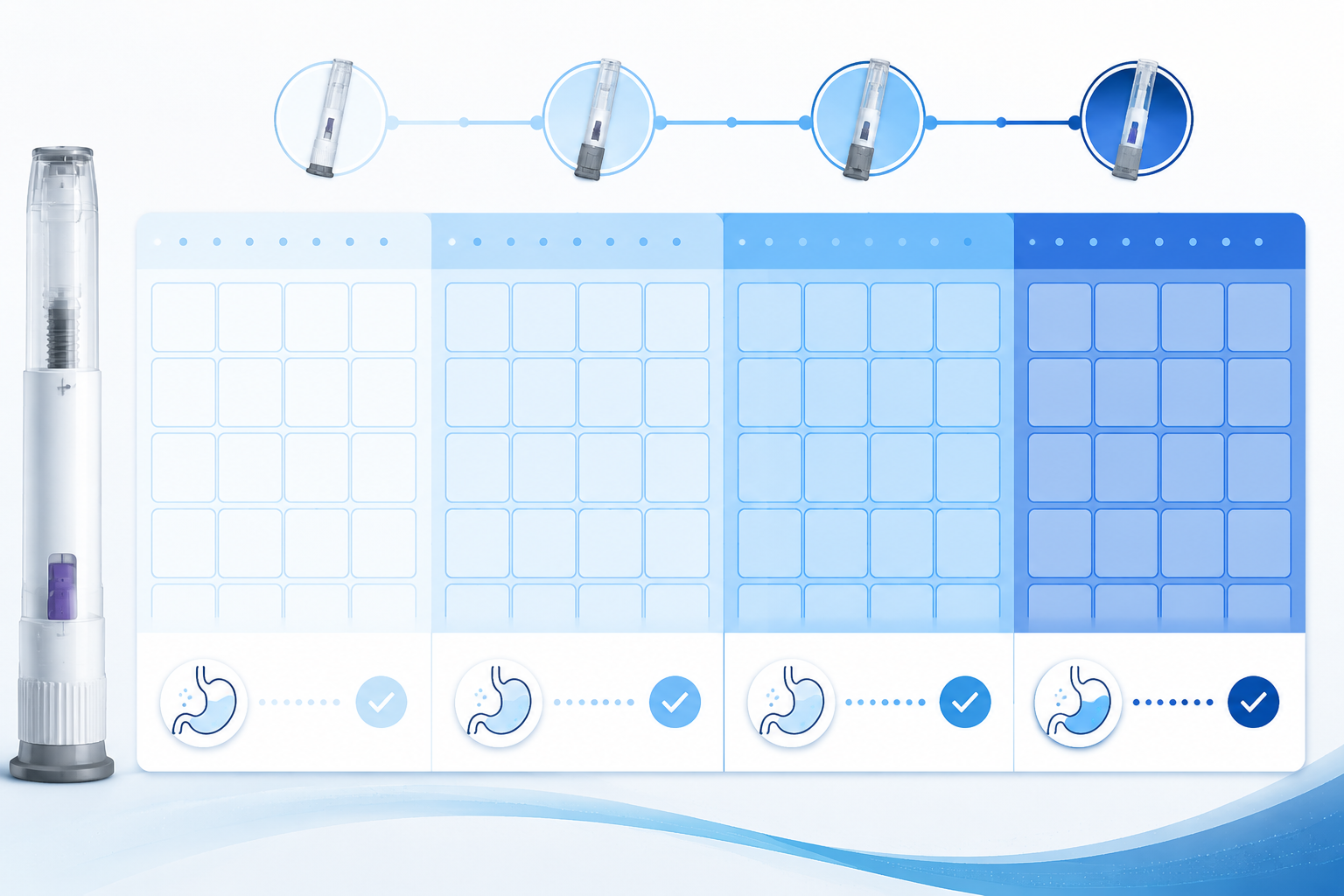
- Weeks 1-4: 2.5mg once weekly (starter dose)
- Weeks 5-8: 5mg once weekly (first therapeutic dose)
- Weeks 9-12: 7.5mg once weekly (if additional support needed)
- Weeks 13-16: 10mg once weekly (if additional support needed)
- Weeks 17-20: 12.5mg once weekly (if additional support needed)
- Week 21+: 15mg once weekly (maximum dose)
Not everyone needs to progress all the way to 15mg. Many people find their optimal maintenance dose at 5mg, 7.5mg, or 10mg, where they achieve their body composition goals while maintaining good tolerability. The decision to continue escalating should be based on your individual response, side effects, and how close you are to your metabolic health targets.[2][4]
Factors that influence your escalation schedule:
- How well you tolerate each dose
- The rate of your body composition progress
- Your metabolic health markers (blood sugar, blood pressure, etc.)
- Your age and overall health status
- Other medications you are taking
- Your personal goals and timeline
Some healthcare providers may recommend staying at a particular dose for longer than four weeks if you are still experiencing side effects or if you are achieving excellent results at that dose. This individualized approach is appropriate and should be respected, even if it differs from the standard schedule.[5][6]
The key principle is that dose increases should always be in 2.5mg increments at a minimum of four-week intervals, never larger jumps or shorter timeframes. This gradual approach is essential for safety and long-term adherence.[4][5]
For more information about higher doses in the escalation schedule, see our guide on what are the effects of tirzepatide 7.5mg.
Can I Stay on 2.5mg Tirzepatide If It’s Working Well
Yes, you can stay on tirzepatide 2.5mg if it is working well for your body composition goals and you are tolerating it without significant side effects. While 2.5mg is designed as a starter dose, there is no medical requirement to increase if you are achieving satisfactory results and your healthcare provider agrees that staying at this dose is appropriate for your situation.[4][5]
However, it is important to understand that 2.5mg is below the standard therapeutic dose range for most people, and clinical evidence suggests that higher doses generally provide more significant metabolic health benefits and body composition improvements. Staying at 2.5mg long-term may limit your progress compared to what you could achieve at 5mg or higher.[1][2]
Reasons you might stay at 2.5mg:
- You are achieving your body composition goals at this dose
- You have a history of severe medication sensitivity
- You are older or have multiple health conditions that warrant a cautious approach
- You are experiencing good appetite control and metabolic benefits
- You have concerns about side effects at higher doses
- Cost considerations make a lower dose more sustainable long-term
Reasons to consider moving to 5mg even if 2.5mg is working:
- Your progress has plateaued after the initial response
- You want more consistent appetite control throughout the week
- Your metabolic health markers could benefit from additional support
- Clinical evidence shows higher doses provide greater long-term benefits
- You have tolerated 2.5mg very well with minimal side effects
Most healthcare providers will recommend at least trying 5mg after completing the four-week starter period, because the majority of people tolerate it well and experience enhanced benefits. However, if you have specific concerns or preferences, discuss them openly with your provider. The decision should be individualized based on your unique situation.[5][6]
If you do choose to stay at 2.5mg, plan to reassess your progress regularly with your healthcare provider. If your body composition progress stalls or your metabolic health markers are not improving as expected, moving to 5mg may become necessary to continue seeing benefits.
For those who are achieving good results at 2.5mg, Tirzeparo’s 2.5mg dose at £169 provides an affordable option to maintain your current regimen without the high costs of traditional clinics.

How Much More Body Composition Change with Tirzepatide 5mg Compared to 2.5mg
Tirzepatide 5mg typically produces approximately 50-70% more body composition improvement compared to staying at 2.5mg long-term, based on clinical trial data comparing different dose levels. While individual results vary significantly, the step from 2.5mg to 5mg represents the transition from a starter dose to a true therapeutic dose, which is reflected in measurably greater metabolic effects.[1][2]
In clinical trials for body composition management, participants who escalated to 5mg after the starter period experienced continued progress, while those who remained at 2.5mg often saw their results plateau after the initial 8-12 weeks. The 5mg dose provides more consistent appetite suppression, better metabolic hormone regulation, and enhanced effects on body composition over time.[2][3]
Approximate body composition outcomes over 24 weeks:
- Staying at 2.5mg: 8-12% improvement from baseline
- Moving to 5mg after 4 weeks: 12-18% improvement from baseline
- The difference: approximately 4-6 percentage points additional improvement
These numbers are averages from clinical trials and should not be interpreted as guaranteed results for any individual. Your actual outcomes will depend on many factors including your starting metabolic health, diet quality, exercise habits, sleep, stress levels, and genetic factors.[2][4]
The difference between 2.5mg and 5mg is not just about the total amount of body composition change, but also about the quality of the experience. Many people report that 5mg provides more consistent appetite control throughout the week, making it easier to stick to a balanced diet without feeling deprived or struggling with cravings. This improved consistency can make the difference between short-term results and long-term sustainable transformation.[3][6]
It is also worth noting that 5mg is often just an intermediate step for many people. Clinical data shows that doses of 10mg and 15mg can provide even greater benefits for those who need additional metabolic support. The goal is to find the dose that provides the best balance of effectiveness and tolerability for your individual situation.[1][4]
If you are considering whether to move from 2.5mg to 5mg, discuss your specific goals and expectations with your healthcare provider. They can help you understand what level of additional benefit you might realistically expect and whether the potential for enhanced results justifies moving to the higher dose.
Common Mistakes When Titrating Up Tirzepatide Doses
The most common mistake when titrating up tirzepatide doses is moving too quickly without allowing adequate time for your body to adjust at each dose level. Rushing through the escalation schedule significantly increases side effects and reduces your chances of long-term success with the medication.[4][5]
Another frequent error is increasing your dose while still experiencing significant side effects from the current dose. If you are still struggling with nausea, vomiting, or other gastrointestinal problems, moving to a higher dose will almost certainly make these symptoms worse rather than better. The appropriate response to persistent side effects is to stay at your current dose longer, not to escalate.[3][5]
Common titration mistakes:
- Moving from 2.5mg to 5mg before completing four full weeks
- Increasing dose while still experiencing moderate to severe nausea
- Skipping the 2.5mg starter dose entirely
- Making dose increases larger than 2.5mg at a time
- Increasing more frequently than every four weeks
- Not communicating with your healthcare provider before dose changes
- Expecting side effects to disappear immediately at higher doses
- Comparing your progress to others and rushing to “catch up”
Some people make the mistake of thinking that higher doses will automatically produce better results, so they push to escalate as quickly as possible. In reality, the optimal dose for you is the one that provides good metabolic support and body composition benefits while remaining tolerable. For some people, that may be 5mg; for others, it may be 10mg or 15mg. There is no universal “best” dose.[2][4]
Another error is not adjusting your diet and lifestyle habits as you increase doses. Higher doses of tirzepatide provide stronger appetite suppression, which means you need to be more intentional about eating enough protein, staying hydrated, and maintaining balanced nutrition. Some people inadvertently under-eat at higher doses, which can lead to muscle loss, fatigue, and other problems.[6]
Best practices for successful titration:
- Follow the four-week minimum at each dose level
- Only increase if you are tolerating the current dose well
- Communicate regularly with your healthcare provider
- Track your side effects, appetite, and body composition progress
- Adjust your diet and hydration as your appetite changes
- Be patient and focus on long-term sustainable results
- Don’t compare your timeline to others
If you have made any of these mistakes and are experiencing problems, it is not too late to correct course. Talk to your healthcare provider about whether you should reduce your dose temporarily or stay at your current level longer before continuing to escalate.
For guidance on proper injection technique and timing, which can also affect your experience with dose increases, see our article on what time of day should you inject tirzepatide.
Who Should Not Increase to Tirzepatide 5mg Yet
You should not increase to tirzepatide 5mg yet if you have not completed at least four weeks at 2.5mg, if you are still experiencing moderate to severe side effects from the starter dose, or if your healthcare provider has advised you to wait longer based on your individual health status and response to treatment.[4][5]
Certain medical conditions and situations warrant a more cautious approach to dose escalation. If you have a history of severe gastrointestinal disorders, pancreatitis, gastroparesis, or other digestive problems, your healthcare provider may recommend staying at 2.5mg for a longer period to ensure you can tolerate the medication safely.[3][5]
People who should delay moving to 5mg:
- Anyone who has been on 2.5mg for less than four weeks
- Those experiencing persistent moderate to severe nausea or vomiting
- People with ongoing dehydration or difficulty maintaining adequate fluid intake
- Individuals with a history of pancreatitis or gallbladder disease
- Those with severe gastroparesis or delayed gastric emptying
- People taking multiple medications that affect digestion
- Older adults who may need a slower titration schedule
- Anyone who has missed doses due to side effects
- Those who are not yet eating and drinking normally
Specific warning signs that you should wait:
- You are vomiting more than once or twice per week
- You are unable to drink at least 1.5-2 liters of fluid daily
- You have lost more than 1-2% of body weight per week
- You are experiencing severe fatigue or weakness
- You have persistent abdominal pain
- You are not having regular bowel movements
- You feel anxious or fearful about taking your injections
If any of these situations apply to you, discuss them with your healthcare provider before moving to 5mg. In most cases, staying at 2.5mg for an additional two to four weeks will allow your body to adjust more fully and will make the transition to 5mg much smoother when you do eventually increase.[5][6]
It is also important to consider your overall health goals and timeline. If you are achieving good results at 2.5mg and there is no urgent medical need to escalate, taking a slower approach may be perfectly appropriate. The goal is sustainable, long-term success, not reaching higher doses as quickly as possible.
For information about potential serious side effects that should prompt immediate medical attention, see our article on tirzepatide long-term side effects.
Do I Need to Wait 4 Weeks Before Going to 5mg Tirzepatide
Yes, you need to wait at least four weeks before going from tirzepatide 2.5mg to 5mg. This four-week minimum is part of the FDA-approved dosing schedule and is based on clinical trial data showing that this timeline is necessary to minimize side effects and allow your body to adapt to the medication’s effects.[1][4][5]
The four-week requirement is not a suggestion or a general guideline; it is a specific medical recommendation that applies to virtually everyone starting tirzepatide. There are no standard circumstances under which it is appropriate to move to 5mg sooner than four weeks, even if you are tolerating 2.5mg very well.[4][5]
Why the four-week minimum is mandatory:
- Your body’s GIP and GLP-1 receptors need time to adjust to stimulation
- Gastrointestinal adaptation occurs gradually over several weeks
- Side effect patterns become predictable only after multiple doses
- Metabolic changes take time to stabilize
- Clinical trial safety data is based on this timeline
- FDA approval requires following this schedule
Some people mistakenly believe that if they are tolerating 2.5mg well with minimal side effects, they can move to 5mg sooner than four weeks. This is not correct. Even if you feel fine at 2.5mg, your body is still adapting at a physiological level, and moving to 5mg too soon will likely trigger side effects that you would have avoided by waiting the full four weeks.[3][4]
The four-week period also allows you and your healthcare provider to assess your response to the medication more accurately. Body composition changes, appetite effects, and metabolic improvements all take several weeks to become apparent. Moving to 5mg before you have had a chance to fully evaluate your response at 2.5mg makes it difficult to determine what dose is actually optimal for you.[5][6]
In some cases, your healthcare provider may recommend staying at 2.5mg for longer than four weeks, but they will never recommend moving to 5mg sooner than four weeks. If you are eager to progress more quickly, focus instead on optimizing your diet, exercise, and lifestyle habits, which will enhance your results at any dose level.
The only exception to the four-week rule would be in a clinical trial setting where a different protocol has been specifically approved by medical ethics boards, but this does not apply to standard clinical use of tirzepatide for metabolic health and body composition management.
Frequently Asked Questions
How quickly will I notice a difference after moving to 5mg?
Most people notice increased appetite suppression within 24-48 hours after their first 5mg injection, with the effect becoming more consistent over the following week. Body composition changes typically become more apparent after 2-4 weeks at the new dose.
Can I split my dose and take 2.5mg twice per week instead of 5mg once weekly?
No, tirzepatide is designed to be taken as a single weekly injection at the prescribed dose. Splitting doses changes the medication’s pharmacokinetics and is not supported by clinical evidence. Always take your full weekly dose in one injection.
What if I experience severe side effects after my first 5mg dose?
If you experience severe nausea, vomiting, or other intolerable side effects after your first 5mg dose, contact your healthcare provider before taking your next injection. They may recommend returning to 2.5mg for a few more weeks before trying 5mg again.
Is 5mg considered a low, medium, or high dose of tirzepatide?
Tirzepatide 5mg is considered a low to moderate therapeutic dose. It is the first standard maintenance dose above the 2.5mg starter level, but the maximum approved dose is 15mg, so 5mg is in the lower third of the full dose range.
Will I gain weight if I stay at 2.5mg instead of moving to 5mg?
Most people will not gain body composition back while staying at 2.5mg, but your progress may plateau sooner than it would at higher doses. The 2.5mg dose continues to provide some appetite management and metabolic support, just not as much as higher doses.
How long should I stay at 5mg before considering moving to 7.5mg?
You should stay at 5mg for at least four weeks before considering an increase to 7.5mg, following the same titration schedule as the move from 2.5mg to 5mg. Only increase if you are tolerating 5mg well and need additional metabolic support.
Can I take 5mg every 5 days instead of every 7 days?
No, you should take tirzepatide exactly as prescribed, which is once every seven days. Taking it more frequently changes the dosing schedule and is not supported by clinical evidence. Stick to the same day each week for your injection.
What should I eat when I first move to 5mg?
Focus on small, frequent meals with lean protein, vegetables, and whole grains. Avoid high-fat, greasy, or very spicy foods in the first few days after increasing to 5mg, as these can worsen nausea. Stay well-hydrated throughout the day.
Is it normal to feel more tired after increasing to 5mg?
Some people experience mild fatigue for a few days after increasing to 5mg, particularly if they are eating less due to increased appetite suppression. Ensure you are consuming enough calories and protein to maintain your energy levels.
Can I drink alcohol while taking tirzepatide 5mg?
Alcohol can worsen gastrointestinal side effects and may affect blood sugar levels. If you choose to drink, do so in moderation and be aware that you may feel the effects more quickly due to slower gastric emptying. Discuss alcohol use with your healthcare provider.
Will my insurance cover 5mg if they covered 2.5mg?
Insurance coverage varies, but most plans that cover tirzepatide will cover the full dose escalation schedule including 5mg. However, many people in the UK find that private clinic costs are prohibitively expensive, which is why Tirzeparo offers affordable access through EU partners.
How do I know if 5mg is the right maintenance dose for me?
Your healthcare provider will help determine if 5mg is your optimal maintenance dose based on your body composition progress, metabolic health markers, side effect profile, and personal goals. Some people stay at 5mg long-term, while others eventually move to higher doses.
Conclusion
Knowing when to move up to tirzepatide 5mg is essential for achieving the best results from your body transformation journey while minimizing side effects and maintaining long-term adherence. The evidence-based answer is clear: you should move to 5mg after completing at least four full weeks at the 2.5mg starter dose, provided you are tolerating it reasonably well and your healthcare provider agrees.
The 2.5mg to 5mg transition represents an important step in your metabolic health journey. While 2.5mg is designed as a starter dose to help your body adjust, 5mg is the first true therapeutic dose where most people experience more significant appetite management and body composition benefits. However, this transition must be approached thoughtfully and patiently, following the established titration schedule that has been proven safe and effective in clinical trials.
If you are still experiencing moderate to severe side effects at 2.5mg, the appropriate response is to stay at that dose longer, not to push forward to 5mg. Your body will tell you when it is ready through reduced side effects, stable appetite control, and the ability to eat and drink normally. Listen to these signals and work closely with your healthcare provider to determine the optimal timing for your individual situation.
Remember that the goal is not to reach higher doses as quickly as possible, but to find the dose that provides the best balance of effectiveness and tolerability for your unique needs. For some people, that may be 5mg; for others, it may be 7.5mg, 10mg, or higher. The gradual titration schedule gives you the opportunity to assess your response at each level and make informed decisions about whether to continue escalating.
Your next steps:
- Complete at least four full weeks at 2.5mg before considering 5mg
- Track your side effects, appetite, and body composition progress
- Discuss your readiness to move up with your healthcare provider
- Ensure you are eating balanced meals and staying well-hydrated
- Prepare for a possible temporary increase in side effects when you do move to 5mg
- Focus on sustainable lifestyle habits that will support your long-term success
For those ready to move forward with affordable, accessible tirzepatide, Tirzeparo provides tirzepatide 5mg at £179, delivered discreetly to your door through our trusted EU partner network. We make it simple to continue your body transformation journey without the inflated costs and long waiting lists of traditional UK clinics.
Important Medical Warning: Contact your healthcare provider promptly if you notice a lump or swelling in your neck, persistent hoarseness, difficulty swallowing, or shortness of breath. These symptoms may require medical evaluation. In animal studies, tirzepatide and similar medications were associated with thyroid tumors. It is not known whether TIRZEPARO causes thyroid tumors or medullary thyroid carcinoma (MTC) in humans. You must be 18+ to use our service.
Sourcing Disclaimer: Tirzeparo acts as a bridge, providing direct access to affordable Tirzepatide by fulfilling orders through our network of EU partners. We are not a medical clinic; we are your sourcing solution.
References
[1] Getting Patients Started – https://mounjaro.lilly.com/hcp/getting-patients-started
[2] Dosage – https://www.goodrx.com/zepbound/dosage
[3] Tirzepatide – https://www.drugs.com/tirzepatide.html
[4] Drg 20534045 – https://www.mayoclinic.org/drugs-supplements/tirzepatide-subcutaneous-route/description/drg-20534045
[5] Maximum Dose Of Tirzepatide Explained – https://www.doctronic.ai/blog/maximum-dose-of-tirzepatide-explained/
[6] Tirzepatide Dosage – https://medvidi.com/blog/tirzepatide-dosage