
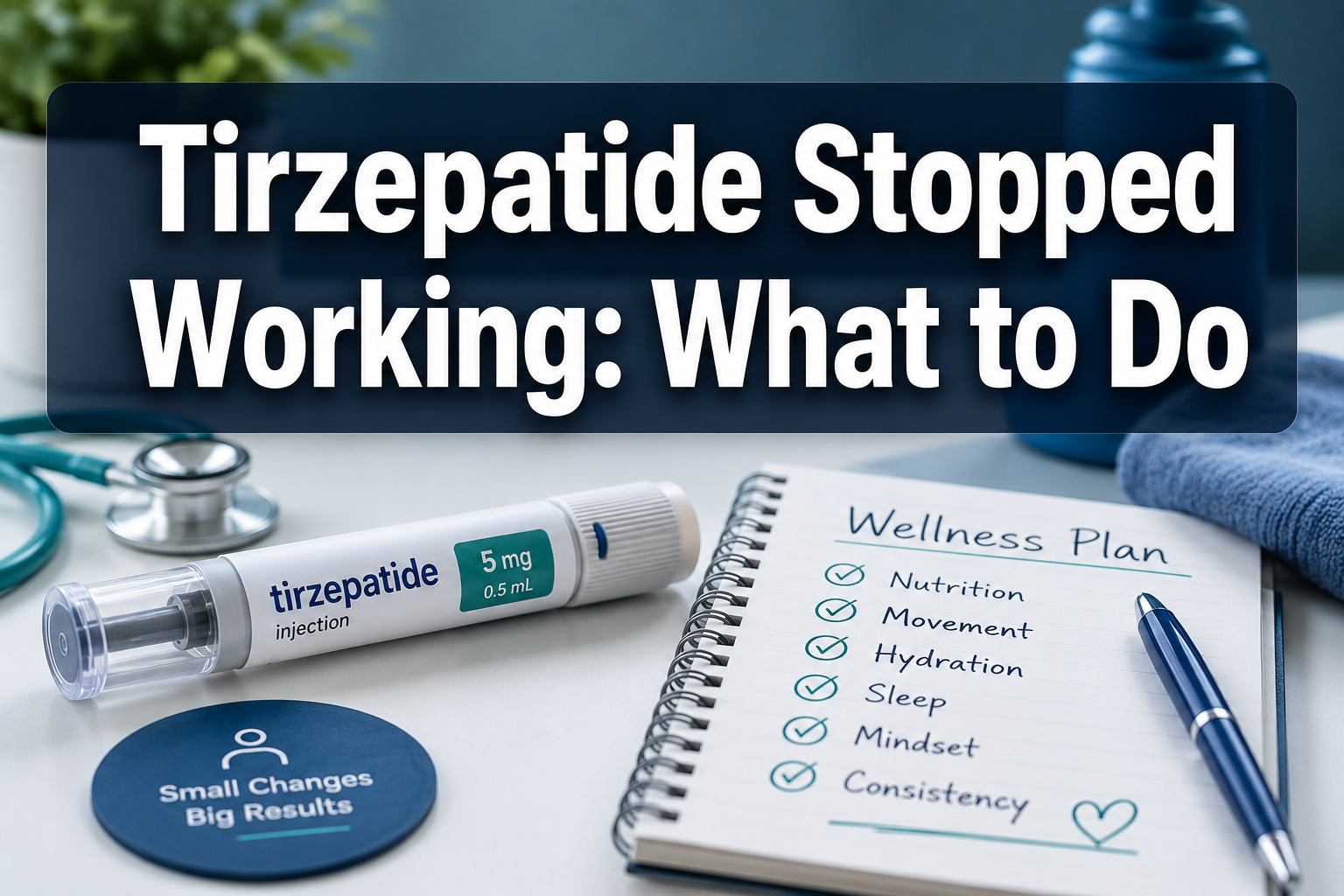
Tirzepatide Plateau: Why It Happens & The Next Steps
Last updated: May 29, 2026
Quick Answer: If tirzepatide has stopped working for you, the most likely causes are a natural metabolic plateau, a dose that needs adjusting, or lifestyle factors that have drifted over time — not true medication failure. The first step is to review your dose, diet, and activity levels before assuming the medication is no longer effective. Speaking with a healthcare provider is strongly recommended before making any changes.
Key Takeaways
- A body composition plateau on tirzepatide is normal and does not automatically mean the medication has stopped working [1]
- Significant progress typically requires 12–16 weeks of consistent use at an appropriate dose [2]
- Higher doses (10 mg and 15 mg) are associated with greater outcomes; dose optimisation is often the solution [3]
- Underlying health conditions such as hypothyroidism can reduce tirzepatide’s effectiveness [3]
- Medication adherence and injection technique both affect how well tirzepatide performs [1]
- Lifestyle factors — particularly diet quality and physical activity — remain critical throughout treatment [3]
- Clinical studies up to 72 weeks show tirzepatide does not develop true pharmacological tolerance [4]
- Switching medications is an option, but should only happen under medical supervision
- Body composition management after stopping tirzepatide requires proactive lifestyle strategies to minimise regain
- Always consult a qualified healthcare professional before changing, stopping, or switching your medication
Why Did My Tirzepatide Stop Being Effective?
The most common reason tirzepatide appears to stop working is metabolic adaptation — the body’s natural response to sustained changes in energy balance. This is not the same as the drug losing potency. Clinical data from trials lasting up to 72 weeks confirms that tirzepatide does not develop true pharmacological tolerance [4].
That said, several factors can make it feel like the medication has stopped working:
Metabolic adaptation: As body composition shifts, the body adjusts its baseline energy expenditure. Progress slows because less effort is required to maintain a lower body weight — not because tirzepatide has become ineffective [1].
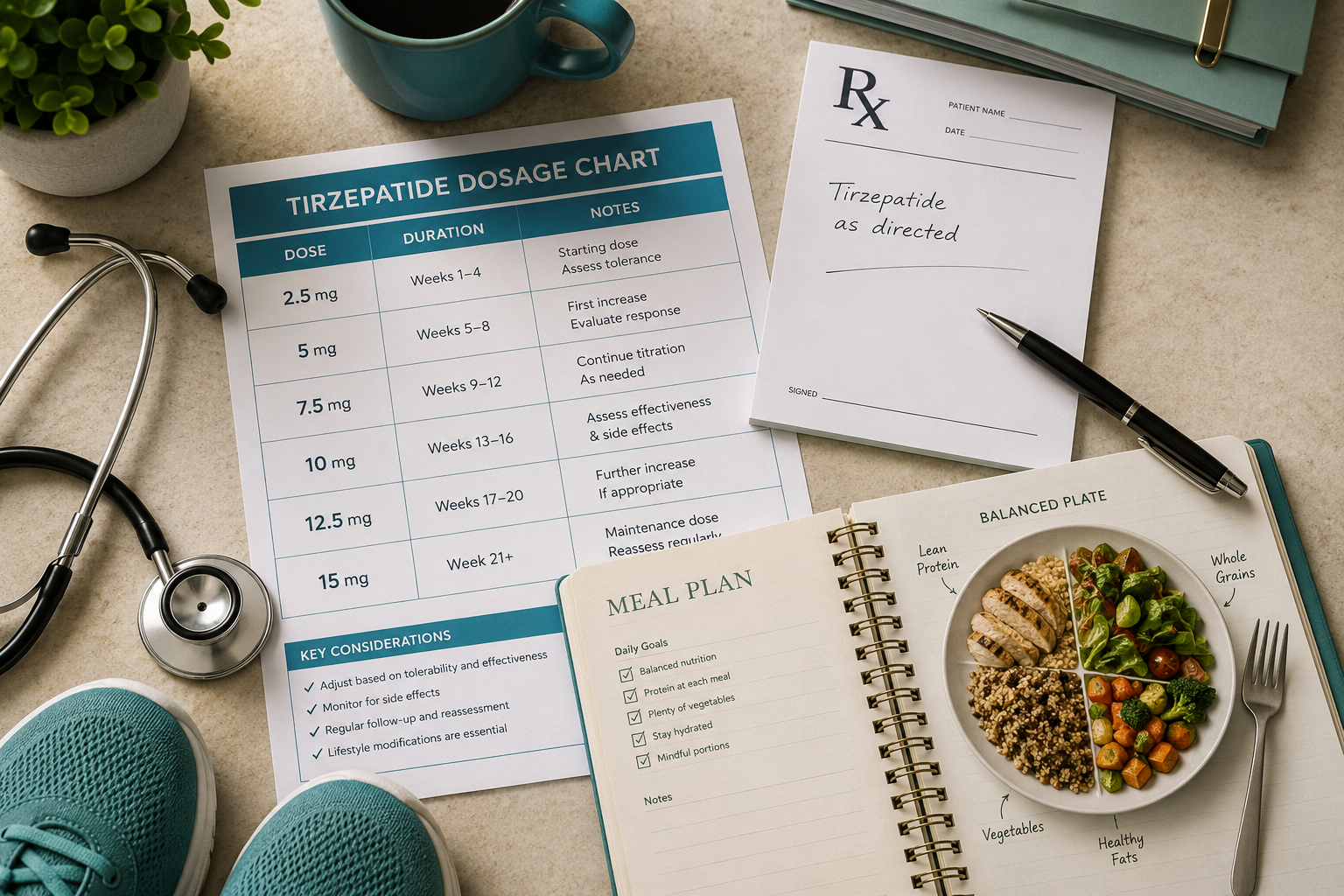
Dose plateau: If you have been on the same dose for several months without progressing to a higher dose, the current level may no longer be sufficient for your body’s needs. Higher doses of tirzepatide (10 mg and 15 mg) are associated with meaningfully greater outcomes [3]. See our tirzepatide dosage chart for a full breakdown of the dose escalation schedule.
Lifestyle drift: Dietary habits and physical activity levels often gradually shift over time. Even small increases in calorie intake or reductions in movement can offset the appetite-suppressing effects of the medication [3].
Medication adherence: Missing injections or injecting inconsistently disrupts the steady-state blood levels that make tirzepatide effective. Consistent weekly dosing is essential [1].
Underlying health conditions: Conditions including hypothyroidism, polycystic ovary syndrome (PCOS), insulin resistance, and Cushing’s syndrome can all reduce the medication’s apparent effectiveness [3].
Drug interactions: Other medications — including some antidepressants, corticosteroids, and antipsychotics — can counteract tirzepatide’s metabolic effects [2].
How Do I Know If I’m Experiencing Medication Tolerance With Tirzepatide?
True pharmacological tolerance to tirzepatide — where the drug’s receptor activity genuinely diminishes — is not well-supported by clinical evidence. Studies running to 72 weeks show sustained glucose-lowering and appetite-management effects without significant tolerance development [4].
What people often describe as “tolerance” is more accurately one of the following:
| What It Feels Like | What’s Actually Happening |
|---|---|
| Appetite returning to normal | Metabolic adaptation at a new body composition set point |
| Progress stalling | Dose may need adjustment upward |
| Less nausea than before | Normal — the body adjusts to the medication over time |
| No change in hunger | Lifestyle factors may be overriding the drug’s effects |
The practical test: If you have been on the same dose for more than 8–12 weeks without progress, and your diet and activity levels have not changed, the most likely explanation is that a dose increase is needed rather than true tolerance. Consult your healthcare provider before adjusting.
⚠️ Important Medical Warning: Contact your healthcare provider promptly if you notice a lump or swelling in your neck, persistent hoarseness, difficulty swallowing, or shortness of breath. These symptoms may require medical evaluation. In animal studies, tirzepatide and similar medications were associated with thyroid tumours. It is not known whether TIRZEPARO® causes thyroid tumours or medullary thyroid carcinoma (MTC) in humans. You must be 18+ to use our service.
What Side Effects Happen When Tirzepatide Stops Working — or When You Stop Taking It?
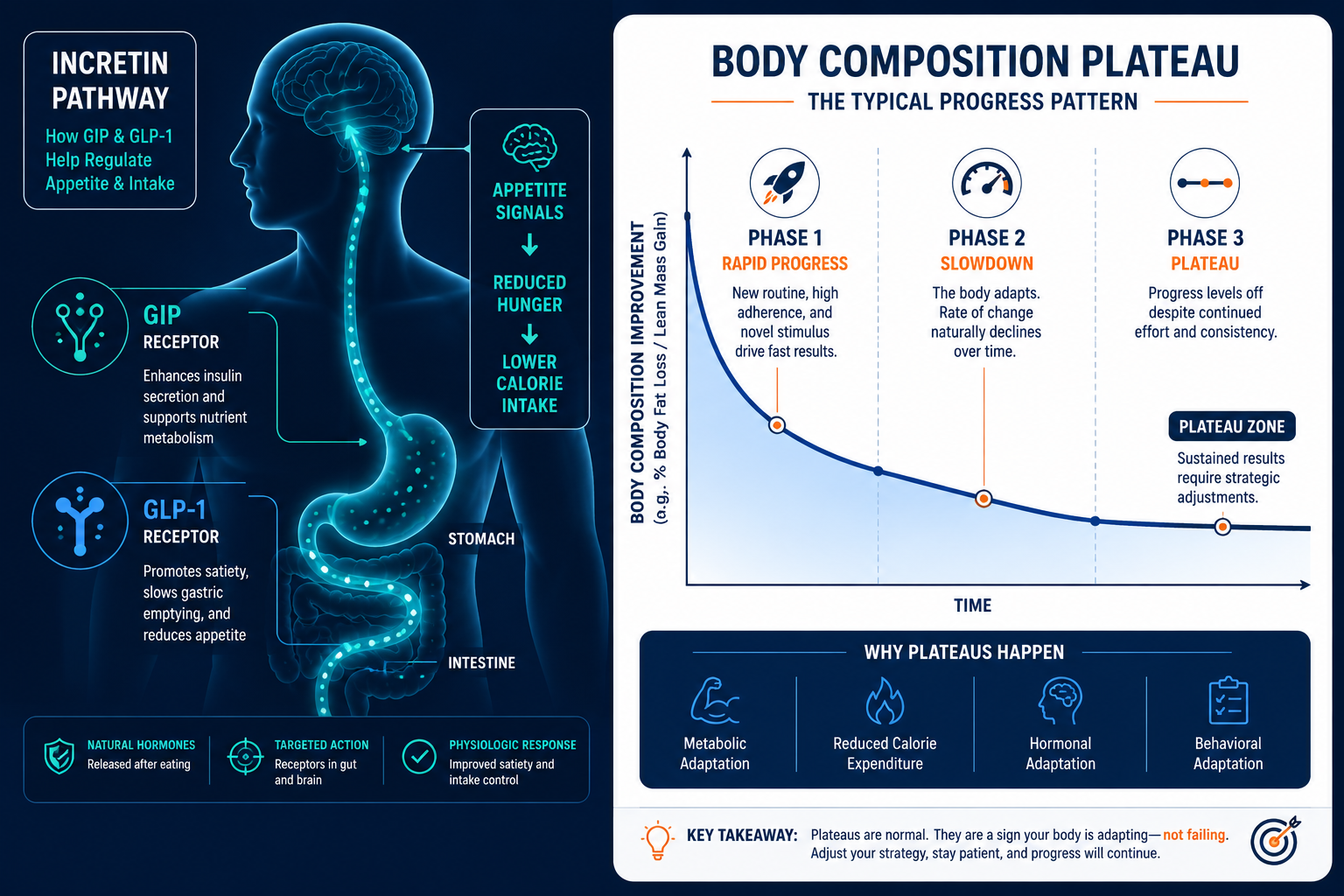
When tirzepatide’s effectiveness diminishes — or when the medication is discontinued — several changes can occur. An analysis of online user communities found that 43.5% of users reported side effects during treatment, predominantly gastrointestinal issues including nausea (36.9%) and vomiting (16.3%) [5].
During a plateau (medication still being taken):
- Appetite may gradually return as the dose becomes insufficient
- Gastrointestinal side effects often reduce — which some users misread as the drug “wearing off,” when in fact it’s normal adjustment [5]
- Energy levels and mood can dip if body composition progress stalls
When tirzepatide is stopped entirely:
- Appetite typically returns to pre-treatment levels within weeks
- The hormonal signals that kept hunger suppressed are no longer active
- Body composition regain is common without proactive lifestyle management
For a comprehensive overview of what to expect during treatment, our guide to tirzepatide long-term side effects covers the full picture.
Is Body Composition Regain Normal After Tirzepatide Stops Working?
Yes — regain after stopping tirzepatide is well-documented and considered a predictable physiological response, not a personal failure. The medication actively suppresses appetite and supports metabolic function; when it is removed, those effects cease.
How much might you regain? Clinical trial extension data (not from a single verified source available here, so this is stated as a general clinical observation) consistently shows that a significant proportion of body composition progress can reverse within 12 months of stopping GLP-1/GIP receptor agonists without concurrent lifestyle changes. The exact amount varies considerably by individual.
Factors that influence regain:
- How long you were on the medication
- Whether lifestyle habits were built and maintained during treatment
- Your starting metabolic profile
- Whether you transition to a maintenance dose rather than stopping abruptly
The most effective strategy is to treat the medication period as a window for building sustainable habits — not as a standalone solution. Pairing tirzepatide with structured exercise is one of the most evidence-backed approaches; our guide on tirzepatide and exercise explains exactly how to combine both for lasting results.
What Medical Conditions Make Tirzepatide Less Effective?
Several underlying health conditions can significantly reduce tirzepatide’s effectiveness. If the medication appears to have stopped working and lifestyle factors are not the cause, these conditions are worth investigating with a healthcare provider [3].
Conditions to rule out:
- Hypothyroidism: An underactive thyroid slows metabolism and can directly counteract tirzepatide’s effects. A simple TSH blood test can identify this.
- Polycystic ovary syndrome (PCOS): Hormonal imbalances associated with PCOS affect insulin sensitivity and appetite regulation.
- Cushing’s syndrome: Excess cortisol promotes fat storage and can override appetite-suppressing medications.
- Severe insulin resistance: While tirzepatide targets insulin pathways, very advanced insulin resistance may blunt the response.
- Sleep apnoea: Disrupted sleep elevates hunger hormones (ghrelin) and can counteract appetite management efforts.
Choose this path if: You have been consistent with dosing and lifestyle for 12+ weeks, are on an appropriate dose, and still see no progress — a medical review to screen for these conditions is the right next step [3].
Are There Lifestyle Changes That Can Help When Tirzepatide Stops Working?
Lifestyle adjustments are the single most reliable lever available when tirzepatide’s effectiveness appears to plateau. The medication supports appetite management, but it works best when paired with consistent dietary and movement habits [3].
Practical steps to take:
- Audit your diet honestly. Calorie-dense foods — particularly ultra-processed snacks, alcohol, and liquid calories — can quietly accumulate and offset tirzepatide’s appetite-suppressing effects. A food diary for 7–14 days often reveals patterns that are easy to miss.
- Increase protein intake. Higher protein diets support muscle retention during body composition changes and increase satiety independently of the medication.
- Add or intensify resistance training. Muscle tissue is metabolically active. Building and preserving it helps maintain a higher resting metabolic rate as body composition shifts.
- Review sleep quality. Poor sleep elevates ghrelin (the hunger hormone) and reduces leptin (the satiety hormone), directly undermining tirzepatide’s effects.
- Check injection technique and site rotation. Injecting into the same site repeatedly can cause lipohypertrophy (hardened fatty tissue), which impairs absorption. Our guide on how to rotate tirzepatide injection sites explains the correct approach.
- Confirm injection timing consistency. Tirzepatide is most effective when injected on the same day each week. See our advice on what time of day to inject tirzepatide for best practice guidance.
Should I Talk to My Doctor If Tirzepatide Isn’t Working Anymore?
Yes — and sooner rather than later. A healthcare professional can identify whether the issue is dose-related, lifestyle-related, or caused by an underlying condition that needs addressing separately [2].
What a medical review should cover:
- Current dose and whether escalation is appropriate (see our guide on what is the maximum dose of tirzepatide for context)
- Blood tests to screen for thyroid dysfunction, insulin resistance, and other metabolic conditions
- A review of all current medications for potential interactions
- An honest assessment of diet and activity patterns
- Whether continuing, adjusting, or switching medication is the right course
Do not stop tirzepatide abruptly without medical guidance. Abrupt discontinuation removes appetite suppression suddenly, which can make managing food intake significantly harder in the short term.
Can I Switch to Another Medication After Tirzepatide Stops Working?
Switching to another GLP-1 or dual-agonist medication is a legitimate option, but it should only happen under medical supervision. The decision depends on why tirzepatide stopped being effective and what your overall health profile looks like.
Alternatives worth discussing with a healthcare provider:
| Medication | Mechanism | Key Difference from Tirzepatide |
|---|---|---|
| Semaglutide (Ozempic/Wegovy) | GLP-1 receptor agonist | Single receptor target vs. tirzepatide’s dual action |
| Liraglutide (Saxenda) | GLP-1 receptor agonist | Daily injection, older formulation |
| Orlistat | Lipase inhibitor | Non-hormonal, works differently |
| Bupropion/naltrexone | CNS-acting combination | Targets brain reward pathways |
For a detailed comparison of tirzepatide and semaglutide — the most common alternative — our article on tirzepatide vs semaglutide covers the clinical differences clearly.
Choose a switch if: You have genuinely maximised the tirzepatide dose (15 mg) for at least 12 weeks with consistent lifestyle adherence and still see no meaningful progress, and underlying conditions have been ruled out.
Don’t switch if: The issue is likely dose, lifestyle, or adherence — these should be addressed first, as they will affect any alternative medication equally.
How Long Do Metabolic Medications Typically Work Before Effectiveness Changes?
Tirzepatide does not have a fixed “expiry” in terms of pharmacological action. Clinical trials running to 72 weeks demonstrate sustained effectiveness without evidence of true tolerance [4]. However, the rate of progress naturally slows over time as the body adapts to a new composition set point.
General timeline of what to expect:
- Weeks 1–4: Dose escalation phase; appetite suppression begins, some gastrointestinal adjustment is normal
- Weeks 4–16: Most active phase of body composition change for most users [2]
- Weeks 16–36: Progress continues but typically at a slower rate as metabolic adaptation occurs [1]
- Weeks 36+: Maintenance phase; the goal shifts from active change to sustaining results at an appropriate dose
A plateau after 4–6 months is not a sign that the medication has failed — it is a normal part of the process [1]. The key question at that point is whether the current dose is still appropriate, and whether lifestyle factors are fully supporting the medication’s effects.
Does Insurance or NHS Coverage Apply When Switching Metabolic Medications in the UK?
NHS access to tirzepatide (Mounjaro) in the UK is currently limited and subject to specific eligibility criteria, with access primarily through specialist weight management services. Private insurance coverage for switching medications varies widely by policy.
Practical points for UK and Ireland users:
- NHS prescribing of Mounjaro follows NICE guidance and is not universally available through GPs as of 2026
- Private clinic costs for branded Mounjaro can exceed £300 per month, making affordability a genuine barrier
- Sourcing through trusted EU supply partners — as Tirzeparo does — provides a more accessible price point, starting from £169 for a 2.5 mg dose
- Switching medications privately typically requires a new consultation and prescription, which adds to overall cost
For a full breakdown of current pricing, our tirzepatide cost guide covers all available options transparently.
Tirzeparo acts as a bridge, providing direct access to affordable Tirzepatide by fulfilling orders through our network of EU partners. We are not a medical clinic; we are your sourcing solution.
Tirzepatide Stopped Working: A Step-by-Step Action Plan
If you are facing this situation right now, here is a practical checklist to work through before making any decisions:
Step 1 — Confirm it is actually a plateau, not a slow phase
- Have you been on the current dose for less than 12 weeks? If so, give it more time.
- Is progress slow but still present? A plateau is a complete stop, not a slowdown.
Step 2 — Audit the basics
- Are you injecting on the same day every week, consistently?
- Are you rotating injection sites correctly?
- Has your diet changed — even subtly — in the past 4–8 weeks?
- Has your physical activity reduced?
Step 3 — Consider dose optimisation
- Are you on the maximum appropriate dose for your situation?
- If not, discuss escalation with a healthcare provider. Review the maximum dose of tirzepatide to understand the ceiling.
Step 4 — Get a medical review
- Request blood tests: thyroid function, fasting glucose, HbA1c
- Review all current medications with your GP for potential interactions
- Discuss whether the current treatment plan needs adjustment
Step 5 — Reinforce lifestyle foundations
- Recommit to a protein-focused, balanced diet
- Add or increase resistance training
- Prioritise sleep (7–9 hours consistently)
Step 6 — Explore alternatives only after steps 1–5
- If all of the above have been addressed and tirzepatide is genuinely not producing results, discuss switching medications with your healthcare provider
FAQ: Tirzepatide Stopped Working — What to Do
Q: Can tirzepatide permanently stop working?
A: There is no clinical evidence that tirzepatide permanently loses effectiveness due to tolerance. Apparent loss of effect is almost always explained by metabolic adaptation, insufficient dose, or lifestyle factors [4].
Q: How long should I wait before concluding tirzepatide isn’t working?
A: At least 12–16 weeks at a consistent, appropriate dose before drawing conclusions [2]. Early plateaus are common and do not indicate failure.
Q: Will I regain body composition changes if I stop tirzepatide?
A: Regain is common after stopping, particularly without strong lifestyle habits in place. The medication actively supports appetite management, and those effects cease when it is discontinued.
Q: Is semaglutide a good alternative if tirzepatide stops working?
A: Semaglutide targets only the GLP-1 receptor, while tirzepatide targets both GLP-1 and GIP. Some individuals respond better to one mechanism than the other. A healthcare provider can advise based on your specific profile. See our tirzepatide vs semaglutide comparison for more detail.
Q: Can I increase my tirzepatide dose myself?
A: No. Dose adjustments should always be made under medical guidance. Increasing too quickly raises the risk of side effects, particularly gastrointestinal issues.
Q: Does stress affect how well tirzepatide works?
A: Yes. Chronic stress elevates cortisol, which promotes fat storage and increases appetite, potentially counteracting tirzepatide’s effects. Stress management is a legitimate part of any body composition strategy.
Q: What if I’ve been on 15 mg for months and still see no progress?
A: At the maximum dose with no progress and confirmed lifestyle adherence, a medical review is essential. This scenario warrants investigation for underlying conditions and discussion of alternative treatment pathways.
Q: Are gastrointestinal side effects a sign tirzepatide is working?
A: Not necessarily. Nausea and gastrointestinal effects are common, particularly in the early dose-escalation phase, and affect around 36.9% of users [5]. Their absence does not mean the medication is ineffective.
Q: Should I take a break from tirzepatide if it has stopped working?
A: A “drug holiday” is not a standard recommendation and can lead to rapid appetite return. Discuss this with a healthcare provider rather than stopping independently.
Q: How does injection site affect tirzepatide’s effectiveness?
A: Repeated injection into the same site can cause lipohypertrophy, which impairs absorption and reduces effectiveness. Rotating sites — abdomen, thigh, upper arm — is important for consistent results.
Conclusion: What to Do When Tirzepatide Stopped Working
A plateau or apparent loss of effectiveness with tirzepatide is frustrating, but it is rarely the end of the road. In most cases, the solution is one of three things: dose optimisation, lifestyle recalibration, or identifying an underlying condition that is working against the medication.
Actionable next steps:
- Do not stop tirzepatide abruptly. Sudden discontinuation removes appetite management support without a plan in place.
- Book a medical review. A healthcare provider can assess whether a dose increase, medication switch, or further investigation is appropriate.
- Audit your lifestyle honestly. Diet drift and reduced activity are the most common, and most fixable, causes of a plateau.
- Check your injection technique. Site rotation and consistent timing matter more than many users realise.
- Set realistic expectations. Progress naturally slows over time — this is physiology, not failure.
For those in the UK and Ireland looking for affordable, discreet access to tirzepatide while working through these steps, Tirzeparo provides a straightforward sourcing solution with transparent pricing from £169, delivered in plain, unbranded packaging. Explore the full range of Tirzeparo dosages or take the eligibility test to find the right starting point for your journey.
References
[1] Why Does Zepbound Stop Working – https://www.baddie.health/guide/why-does-zepbound-stop-working?utm_source=openai
[2] Why Is Tirzepatide Not Working For Me – https://www.fellahealth.com/guide/why-is-tirzepatide-not-working-for-me?utm_source=openai
[3] Drugs Zepbound Not Working – https://www.medicalnewstoday.com/articles/drugs-zepbound-not-working?utm_source=openai
[4] Will Tirzepatide Stop Working – https://www.baddie.health/guide/will-tirzepatide-stop-working?utm_source=openai
[5] arxiv – https://arxiv.org/abs/2603.12341?utm_source=openai