Can You Drink Alcohol on Tirzepatide or Ozempic?
Quick Answer: You can drink alcohol while taking tirzepatide, but it comes with real risks. There is no direct chemical interaction between alcohol and tirzepatide, but combining the two can intensify nausea, lower blood sugar dangerously, reduce your alcohol tolerance significantly, and undermine your body composition management progress. Most healthcare providers recommend limiting alcohol to occasional, moderate consumption — and avoiding it entirely in the first 48 hours after your injection.
Key Takeaways
- Tirzepatide does not chemically interact with alcohol, but the combination amplifies several side effects [1]
- Alcohol and tirzepatide both lower blood sugar — together, they significantly raise the risk of hypoglycemia [2]
- Tirzepatide slows gastric emptying by approximately 70%, which means alcohol enters the bloodstream faster and hits harder [4]
- Many users report feeling the effects of just one or two drinks as strongly as they previously felt four or five [4]
- Gastrointestinal side effects — nausea, vomiting, diarrhoea — are made worse by alcohol [3]
- Clinical trials for tirzepatide capped alcohol at 14 drinks per week for men and 7 for women [4]
- Alcohol is calorie-dense and can slow progress on your body transformation journey [5]
- People managing type 2 diabetes face the highest risk when mixing alcohol with tirzepatide [2]
- There is no strict medical prohibition on drinking, but moderation and timing matter considerably
- Always speak with a healthcare professional about your personal circumstances before drinking on this medication [1]
What Happens If You Drink While Taking Tirzepatide?
Drinking alcohol while on tirzepatide does not trigger a direct pharmacological reaction — the two substances don’t chemically clash in the way that, say, alcohol and metronidazole do. However, the indirect effects are significant and worth understanding before you pour a drink [1].
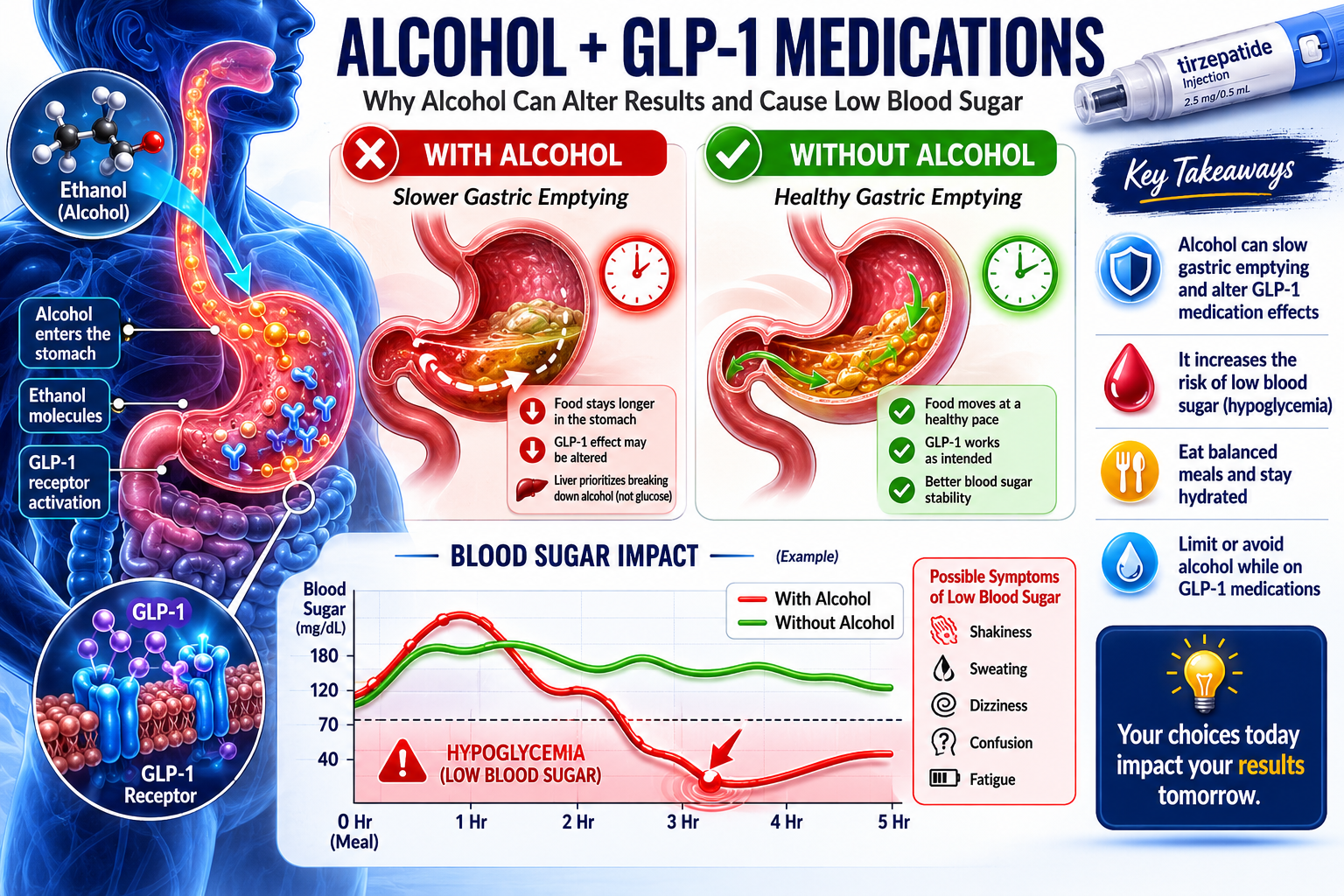
Tirzepatide is a dual GIP and GLP-1 receptor agonist. It works by mimicking natural gut hormones that regulate appetite and metabolic function, and one of its key mechanisms is slowing gastric emptying — the rate at which food (and drink) leaves the stomach. When alcohol is consumed on tirzepatide, it is absorbed more slowly through the stomach but then released into the small intestine in a more concentrated way, which can amplify its effects unpredictably [4].
Here is what users and clinicians commonly report:
- Stronger intoxication from smaller amounts of alcohol
- Faster onset of nausea and dizziness
- Prolonged hangover symptoms the following day
- Increased vomiting, particularly if alcohol is consumed within 48 hours of an injection
- Blood sugar instability, especially in people managing type 2 diabetes
The short answer: your body processes alcohol differently on tirzepatide, and the margin for a comfortable drinking experience narrows considerably.
Does Alcohol Interact Badly with Tirzepatide? Understanding the Core Risks
Alcohol does not interact with tirzepatide in a direct drug-drug sense, but the functional interaction — the way the two substances affect the same bodily systems — can produce meaningful risks [1][3].
The key risk areas are:
Blood Sugar and Hypoglycemia
Both alcohol and tirzepatide independently lower blood glucose. When combined, particularly on an empty stomach or alongside other diabetes medications such as insulin or sulphonylureas, the risk of hypoglycemia (dangerously low blood sugar) increases substantially [2].
Symptoms of hypoglycemia include:
- Shakiness or trembling
- Sweating and clamminess
- Confusion or difficulty concentrating
- Rapid heartbeat
- In severe cases, loss of consciousness
Decision rule: If you are managing type 2 diabetes with tirzepatide alongside other glucose-lowering medications, drinking alcohol carries a meaningfully higher risk and warrants a direct conversation with your healthcare provider before proceeding.
Gastrointestinal Side Effects
Tirzepatide already causes nausea, vomiting, and diarrhoea in a significant portion of users — particularly during dose escalation. Alcohol irritates the gastrointestinal lining and stimulates gastric acid production, which compounds these symptoms considerably [3].
For a deeper look at how to manage these side effects, see our guide on tirzepatide nausea and vomiting.
Liver Stress
Both alcohol and tirzepatide are processed by the liver. Chronic or heavy alcohol use adds metabolic stress to the liver, and while tirzepatide itself is not known to cause liver toxicity at therapeutic doses, combining regular alcohol consumption with any metabolically active medication is worth monitoring. People with pre-existing liver conditions should be especially cautious.
How Much Alcohol Can You Drink on Tirzepatide?
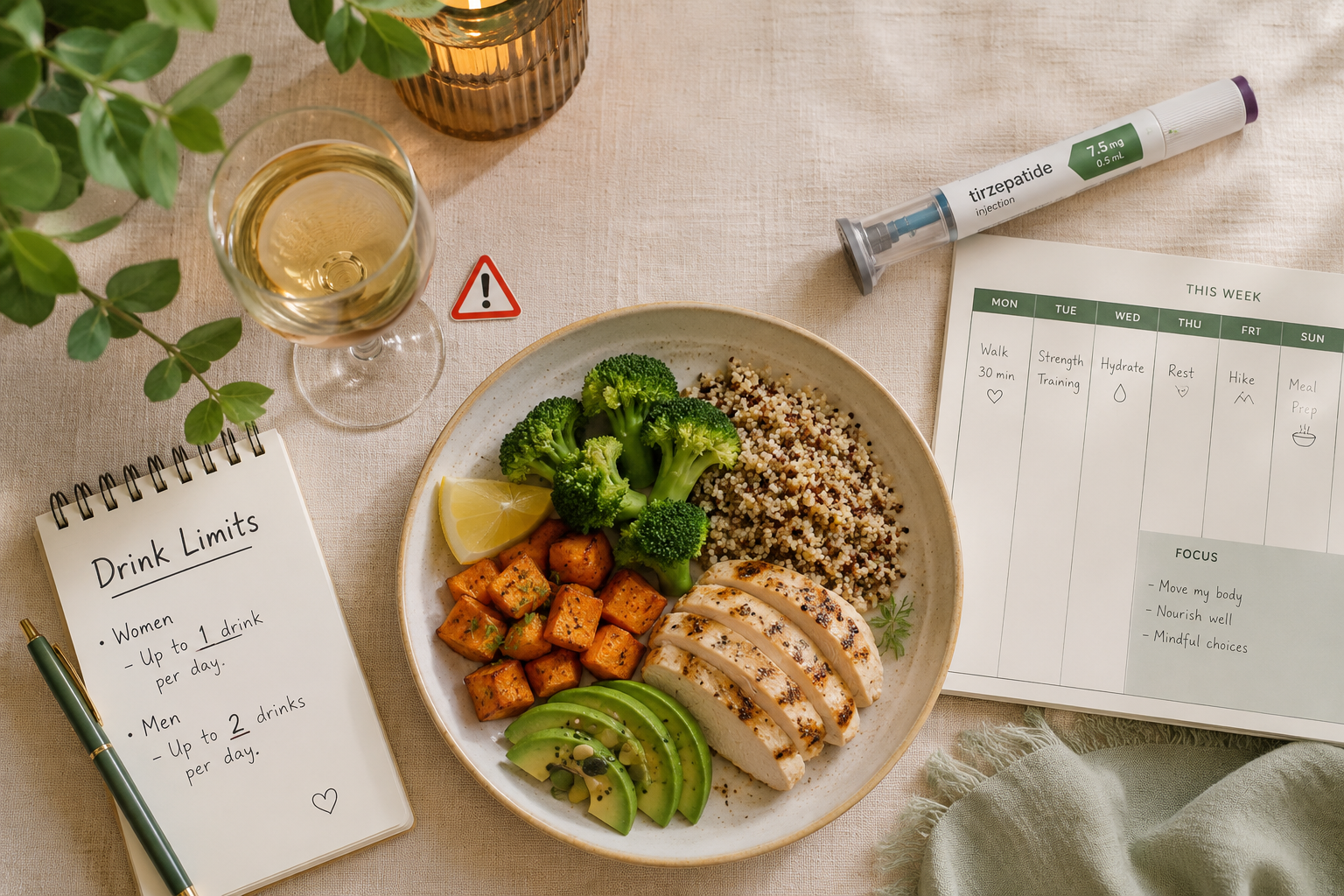
There is no universally agreed “safe” amount of alcohol while on tirzepatide, but clinical trial data provides a useful reference point. The trials that led to tirzepatide’s approval capped participant alcohol intake at 14 drinks per week for men and 7 drinks per week for women — broadly aligning with standard low-risk drinking guidelines [4].
In practice, most healthcare providers recommend going well below these caps. A common clinical recommendation is:
| Scenario | Suggested Approach |
|---|---|
| First 48 hours after injection | Avoid alcohol entirely |
| During active dose escalation | Limit to 1 drink on any given occasion |
| Stable maintenance dose, no diabetes | Occasional moderate drinking (1–2 drinks) may be tolerated |
| Managing type 2 diabetes | Discuss individually with your doctor |
| History of gastrointestinal sensitivity | Avoid or minimise alcohol |
| Liver conditions | Avoid alcohol |
Common mistake: Assuming that because tirzepatide has no listed alcohol contraindication, drinking freely is safe. The absence of a hard prohibition is not the same as a green light.
Will Drinking Reduce the Effects of Tirzepatide on Body Composition?
Yes — regular alcohol consumption can slow your body transformation progress while on tirzepatide, even if it does not directly reduce the medication’s pharmacological activity [5].
Here is why:
- Alcohol is calorie-dense. A standard glass of wine contains roughly 120–150 calories; a pint of beer can exceed 200. These calories add up quickly and can offset the appetite management benefits tirzepatide provides.
- Alcohol disrupts sleep quality. Poor sleep is associated with increased hunger hormones (ghrelin) and reduced satiety signals, which works against tirzepatide’s appetite-reducing mechanism.
- Alcohol can trigger cravings. Many people find that drinking lowers their dietary discipline, leading to late-night snacking that undermines their body composition goals.
- Alcohol impairs recovery from exercise. If you are pairing tirzepatide with a fitness routine — which is strongly recommended — alcohol can hinder muscle recovery and reduce training quality.
For more on maximising your results, read our article on tirzepatide and exercise.
The bottom line: occasional, moderate drinking is unlikely to derail your progress, but regular or heavy drinking will work against the body composition management goals that tirzepatide is designed to support [5].
Are There Specific Risks for Diabetics Mixing Alcohol and Tirzepatide?
For people using tirzepatide to manage type 2 diabetes, the risks of combining alcohol are more pronounced than for those using it solely for body composition management [2].
The core concern is compounded hypoglycemia. Alcohol inhibits gluconeogenesis — the liver’s ability to release stored glucose into the bloodstream. Tirzepatide simultaneously enhances insulin sensitivity and reduces glucagon secretion. Together, these effects can push blood sugar to dangerously low levels, particularly if:
- Alcohol is consumed without food
- The person is also taking insulin or sulphonylureas
- Alcohol is consumed in larger quantities
Practical guidance for diabetics:
- Never drink on an empty stomach
- Check blood glucose before, during, and after drinking
- Wear a medical ID if you are at risk of severe hypoglycemia
- Inform people around you of the signs of hypoglycemia
- Speak with your healthcare provider about whether any alcohol is appropriate given your medication stack
This is one area where personalised medical advice is not optional — it is essential [1][2].
What Do Doctors Recommend About Drinking on Tirzepatide?
Healthcare providers generally do not tell patients to stop drinking entirely, but they consistently advise caution and moderation [1][3].
The standard clinical guidance in 2026 broadly includes:
- Avoid alcohol for 48 hours after each injection — this is the window when gastrointestinal side effects are most active and gastric emptying is most significantly slowed
- Limit intake to 1–2 drinks on any occasion when you do drink
- Always eat food when drinking — never drink on an empty stomach
- Monitor for signs of hypoglycemia, especially if managing diabetes
- Avoid binge drinking entirely — the combination of large alcohol volumes and tirzepatide’s effects on gastric emptying creates a high risk of severe nausea and vomiting
- Disclose your full medication list to any healthcare provider, including tirzepatide, when discussing alcohol use
The FDA-approved prescribing information for tirzepatide does not list alcohol as a contraindication, but the clinical trial protocols deliberately restricted intake — a signal that caution was considered warranted from the outset [4].
How Long Should You Wait Between Drinking and Taking Your Dose?
The safest approach is to avoid alcohol for at least 48 hours after your tirzepatide injection [4].
Tirzepatide is administered once weekly as a subcutaneous injection. The peak plasma concentration — the point at which the medication is most active in the body — typically occurs within 8 to 72 hours post-injection, depending on the individual. During this window, gastric emptying is most significantly slowed, and the risk of alcohol-related nausea and vomiting is highest.
Practical timing guidance:
- If you inject on a Monday, avoid alcohol until at least Wednesday
- If you have a social event planned, consider scheduling your injection to minimise overlap with the 48-hour peak window
- Even outside the 48-hour window, moderation applies
For guidance on when to take your dose and how to time it effectively, see what time of day should you inject tirzepatide.
Altered Alcohol Tolerance: Why You Get Drunk Faster on Tirzepatide
One of the most commonly reported — and most surprising — effects for people who drink while on tirzepatide is a dramatic reduction in alcohol tolerance [4].
Users frequently describe feeling the effects of one or two drinks as strongly as they previously felt four or five. This is not a placebo effect or psychological change. It has a clear physiological explanation:
Tirzepatide slows gastric emptying by approximately 70%. Normally, alcohol is absorbed gradually through the stomach wall. When gastric emptying is slowed, alcohol sits in the stomach longer and is then released into the small intestine in a more concentrated bolus. The small intestine absorbs alcohol far more rapidly than the stomach, leading to a faster and more intense spike in blood alcohol concentration.
The practical implication: Even if you have been a moderate drinker for years and know your limits well, those limits no longer apply in the same way once you are on tirzepatide. Starting with a single drink and waiting to assess the effect is a sensible approach.
Are Some Types of Alcohol Worse Than Others on Tirzepatide?
Not all alcoholic drinks carry equal risk on tirzepatide. The main variables are alcohol content, sugar content, and carbonation [4][5].
| Drink Type | Key Concern | Risk Level |
|---|---|---|
| Spirits (neat or with water) | High alcohol concentration, fast absorption | Higher |
| Cocktails with sugary mixers | Blood sugar spikes followed by drops | Higher |
| Carbonated drinks (beer, sparkling wine) | Carbonation speeds gastric emptying, faster absorption | Moderate–Higher |
| Dry wine (red or white) | Moderate alcohol, lower sugar | Moderate |
| Low-alcohol beer (under 2.5% ABV) | Reduced alcohol impact | Lower |
Key points:
- Sugary cocktails are particularly problematic for people managing blood sugar, as the sugar spike followed by the combined glucose-lowering effects of alcohol and tirzepatide can create erratic blood sugar swings
- Carbonated drinks may partially counteract tirzepatide’s slowed gastric emptying, leading to faster alcohol absorption
- Spirits consumed neat or with water deliver a concentrated alcohol hit without added sugars, but the high ABV means less margin for error
- Lower-alcohol options are generally better tolerated, though they are not risk-free
Should You Completely Stop Drinking While on Tirzepatide?
A complete alcohol ban is not medically required for most people on tirzepatide, but it is a reasonable personal choice — and one that will support your body transformation goals more effectively [1][5].
The case for stopping entirely:
- Eliminates all risk of alcohol-related hypoglycemia
- Removes a significant source of empty calories
- Avoids worsening gastrointestinal side effects
- Supports better sleep and exercise recovery
- Simplifies the management of your metabolic health journey
The case for moderate, occasional drinking:
- Social and cultural contexts make complete abstinence impractical for many people
- Occasional moderate drinking (1–2 drinks, with food, outside the 48-hour injection window) is unlikely to cause serious harm in otherwise healthy adults
- Forcing an unsustainable restriction can create a negative relationship with the overall programme
The pragmatic position: If you choose to drink, do so rarely, moderately, with food, and well away from your injection day. If you find that alcohol consistently triggers nausea or disrupts your progress, stopping entirely is the cleaner option.
For a full picture of what to expect on this medication, our tirzepatide side effects guide covers the broader landscape of potential reactions.
Can Occasional Drinking Impact Your Treatment Results?
Occasional, moderate drinking is unlikely to meaningfully derail your tirzepatide treatment if managed carefully [5]. The key word is occasional.
A single drink at a social event, consumed with food and outside the 48-hour post-injection window, is unlikely to cause significant harm or measurably slow your progress. The risk compounds with frequency and quantity.
Where occasional drinking can still cause problems:
- If it triggers nausea that lasts 24–48 hours and disrupts eating patterns
- If it leads to poor food choices that offset several days of appetite management
- If it interferes with sleep quality over time
- If it gradually becomes less “occasional” as social habits reassert themselves
Edge case to watch for: Some users find that tirzepatide actually reduces their desire to drink alcohol — a phenomenon also observed with GLP-1 receptor agonists more broadly. If this happens, it can be a useful side benefit for those looking to reduce their alcohol intake as part of a broader wellness journey.
What Liver Risks Exist When Combining Alcohol and Tirzepatide?
The liver processes both alcohol and tirzepatide, and while tirzepatide is not associated with direct liver toxicity at therapeutic doses, the combination warrants consideration for people with any degree of liver compromise [2][3].
Alcohol is metabolised by the liver into acetaldehyde, a toxic compound that, with regular heavy consumption, causes inflammation and progressive liver damage. Tirzepatide, as a metabolically active medication, places additional demands on hepatic processing.
For most healthy adults, occasional moderate drinking alongside tirzepatide is not expected to cause liver damage. However:
- People with non-alcoholic fatty liver disease (NAFLD) — which is common in those with metabolic health concerns — should be particularly careful, as alcohol can accelerate liver inflammation
- People with existing liver disease should avoid alcohol entirely and discuss tirzepatide use with a hepatologist
- Regular heavy drinkers on tirzepatide should have liver function monitored periodically
If you are concerned about how tirzepatide may affect your body over the longer term, our article on tirzepatide long-term side effects provides a thorough overview.
Frequently Asked Questions
Q: Can you drink alcohol on tirzepatide without any side effects?
A: Some people tolerate occasional, moderate drinking without significant issues. However, most users experience some degree of increased sensitivity to alcohol — nausea, faster intoxication, or worsened gastrointestinal symptoms — particularly in the first 48 hours after an injection [4].
Q: Is alcohol safe with Mounjaro or Wegovy?
A: The same cautions apply to Mounjaro (tirzepatide) and Wegovy (semaglutide). Both medications slow gastric emptying, lower blood sugar, and can intensify alcohol’s effects. Neither has alcohol listed as a hard contraindication, but both warrant a cautious approach [3].
Q: Will one glass of wine affect my tirzepatide?
A: A single glass of wine, consumed with food and outside the 48-hour post-injection window, is unlikely to cause serious harm for most healthy adults. However, expect it to feel stronger than usual due to altered gastric emptying [4].
Q: Can alcohol stop tirzepatide from working?
A: Alcohol does not directly block tirzepatide’s pharmacological action. However, regular drinking can undermine the body composition management benefits by adding calories, disrupting sleep, and increasing appetite [5].
Q: How long after my injection can I drink?
A: Wait at least 48 hours after your tirzepatide injection before drinking. This covers the peak activity window when gastrointestinal effects are strongest [4].
Q: Does tirzepatide change how drunk I get?
A: Yes. Many users report feeling significantly more intoxicated from smaller amounts of alcohol. This is because tirzepatide slows gastric emptying, causing alcohol to be released into the small intestine more rapidly and absorbed more quickly [4].
Q: Is beer or wine worse than spirits on tirzepatide?
A: Carbonated drinks like beer and sparkling wine may be absorbed slightly faster due to carbonation. Sugary cocktails carry additional blood sugar risks. Dry wine or spirits in small amounts are generally better tolerated, though all alcohol carries some risk [4][5].
Q: What should I do if I feel unwell after drinking on tirzepatide?
A: Stop drinking immediately, eat something if you can tolerate it, stay hydrated with water, and rest. If you experience severe vomiting, signs of hypoglycemia (shaking, confusion, rapid heartbeat), or symptoms that persist, seek medical attention [2].
Q: Do I have to tell my doctor I drink alcohol while on tirzepatide?
A: Yes. Disclosing your alcohol habits allows your healthcare provider to give you personalised guidance, particularly if you are also managing diabetes or taking other medications [1].
Q: Can tirzepatide reduce my desire to drink alcohol?
A: Some users report a reduced interest in alcohol after starting tirzepatide, consistent with observations from GLP-1 receptor agonist research more broadly. This is not guaranteed but can be a welcome secondary effect for those looking to reduce their intake.
Q: Is it safe to drink alcohol at a higher tirzepatide dose like 10mg or 15mg?
A: Higher doses of tirzepatide generally produce stronger effects on gastric emptying and appetite suppression, which may amplify alcohol sensitivity further. Extra caution is warranted at higher doses. See our guides on tirzepatide 10mg effects and tirzepatide 15mg for more context.
Q: Where can I get affordable tirzepatide in the UK?
A: Tirzeparo provides access to affordable tirzepatide sourced through trusted EU partners, with discreet home delivery across the UK and Ireland. You can buy tirzepatide in the UK starting from £169 for the 2.5mg starting dose.
Conclusion
The question of whether you can drink alcohol on tirzepatide does not have a simple yes or no answer — but the evidence points clearly toward caution rather than freedom.
Tirzepatide and alcohol do not interact chemically, but they affect the same bodily systems in ways that compound risk. Gastric emptying slows significantly on tirzepatide, making alcohol hit harder and faster. Blood sugar drops more sharply when both substances are present. Nausea and vomiting — already common side effects of tirzepatide — become more likely and more severe with alcohol in the mix. And regular drinking quietly undermines the body composition management progress that makes tirzepatide worth taking in the first place.
Actionable steps for 2026:
- Avoid alcohol for 48 hours after every injection — this is the single most practical rule to follow
- If you drink, keep it to 1–2 drinks maximum, with food, on a stable dose
- Avoid sugary cocktails and carbonated drinks where possible
- Monitor how you feel — your tolerance has likely changed more than you realise
- If you manage type 2 diabetes, treat this as a medical conversation, not a personal judgement call
- Consider reducing or stopping alcohol entirely if you find it consistently triggers side effects or slows your progress
For those ready to start or continue their metabolic health journey with tirzepatide, explore our full range of tirzepatide products or check the tirzepatide dosage chart to understand where you are in your dose progression.
⚠️ Important Medical Warning: Contact your healthcare provider promptly if you notice a lump or swelling in your neck, persistent hoarseness, difficulty swallowing, or shortness of breath. These symptoms may require medical evaluation. In animal studies, tirzepatide and similar medications were associated with thyroid tumours. It is not known whether TIRZEPARO® causes thyroid tumours or medullary thyroid carcinoma (MTC) in humans. You must be 18+ to use our service.
Tirzeparo acts as a bridge, providing direct access to affordable Tirzepatide by fulfilling orders through our network of EU partners. We are not a medical clinic; we are your sourcing solution.
References
[1] Can You Drink Alcohol While On Tirzepatide – https://www.fellahealth.com/guide/can-you-drink-alcohol-while-on-tirzepatide
[2] Can You Drink Alcohol Tirzepatide – https://trytrimi.com/blog/can-you-drink-alcohol-tirzepatide
[3] Drugs Mounjaro Interactions – https://www.medicalnewstoday.com/articles/drugs-mounjaro-interactions
[4] Can You Drink Alcohol While On Tirzepatide – https://formblends.com/articles/lifestyle-hub/can-you-drink-alcohol-while-on-tirzepatide
[5] Does Alcohol Affect Tirzepatide – https://www.baddie.health/guide/does-alcohol-affect-tirzepatide