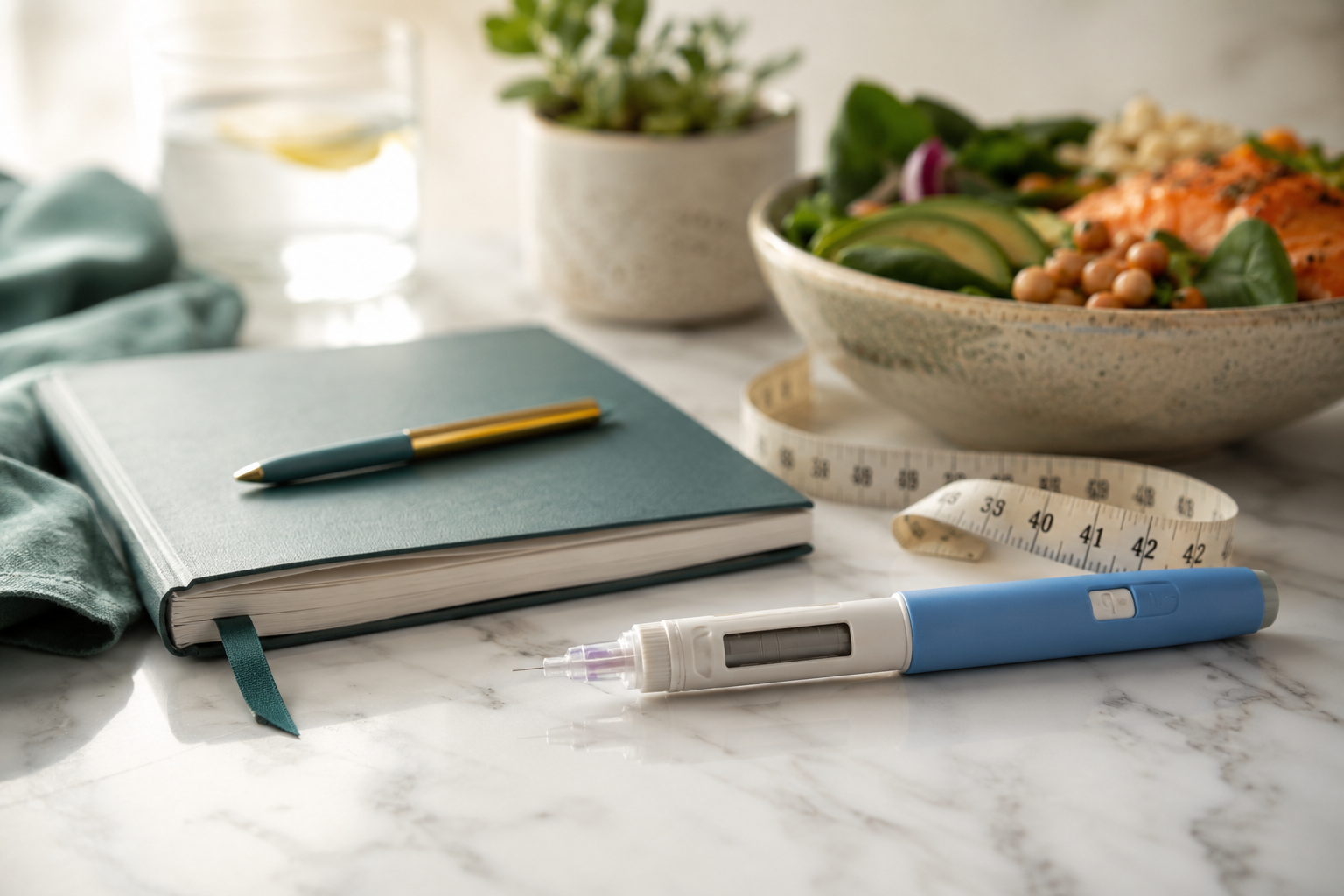

What is the Best Time of the Day to take Tirzepatide?
There is no single “best” time of day to inject tirzepatide that is clinically mandated — the medication can be administered at any time of day, with or without food. That said, most users find that a consistent morning injection on a chosen weekly day works best for managing side effects and building a reliable routine. The most important factor is picking a time you can stick to every week.
Key Takeaways
- ✅ Tirzepatide is a once-weekly injection — the time of day is flexible, but consistency matters most
- ✅ Morning injections are widely preferred because nausea and fatigue (common early side effects) tend to be less disruptive when they occur during waking hours
- ✅ Evening injections can work well for some people, particularly those who find side effects manageable overnight
- ✅ Always inject on the same day each week, spacing doses at least 3 days apart if you ever need to shift your schedule
- ✅ Injection site rotation (abdomen, thigh, upper arm) helps reduce localised irritation
- ✅ Starting on Tirzeparo® 2.5mg and titrating gradually reduces the intensity of early side effects regardless of injection timing
- ✅ Food timing around the injection does not affect efficacy — eat normally before or after
- ✅ If side effects are consistently disruptive, shifting your injection time by a few hours can make a meaningful difference

What Time of Day Should You Inject Tirzepatide?
The short answer: any time of day works, but morning tends to suit most people best. Tirzepatide’s pharmacokinetics (how the drug moves through your body) are not significantly affected by the time of administration. It reaches peak plasma concentration roughly 8–72 hours after injection and has a half-life of approximately 5 days, meaning a few hours’ difference in timing has no measurable impact on how well it supports appetite management.
What does vary between individuals is how they experience side effects — and that’s where timing becomes a practical decision rather than a clinical one.
Why morning injections are the most popular choice
For most people starting their metabolic health journey with tirzepatide, a morning injection on a consistent weekly day (say, every Monday at 8am) offers a few clear advantages:
- Side effects happen while you’re awake. Mild nausea, fatigue, or reduced appetite are easier to monitor and manage during the day than overnight
- You’re less likely to forget. Morning routines are habit-anchored — pairing an injection with breakfast prep or a morning coffee builds a reliable cue
- Appetite suppression kicks in during your most active eating window. For many users, feeling fuller for longer during the daytime hours aligns well with their body composition management goals
- Medical support is accessible. If you experience any unexpected reaction, clinics and helplines are reachable during daytime hours
When an evening injection might suit you better
Evening injections aren’t wrong — they’re simply a different trade-off. Some users prefer them because:
- Nausea and fatigue occur while they’re winding down and sleeping, so the discomfort is less noticeable
- Their work schedule makes morning injections impractical
- They find that appetite suppression in the evening helps them avoid late-night snacking
Choose morning if: you experience noticeable nausea or fatigue and want to stay alert to how your body responds.
Choose evening if: your side effects are mild and you’d rather sleep through any discomfort.
Does the Day of the Week Matter for Tirzepatide Injections?
The specific day of the week doesn’t matter clinically — but once you choose a day, stick to it. Tirzepatide is dosed once every seven days. Consistency in your weekly schedule keeps drug levels stable and makes your routine predictable.
A few practical tips for choosing your injection day:
- Pick a day when you don’t have high-pressure commitments (e.g., avoid the night before a big presentation if you’re prone to nausea)
- Avoid days when you’ll be travelling or away from your usual routine, especially in the first month
- Many users choose Sunday or Monday so the week starts with a fresh dose
What if you need to change your injection day?
Life happens. If you need to shift your injection day, the general guidance is:
- Administer the next dose on your new preferred day
- Ensure at least 3 full days (72 hours) have passed since your last injection
- Then continue on the new weekly schedule going forward
Do not inject twice in quick succession to “catch up.” If you’re unsure, consult a healthcare professional before adjusting your schedule.
How Does Injection Timing Affect Side Effects?
Injection timing is one of the most practical levers you have for managing tirzepatide’s common early side effects. The most frequently reported ones — nausea, reduced appetite, fatigue, and occasional digestive discomfort — tend to peak in the first 24–48 hours after each injection, particularly during the dose titration phase.
Here’s how timing interacts with those effects:
| Side Effect | Morning Injection | Evening Injection |
|---|---|---|
| Nausea | Noticeable during the day — manageable with small meals | May occur overnight — some users sleep through it |
| Fatigue | Can affect daytime energy in the first 24hrs | Less disruptive if it occurs during sleep |
| Reduced appetite | Aligns with daytime eating windows | May reduce evening meal appetite more noticeably |
| Digestive discomfort | Easier to monitor and respond to | Can disturb sleep in some users |
Practical note: If you’re in the early titration phase on a starting dose like Tirzeparo® 2.5mg, side effects are typically milder. As you step up — for example to Tirzeparo® 5mg — revisiting your injection timing is a sensible adjustment if side effects increase.
Should You Inject Tirzepatide With or Without Food?
Tirzepatide can be injected with or without food — food intake does not affect how the medication is absorbed. This is a common point of confusion, partly because some other medications require fasting or food timing. Tirzepatide is a subcutaneous injection, not an oral medication, so it bypasses the digestive process entirely.
That said, there are some sensible habits around food and injection timing:
- Avoid injecting immediately after a very large meal. Not because it affects efficacy, but because tirzepatide already slows gastric emptying — combining it with a heavy meal can intensify feelings of fullness or nausea
- Stay hydrated on injection day. Drinking water throughout the day supports overall comfort, particularly in the first 24 hours
- Eat smaller, lighter meals on injection day if you’re prone to nausea — this is a widely reported user strategy, not a clinical requirement
For users focused on body composition management, pairing tirzepatide with a balanced diet is where the real results come from. Read more about tirzepatide and exercise as a combined approach to get the most from your wellness journey.
Where Should You Inject Tirzepatide and Does Location Affect Timing?
Injection site and timing are separate considerations, but rotating your injection site weekly is just as important as maintaining a consistent schedule. The three approved subcutaneous injection sites are:
- Abdomen (at least 2 inches from the navel)
- Thigh (outer, upper thigh)
- Upper arm (outer area — often easier with assistance)
Rotate between these sites each week to prevent localised skin reactions, lipohypertrophy (fatty lumps under the skin), or reduced absorption over time.
Injection site tips by time of day
- Morning injections: The abdomen is a convenient and accessible site when getting ready in the morning
- Evening injections: The thigh is often easier to access when seated or lying down
- Never inject into skin that is bruised, irritated, scarred, or has existing lumps
What Time of Day Should You Inject Tirzepatide If You’re New to It?
If you’re just starting out, a mid-morning injection on a low-commitment day is the most forgiving approach. Here’s a simple first-injection checklist:
- ✅ Choose a day with no major plans for the following 24–48 hours
- ✅ Inject in the morning (between 7am–10am works well for most people)
- ✅ Eat a light breakfast beforehand
- ✅ Stay hydrated throughout the day
- ✅ Have light, bland foods available (crackers, plain rice, ginger tea) in case of nausea
- ✅ Note how you feel in the hours after — this helps you decide whether to adjust timing for future doses
- ✅ Set a weekly phone reminder for the same day and time going forward
Starting on the lowest dose is strongly recommended. The Tirzeparo® 2.5mg starting dose is designed precisely for this titration phase, giving your body time to adjust before stepping up. You can explore the full dosage range in the Tirzeparo shop.
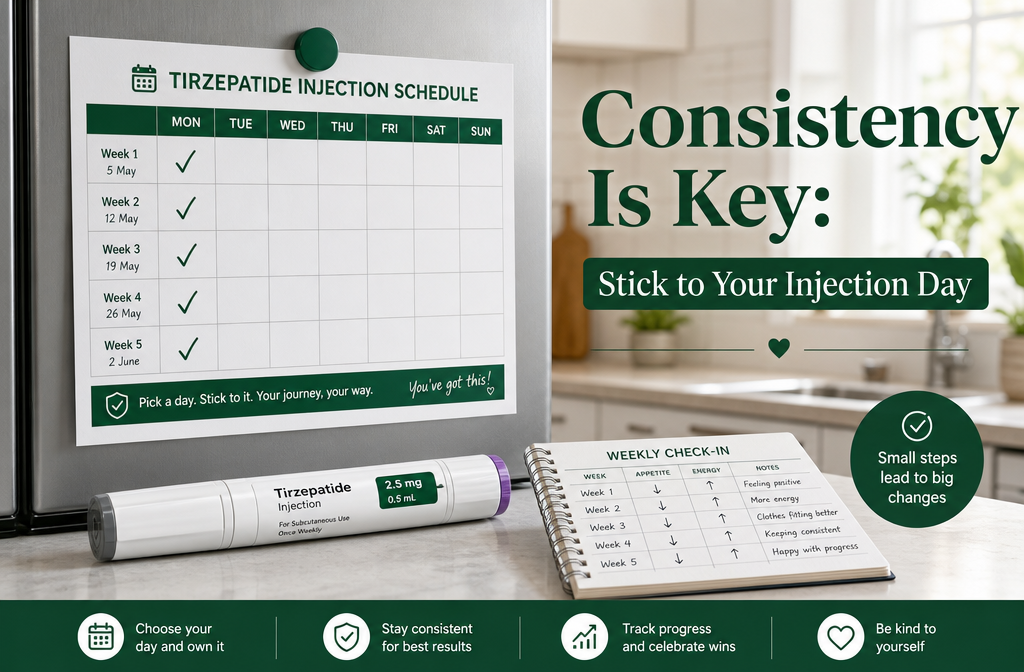
What Time of Day Should You Inject Tirzepatide: Common Mistakes to Avoid
Even experienced users make avoidable errors with injection timing and routine. Here are the most common ones — and how to sidestep them.
❌ Injecting at irregular times each week
Tirzepatide works best when your body has a predictable weekly rhythm. Injecting at 7am one week and 11pm the next doesn’t affect efficacy dramatically, but it does make it harder to track side effect patterns and build a reliable habit.
Fix: Set a recurring weekly alarm. Treat it like a standing appointment.
❌ Skipping a dose and then double-dosing
Missing a dose happens. But injecting double the amount the following week is not the answer — it significantly increases the risk of side effects without improving outcomes.
Fix: If you miss a dose and your next scheduled injection is more than 4 days away, inject as soon as you remember. If it’s fewer than 4 days away, skip the missed dose and resume your normal schedule.
❌ Injecting into the same site repeatedly
Repeatedly using the same spot leads to skin changes that can reduce absorption and cause discomfort.
Fix: Keep a simple rotation log — even a sticky note on your fridge works.
❌ Assuming nausea means the medication isn’t working
Nausea, particularly in the first few weeks, is a sign that the medication is active. It typically reduces significantly after the first month and with gradual dose titration.
Fix: Adjust your injection time, eat lighter on injection day, and give your body time to adapt.
For a broader comparison of how tirzepatide stacks up against other options, the tirzepatide vs semaglutide guide covers the key differences in detail.
How Does Tirzepatide Dosage Progression Affect Injection Timing Decisions?
As you move through the dose titration schedule, your injection timing strategy may need to evolve. Lower doses tend to produce milder side effects, giving you more flexibility. Higher doses — such as Tirzeparo® 10mg or Tirzeparo® 12.5mg — can intensify nausea and fatigue in the first 24 hours, making timing a more meaningful consideration.
Standard titration schedule (general guidance):
| Dose | Typical Duration | Side Effect Intensity | Timing Recommendation |
|---|---|---|---|
| 2.5mg | 4 weeks | Low | Flexible — morning preferred |
| 5mg | 4 weeks | Low–Moderate | Morning recommended |
| 7.5mg | 4 weeks | Moderate | Morning strongly preferred |
| 10mg | 4 weeks | Moderate | Morning, light meal day |
| 12.5mg | 4 weeks | Moderate–High | Morning, plan a lighter day |
| 15mg | Maintenance | Variable | Morning, well-established routine |
This titration schedule is a general guide. Always follow the specific advice of a healthcare professional for your individual situation.
If you’re exploring where to access affordable tirzepatide in the UK, the Tirzeparo dosage and pricing guide provides a clear breakdown of costs at each dose level.
Frequently Asked Questions
Q: Can I inject tirzepatide at night?
Yes. Evening or night-time injections are a valid option. Some users prefer them because side effects like nausea and fatigue occur during sleep. The key is to choose a consistent time and stick to it weekly.
Q: Does it matter if I inject tirzepatide in the morning versus the evening?
Clinically, no — efficacy is not affected by the time of day. Practically, morning injections are preferred by most users because side effects are easier to monitor and manage during waking hours.
Q: What happens if I inject tirzepatide at different times each week?
Minor variations (a few hours) are unlikely to cause problems. Larger shifts — such as swapping from morning to late evening regularly — can make it harder to track your body’s response and maintain a consistent habit. Aim for the same time each week.
Q: Should I eat before or after my tirzepatide injection?
Either is fine. Food timing does not affect how tirzepatide is absorbed. Many users find that eating a light meal before injecting helps reduce nausea, but this is a comfort strategy rather than a clinical requirement.
Q: Can I exercise on the same day as my tirzepatide injection?
Yes. There’s no restriction on exercising on injection day. Some users prefer to inject on rest days to avoid compounding fatigue, but this is personal preference. Pairing tirzepatide with regular movement is actively encouraged for body composition management.
Q: What if I forget what time I injected last week?
Focus on the day rather than the exact time. As long as you’re injecting once every seven days, a few hours’ variance is not clinically significant. Keeping a simple log or phone reminder removes the guesswork entirely.
Q: Can I change my injection day permanently?
Yes, but ensure at least 72 hours (3 days) pass between your last injection and the new day’s injection. After that, continue on the new weekly schedule.
Q: Does tirzepatide injection timing affect appetite suppression timing?
Tirzepatide’s appetite-regulating effects are continuous due to its long half-life — they don’t simply switch on and off around injection time. You’ll experience consistent appetite management throughout the week, not just in the hours after injecting.
Q: Is there a best time of day to inject tirzepatide for body composition management specifically?
Morning injections align appetite suppression with the most active eating window for most people, which many users find supports their body composition management goals. But consistency and dose adherence matter far more than the specific hour.
Q: What should I do if I experience severe side effects after injecting?
Mild nausea and fatigue are common, especially early on. Severe or persistent symptoms — including difficulty swallowing, shortness of breath, or a lump in the neck — require prompt medical attention. Contact a healthcare provider immediately if these occur.
Conclusion: Build a Routine That Works for You
The question of what time of day you should inject tirzepatide ultimately comes down to one principle: consistency beats perfection. Morning injections work best for most people because they align side effect management with waking hours and fit naturally into daily routines — but the “best” time is the time you’ll actually stick to, week after week.
Actionable next steps:
- Choose your injection day and time — morning is a strong starting point for most people
- Set a weekly recurring reminder on your phone so you never miss a dose
- Start on the lowest dose to give your body time to adjust — Tirzeparo® 2.5mg is designed for exactly this
- Keep a simple log of how you feel in the 24 hours after each injection — this helps you fine-tune your timing if needed
- Rotate your injection site each week and stay hydrated on injection day
- Pair your tirzepatide routine with movement and a balanced diet for the best body composition results — explore how tirzepatide and exercise work together
- Browse the full range at Tirzeparo to find the right dose for your current stage
Important Medical Warning: Contact your healthcare provider promptly if you notice a lump or swelling in your neck, persistent hoarseness, difficulty swallowing, or shortness of breath. These symptoms may require medical evaluation. In animal studies, tirzepatide and similar medications were associated with thyroid tumours. It is not known whether TIRZEPARO® causes thyroid tumours or medullary thyroid carcinoma (MTC) in humans. You must be 18+ to use our service.
Tirzeparo acts as a bridge, providing direct access to affordable Tirzepatide by fulfilling orders through our network of EU partners. We are not a medical clinic; we are your sourcing solution.