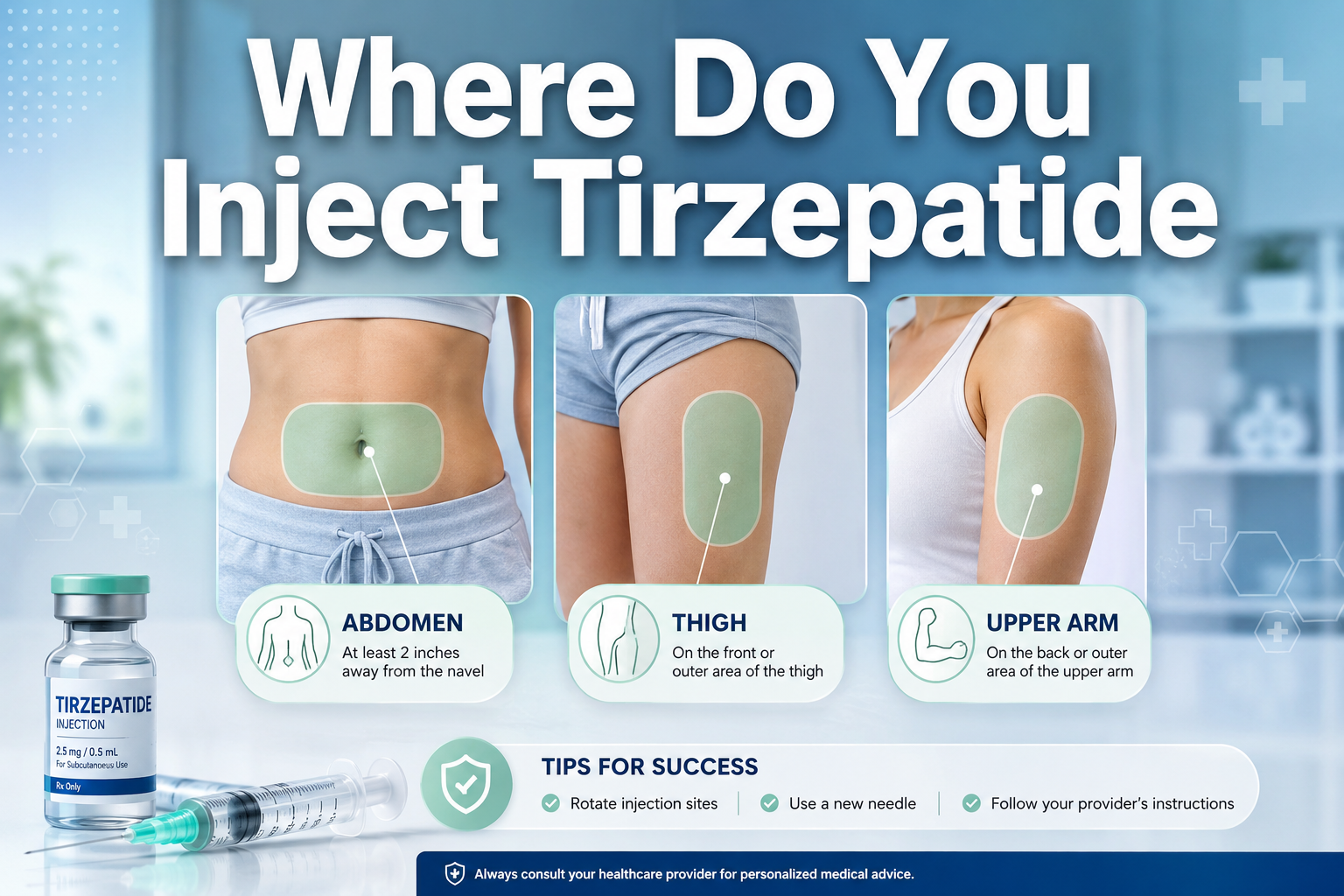

How to prevent Loose Skin if you use Tirzepatide ?
Quick Answer: Tirzepatide loose skin prevention is achievable with the right strategy. Because tirzepatide supports significant, relatively rapid body composition changes, the skin may not always keep pace. The most effective approach combines a gradual dose escalation, consistent resistance training, adequate protein intake, and strong hydration habits — all started early in your journey, not as an afterthought.
Key Takeaways
- Loose skin is a skin elasticity issue, not a medication flaw. It happens when body composition changes faster than the skin can adapt.
- Gradual dose escalation (starting at 2.5mg and stepping up slowly) gives your skin more time to adjust alongside your body transformation.
- Resistance training is the single most impactful tool for preserving lean muscle mass and keeping skin supported during a slimming journey.
- Protein intake matters significantly — most adults aiming for body composition management should target 1.2–1.6g of protein per kg of body weight daily.
- Hydration supports skin elasticity — chronic dehydration accelerates the appearance of loose or sagging skin.
- Collagen-supporting nutrients (vitamin C, zinc, silica) can assist the body’s natural skin repair processes.
- Age and genetics play a role, but they don’t eliminate your ability to minimise loose skin with the right habits.
- Starting preventative habits early — before significant body composition changes occur — produces better outcomes than trying to reverse the effects later.
- Tirzepatide’s dual GIP and GLP-1 mechanism supports appetite management, which can allow for a more controlled, measured approach to body transformation.
- Patience is part of the protocol. Skin remodelling takes months, not weeks.
What Causes Loose Skin During a Body Transformation Journey?
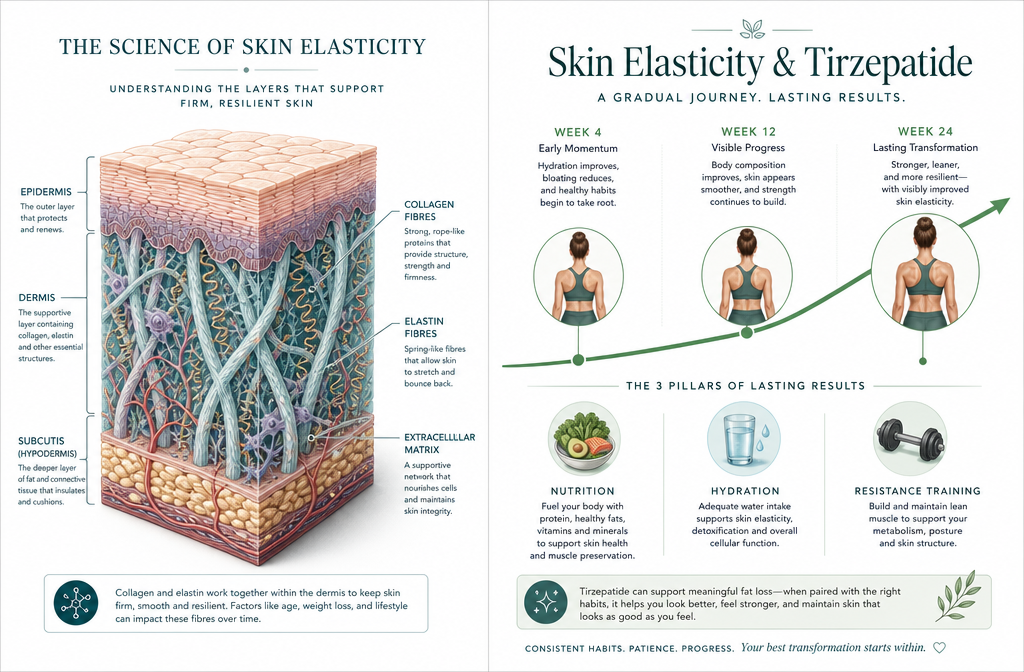
Loose skin during a body transformation journey is primarily caused by a loss of the internal structure that previously filled and supported the skin. When body composition changes occur faster than the skin can remodel its collagen and elastin fibres, the outer layer lacks the support it once had.
Here’s what’s actually happening beneath the surface:
- Collagen and elastin are the proteins that give skin its firmness and snap-back ability. These fibres take time to remodel — weeks to months, not days.
- Adipose tissue (body fat) physically fills the skin from the inside. When that volume reduces, the skin envelope can appear loose or deflated.
- Muscle mass acts as a secondary support structure. If lean muscle is lost alongside fat during a slimming journey, the skin has even less internal scaffolding.
- Age reduces the skin’s natural collagen production, which is why tirzepatide loose skin prevention strategies become more important for adults over 40.
- Rate of change is a key variable. Slower, more gradual body composition changes consistently produce better skin outcomes than rapid shifts.
Common mistake: Many people assume loose skin is permanent and inevitable. In reality, the skin has a meaningful capacity to remodel — especially when the right nutritional and lifestyle habits are in place from the start.
How Does Tirzepatide Affect Skin Elasticity Specifically?
Tirzepatide itself does not directly damage skin elasticity. The skin changes some people notice are a consequence of the body composition changes it supports, not a pharmacological side effect of the medication.
Tirzepatide is a dual GIP and GLP-1 receptor agonist. It works by mimicking natural hormones that regulate appetite and metabolic function, helping you feel fuller for longer and supporting appetite management. This can lead to meaningful reductions in body fat over time — and it’s that fat reduction, if not managed carefully, that creates the conditions for loose skin.
Key distinction:
| Factor | Effect on Skin |
|---|---|
| Rapid body composition change | Higher risk of loose skin |
| Gradual, managed change | Lower risk, more time for skin adaptation |
| Muscle mass preservation | Maintains internal skin support |
| Muscle mass loss | Reduces skin support structure |
| Adequate protein and hydration | Supports collagen production |
| Poor nutrition during transformation | Impairs skin repair capacity |
The good news: because tirzepatide works through appetite management rather than forced malabsorption, you retain full control over your nutrition quality. That means you can actively fuel the habits that support tirzepatide loose skin prevention at every stage of your journey.
For a broader look at how tirzepatide compares to other metabolic health options, see tirzepatide vs semaglutide: which is better for body composition.
What Are the Most Effective Tirzepatide Loose Skin Prevention Strategies?
The most effective tirzepatide loose skin prevention strategies work on three fronts simultaneously: preserving muscle mass, supporting skin health nutritionally, and controlling the rate of body composition change. None of these requires expensive treatments — most are lifestyle-based and can be started on day one.
1. Prioritise Resistance Training
Resistance training is the most evidence-supported tool for preserving lean muscle during a slimming journey. Muscle mass provides the structural support that keeps skin looking taut and defined.
Practical starting point:
- Aim for 3–4 resistance training sessions per week.
- Focus on compound movements: squats, deadlifts, rows, presses, and lunges.
- Progressive overload (gradually increasing the challenge) is more important than session length.
- Even bodyweight training at home produces meaningful muscle preservation results.
For a detailed breakdown of how to pair exercise with tirzepatide for the best body transformation outcomes, read tirzepatide and exercise: the ultimate combination.
2. Hit Your Protein Targets
Protein is the raw material for both muscle repair and collagen synthesis. Without adequate protein intake, the body struggles to maintain lean tissue and rebuild skin structure.
- Target range: 1.2–1.6g of protein per kg of body weight per day (general guidance for active adults in a body composition management phase).
- Best sources: lean meats, fish, eggs, Greek yogurt, cottage cheese, legumes, and quality protein supplements.
- Spread intake: aim for protein at every meal rather than concentrating it in one sitting.
3. Stay Consistently Hydrated
Dehydrated skin loses elasticity faster. Hydration supports the skin’s ability to stretch and rebound, and it supports the overall cellular environment in which collagen remodelling occurs.
- Aim for at least 2–2.5 litres of water daily (more if you exercise regularly or live in a warm climate).
- Limit excessive caffeine and alcohol, both of which contribute to dehydration.
4. Support Collagen Production Through Nutrition
Certain nutrients directly support the body’s collagen synthesis pathway:
- Vitamin C (found in citrus, peppers, kiwi, broccoli) is essential for collagen formation.
- Zinc (found in meat, seeds, legumes) supports tissue repair.
- Silica (found in oats, bananas, leafy greens) supports connective tissue structure.
- Omega-3 fatty acids (found in oily fish, flaxseed, walnuts) support skin membrane integrity.
5. Use Gradual Dose Escalation
Starting at the lowest effective dose and stepping up gradually gives your body — and your skin — more time to adapt. Tirzeparo® 2.5mg is the standard starting dose for this reason. The step-up to Tirzeparo® 5mg and beyond should follow your body’s response, not a rushed timeline.
Does the Rate of Body Composition Change Really Matter for Skin?
Yes — the rate of change is one of the most controllable variables in tirzepatide loose skin prevention. Skin remodelling is a biological process that takes time, and when body composition changes outpace that process, the gap shows up visually.
General principle: slower, sustained body composition management consistently produces better skin outcomes than rapid transformation.
This is one reason why tirzepatide’s dose escalation protocol (starting low, stepping up gradually) is not just about tolerability — it also gives the skin a better chance to adapt alongside the body’s changing shape.
Edge case: Some individuals, particularly those with a long history of carrying significant excess body fat, may find that skin laxity is more pronounced regardless of pace. In these cases, the prevention strategies above still apply and can meaningfully reduce severity — but additional options (discussed below) may also be relevant.

Which Topical and Lifestyle Habits Support Skin Elasticity?
Topical habits and lifestyle practices can complement the core nutritional and exercise strategies, particularly for maintaining skin surface quality and supporting the remodelling process.
Topical options worth considering:
- Moisturisers with hyaluronic acid or glycerin: These help maintain skin hydration at the surface level, which supports elasticity.
- Retinol-based products: Retinol (vitamin A derivative) has a reasonable evidence base for stimulating collagen production in the skin’s dermis. Start with a low concentration and use consistently.
- Firming creams with peptides or caffeine: These can temporarily improve skin tone appearance, though their long-term structural impact is modest compared to nutrition and exercise.
Lifestyle habits that protect skin integrity:
- Avoid smoking. Smoking directly degrades collagen and elastin fibres and significantly accelerates skin ageing.
- Limit sun exposure or use SPF consistently. UV radiation is one of the leading causes of collagen breakdown in the skin.
- Prioritise sleep. The majority of skin repair and collagen synthesis occurs during deep sleep cycles. Aim for 7–9 hours per night.
- Manage stress. Chronic stress elevates cortisol, which can impair collagen production and slow skin remodelling.
Are There Medical or Aesthetic Options for Loose Skin After Body Transformation?
For individuals who have completed a significant body transformation and still have visible skin laxity, several medical and aesthetic options exist. These are typically considered after the body composition has stabilised and the skin has had adequate time (often 12–18 months) to remodel naturally.
Non-surgical options:
- Radiofrequency (RF) treatments: These use heat energy to stimulate collagen production in the dermis. Multiple sessions are typically required.
- Ultrasound therapy (e.g., HIFU): Targets deeper skin layers to promote collagen tightening.
- Laser skin tightening: Various laser modalities can stimulate collagen remodelling with minimal downtime.
Surgical options:
- Body contouring surgery (such as abdominoplasty or arm lifts) removes excess skin physically. This is typically reserved for cases where non-surgical methods have not produced the desired outcome and the individual has maintained stable body composition for at least 12 months.
Important: Any medical or aesthetic procedure should be discussed with a qualified healthcare professional. The strategies outlined in this guide are designed to minimise the need for these interventions by addressing loose skin prevention proactively.
How Should You Structure Your Tirzepatide Loose Skin Prevention Protocol Week by Week?
A structured weekly approach to tirzepatide loose skin prevention is more effective than sporadic effort. Here’s a practical framework:
Daily non-negotiables:
- Hit protein targets at every meal.
- Drink at least 2 litres of water.
- Apply moisturiser morning and evening.
- Take SPF if spending time outdoors.
Weekly structure:
- 3–4 resistance training sessions (45–60 minutes each).
- 2–3 lower-intensity movement sessions (walking, swimming, yoga) to support circulation and recovery.
- 1 meal prep session to ensure protein-rich foods are readily available.
Monthly check-ins:
- Assess body composition changes (photos, measurements — not just scale weight).
- Review dose escalation timing with your healthcare provider.
- Evaluate whether nutritional targets are being consistently met.
For those starting their journey, Tirzeparo® 2.5mg is the recommended starting dose, with step-ups available through Tirzeparo® 7.5mg and beyond as your journey progresses. You can explore the full range and affordable dosage options here.
What Role Does Age and Genetics Play in Loose Skin Risk?
Age and genetics are real factors, but they’re not fixed sentences. Understanding them helps set realistic expectations and allows for a more targeted prevention approach.
Age-related factors:
- Collagen production naturally declines from the mid-20s onward, accelerating after 40.
- Skin elastin fibres become less resilient with age.
- Older adults benefit from starting prevention strategies earlier and being more consistent with protein intake and resistance training.
Genetic factors:
- Some individuals naturally produce more robust collagen and have higher baseline skin elasticity.
- Skin tone and thickness vary genetically and affect how visible laxity appears.
- Previous skin stretching (from pregnancy, for example) can affect how the skin responds to body composition changes.
Choose this approach if: You’re over 40 or have a family history of skin laxity — prioritise resistance training and protein intake even more aggressively, and consider adding a collagen peptide supplement (typically 10–15g daily) to your routine.
FAQ: Tirzepatide Loose Skin Prevention
Q: Does tirzepatide cause loose skin?
A: Tirzepatide does not directly cause loose skin. Loose skin can occur as a result of the body composition changes it supports, particularly if those changes happen quickly or without adequate muscle preservation strategies in place.
Q: When should I start loose skin prevention habits?
A: Start on day one — before significant body composition changes occur. Prevention is far more effective than trying to reverse skin laxity after the fact.
Q: How much protein do I actually need?
A: A general target for adults in a body composition management phase is 1.2–1.6g of protein per kg of body weight per day. Consult a registered dietitian for personalised guidance.
Q: Can collagen supplements help?
A: Hydrolysed collagen peptide supplements (10–15g daily) have a growing evidence base for supporting skin elasticity and collagen density, particularly in adults over 35. They’re a reasonable addition to a broader prevention strategy, not a standalone fix.
Q: Does loose skin always go away on its own?
A: Mild to moderate skin laxity often improves significantly over 12–18 months as the body remodels collagen naturally, especially with the right nutrition and exercise habits. Severe laxity may require additional intervention.
Q: Is resistance training really that important?
A: Yes. It’s the most impactful single habit for maintaining the muscle mass that supports skin from the inside. Cardio alone will not provide the same benefit.
Q: Does the starting dose of tirzepatide affect loose skin risk?
A: Starting at a lower dose (such as 2.5mg) and escalating gradually allows for slower, more controlled body composition changes, which gives the skin more time to adapt. This is one of the practical benefits of a structured dose escalation protocol.
Q: Can I use firming creams instead of exercise?
A: No. Topical products can support skin hydration and surface tone, but they cannot replace the structural support that muscle mass provides. Use them as a complement to exercise and nutrition, not a substitute.
Q: How long does skin remodelling take?
A: Meaningful skin remodelling typically takes 6–18 months. Consistency with the prevention strategies above throughout this period produces the best outcomes.
Q: Where can I find out more about Tirzeparo’s products?
A: You can explore the full range and pricing at the Tirzeparo shop, or contact the team directly with any questions.
Conclusion: Your Tirzepatide Loose Skin Prevention Action Plan
Tirzepatide loose skin prevention is not about luck or genetics alone — it’s about building the right habits before and during your body transformation journey. The evidence points clearly to a handful of high-impact actions: start at a low dose and escalate gradually, train with resistance consistently, hit your protein targets daily, stay hydrated, and support your skin with the nutrients it needs to remodel.
Your immediate next steps:
- Start resistance training this week — even three sessions of 30–45 minutes will make a meaningful difference.
- Calculate your daily protein target (body weight in kg × 1.4g is a solid starting point) and plan your meals around it.
- Drink more water — set a daily target and track it for the first two weeks until it becomes automatic.
- Begin at the lowest effective dose and follow a structured escalation — explore Tirzeparo® 2.5mg as your starting point.
- Be patient with your skin — remodelling takes months, but consistent effort compounds over time.
Body transformation is a journey, and the skin is part of that story. With the right approach, loose skin doesn’t have to be the conclusion.
Important Medical Warning: Contact your healthcare provider promptly if you notice a lump or swelling in your neck, persistent hoarseness, difficulty swallowing, or shortness of breath. These symptoms may require medical evaluation. In animal studies, tirzepatide and similar medications were associated with thyroid tumours. It is not known whether TIRZEPARO® causes thyroid tumours or medullary thyroid carcinoma (MTC) in humans. You must be 18+ to use our service.
Sourcing Disclaimer: Tirzeparo acts as a bridge, providing direct access to affordable Tirzepatide by fulfilling orders through our network of EU partners. We are not a medical clinic; we are your sourcing solution.