Where Do You Inject Tirzepatide?
Quick Answer
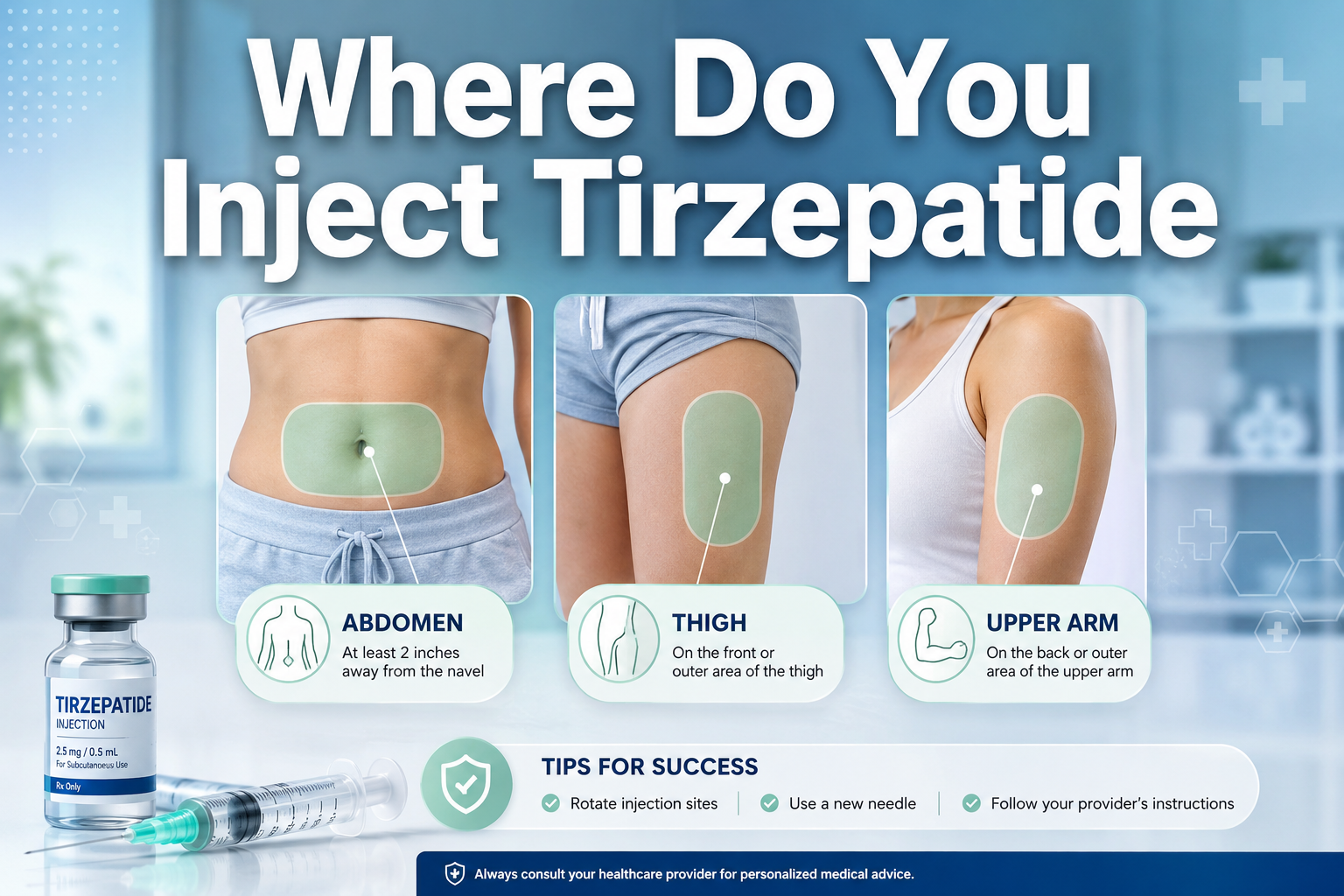
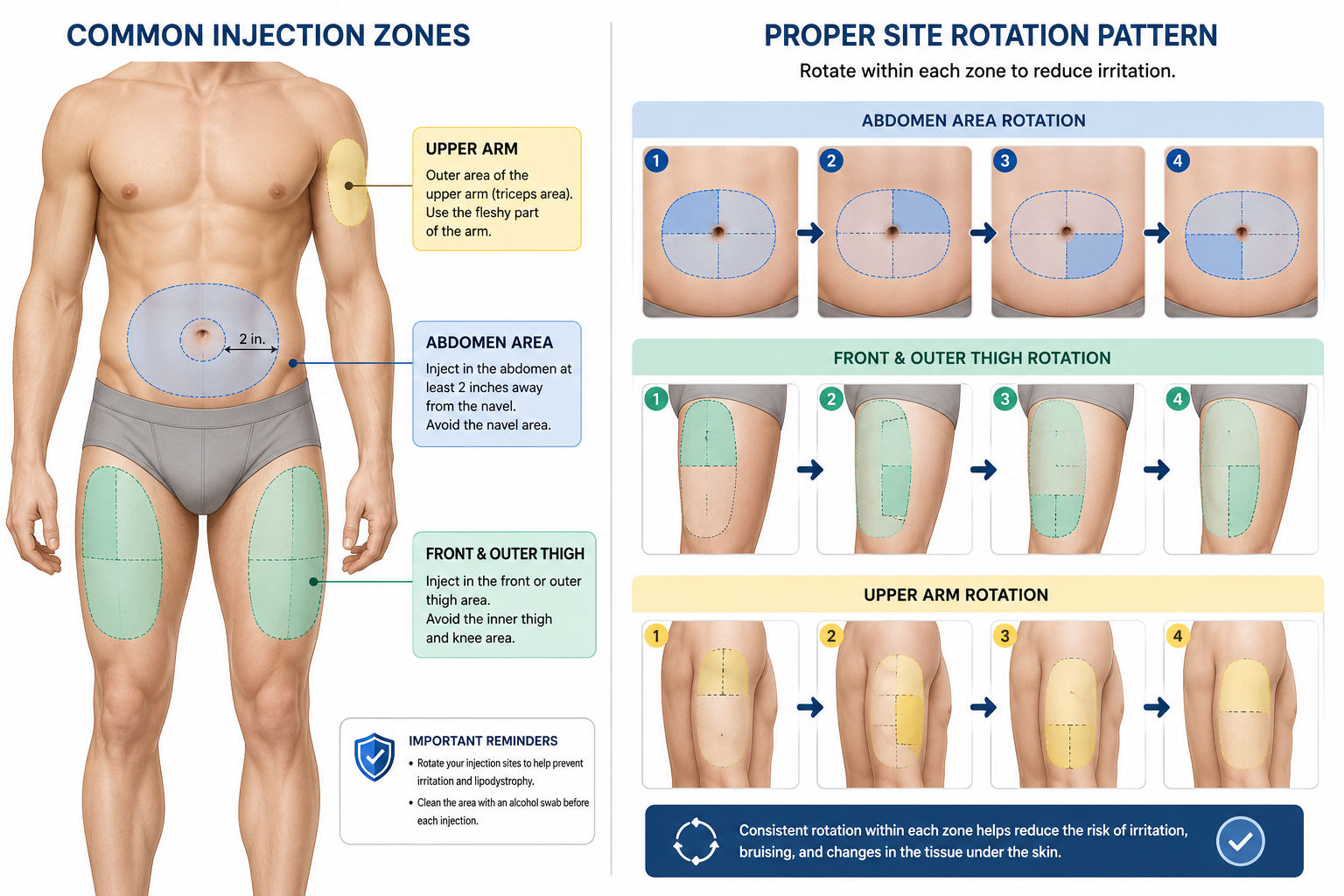
Tirzepatide should be injected subcutaneously (under the skin) in three approved areas: the abdomen (at least 2 inches away from the navel), the front or outer thigh, or the upper arm. The abdomen is typically the most convenient and commonly used site, though rotating between different areas each week helps minimize injection site reactions and ensures consistent absorption for optimal metabolic health support.
Key Takeaways
- Three approved injection sites: abdomen (most common), thigh (front/outer), and upper arm (back/outer)
- Subcutaneous injection only: Tirzepatide must go into the fatty tissue layer, not muscle
- Rotation is essential: Change injection sites weekly to prevent tissue irritation and maintain effectiveness
- Abdomen offers advantages: Generally provides the most consistent absorption and easiest self-administration
- Distance matters: Stay at least 2 inches away from the navel, scars, moles, or bruised areas
- Technique affects comfort: Proper pinching, angle, and injection speed reduce discomfort significantly
- Site reactions are manageable: Mild redness or swelling typically resolves within 24-48 hours
- Wrong-site injection risks: Intramuscular injection may cause faster absorption and increased side effects
- Professional guidance recommended: Consult healthcare providers for personalized injection training
- Affordable access available: Tirzeparo offers budget-friendly tirzepatide starting at £169 with discreet home delivery across the UK and Ireland
What Is Tirzepatide Used For?
Tirzepatide is a dual GIP and GLP-1 receptor agonist designed to support metabolic health and body composition management. It works by mimicking natural hormones that regulate appetite and metabolic function, helping you feel fuller for longer and reducing hunger throughout the day.
When paired with a balanced diet and regular exercise routine, tirzepatide supports your body transformation journey by:
- Reducing appetite: Signals to your brain that you’re satisfied with smaller portions
- Slowing gastric emptying: Keeps food in your stomach longer, extending feelings of fullness
- Supporting metabolic function: Helps your body process nutrients more efficiently
- Managing blood sugar levels: Assists in maintaining healthy glucose metabolism
The medication is administered once weekly via subcutaneous injection, making it a convenient option for those seeking consistent metabolic support. Understanding the effects at different dosages helps you work with healthcare providers to find the right strength for your wellness journey.
Important Medical Warning: Contact your healthcare provider promptly if you notice a lump or swelling in your neck, persistent hoarseness, difficulty swallowing, or shortness of breath. These symptoms may require medical evaluation. In animal studies, tirzepatide and similar medications were associated with thyroid tumors. It is not known whether TIRZEPARO® causes thyroid tumors or medullary thyroid carcinoma (MTC) in humans. You must be 18+ to use our service.
Best Injection Sites for Tirzepatide
The three FDA-approved injection sites for tirzepatide each offer distinct advantages depending on your comfort level and lifestyle needs.
Abdomen (Most Popular Choice)
The abdominal area is the most commonly used injection site for several practical reasons:
- Largest injection area: Provides the most space for rotating injection spots
- Easy self-administration: You can see and reach the area without assistance
- Consistent absorption: Fatty tissue in the abdomen typically provides reliable medication uptake
- Convenient access: No need to adjust clothing significantly
Proper technique: Inject at least 2 inches (about 5 cm) away from your navel in any direction. Avoid the area directly around your belly button and stay clear of your waistline where clothing might rub.
Front and Outer Thigh
The thigh offers a comfortable alternative, particularly for those who prefer variety in their injection routine:
- Accessible location: Easy to reach while sitting
- Good for rotation: Provides ample space on both legs
- Comfortable for many: Some people find thigh injections less sensitive
Proper technique: Use the front and outer portion of your thigh, in the middle area between your hip and knee. Avoid the inner thigh, which has more nerves and blood vessels.
Upper Arm (Back/Outer Area)
The upper arm is the least commonly used site for self-injection but remains a valid option:
- Effective absorption: Provides similar results to other sites
- Useful for rotation: Adds two more sites to your weekly schedule
- May require assistance: Can be challenging to reach and inject properly on your own
Proper technique: Use the back and outer area of your upper arm, roughly halfway between your shoulder and elbow. This site often works best when someone else administers the injection.
Affordable tirzepatide access through Tirzeparo includes detailed injection guidance with every order, ensuring you feel confident with your chosen injection site.
Can You Inject Tirzepatide in Your Arm?
Yes, you can inject tirzepatide in your upper arm, specifically in the back and outer portion of the upper arm. This site is one of the three approved injection areas and provides effective medication absorption when used correctly.
However, the upper arm presents some practical challenges:
Advantages of arm injections:
- Adds variety to your rotation schedule
- Effective absorption comparable to other sites
- May be less sensitive for some individuals
Challenges to consider:
- Difficult to reach and see the injection site yourself
- Harder to pinch the skin properly with one hand
- May require assistance from another person
- Smaller injection area compared to abdomen or thigh
Best practices for arm injections:
- Ask a family member or friend to help administer the injection
- Use a mirror to help visualize the correct area if injecting yourself
- Ensure you’re using the back/outer portion, not the inner arm
- Maintain the same rotation schedule as with other sites
Most people find the abdomen or thigh more practical for weekly self-administration, but the arm remains a perfectly acceptable option when proper technique is followed.
Tirzepatide Stomach vs Thigh Injection: Which Is Better?
Neither the stomach nor thigh is definitively “better” for tirzepatide injections—both sites provide effective medication absorption and support your metabolic health journey. The choice comes down to personal preference, comfort, and practical considerations.
Stomach (Abdomen) Advantages
Why many prefer the abdomen:
- Larger surface area for rotation (more injection spots available)
- Generally easier to access and see during self-injection
- Often has more subcutaneous fat, making injection easier
- Typically causes less discomfort for most people
- Convenient—no need to sit down or adjust clothing significantly
Potential drawbacks:
- May be more sensitive if you have less abdominal fat
- Clothing waistbands might irritate fresh injection sites
- Some people feel self-conscious about abdominal injections
Thigh Advantages
Why some prefer the thigh:
- Comfortable to inject while sitting
- Good option if abdominal area is sensitive or scarred
- Easy to alternate between left and right legs
- May be preferable if you have more subcutaneous fat in your legs
Potential drawbacks:
- Slightly smaller injection area compared to abdomen
- May be more uncomfortable if you have less thigh fat
- Requires sitting or stable positioning during injection
Absorption Differences
Research indicates that absorption rates are generally consistent across all approved injection sites when proper subcutaneous technique is used. Any minor differences in absorption speed don’t significantly impact the medication’s effectiveness for body composition management.
Practical recommendation: Start with the abdomen for your first few injections due to its convenience and larger area. If you experience persistent discomfort or site reactions, switch to the thigh. Many people establish a rotation pattern that alternates between both areas weekly.
Understanding tirzepatide’s effects at your current dosage helps you monitor whether your chosen injection site is providing consistent results.
How to Inject Tirzepatide Step by Step
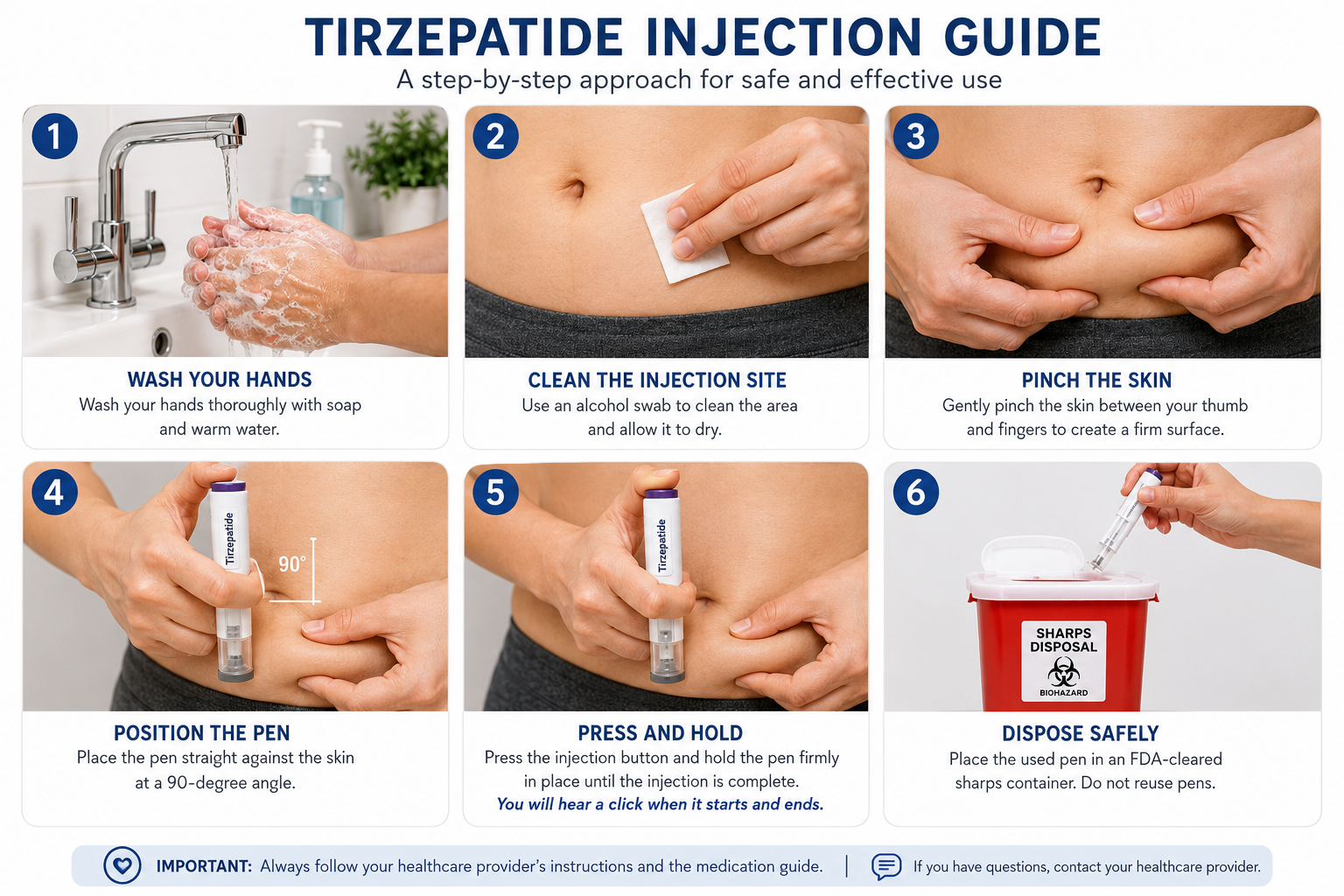
Proper injection technique ensures comfortable administration and optimal medication absorption. Follow these detailed steps for safe, effective tirzepatide injections.
Before You Begin
Gather your supplies:
- Tirzepatide pen (stored according to instructions)
- Alcohol swab
- Sharps disposal container
- Clean, flat surface
Preparation steps:
- Wash your hands thoroughly with soap and water for at least 20 seconds
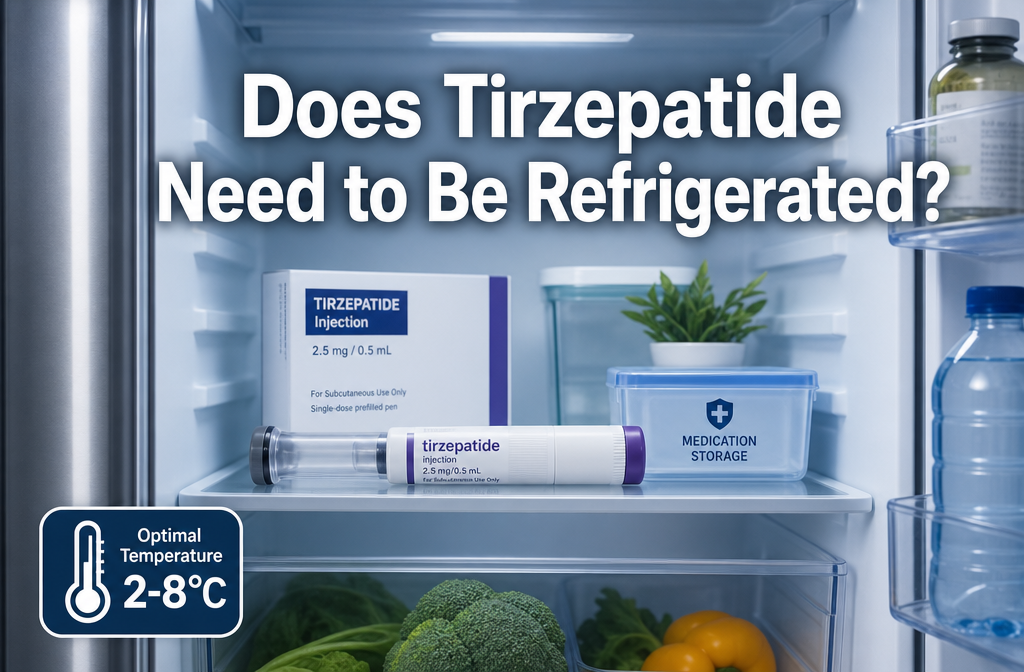
- Remove the tirzepatide pen from refrigeration 30 minutes before injection (room temperature injections are more comfortable)
- Check the medication—it should be clear and colorless
- Choose your injection site and ensure it’s at least 2 inches from the previous week’s location
Step-by-Step Injection Process
Step 1: Clean the injection site
- Wipe the chosen area with an alcohol swab
- Let the area air dry completely (about 10 seconds)
- Don’t blow on it or fan it—let it dry naturally
Step 2: Prepare the pen
- Remove the pen cap
- Attach a new needle if required by your pen type
- Prime the pen according to manufacturer instructions (usually not needed for pre-filled pens)
Step 3: Pinch the skin
- Use your thumb and forefinger to gently pinch a fold of skin
- Create a firm fold about 1-2 inches wide
- This ensures you’re injecting into subcutaneous fat, not muscle
Step 4: Insert the needle
- Hold the pen at a 90-degree angle to your skin
- Insert the needle with a quick, smooth motion
- Push it in completely—the needle is short and designed for subcutaneous injection
Step 5: Inject the medication
- Press the injection button firmly
- Keep the button pressed and count slowly to 10
- This ensures the full dose is delivered
- Keep the needle in place during the entire count
Step 6: Remove and dispose
- Release the skin fold
- Pull the needle straight out at the same angle it went in
- Don’t rub the injection site
- Immediately place the used needle in a sharps container
Step 7: Post-injection care
- Check for any bleeding (a tiny drop is normal)
- Apply gentle pressure with a clean cotton ball if needed
- Record the injection site and date for your rotation schedule
Common Technique Mistakes to Avoid
- Injecting cold medication: Always let the pen reach room temperature
- Rushing the injection: Take your time, especially with the 10-second hold
- Reusing needles: Always use a fresh needle for each injection
- Skipping the pinch: This increases the risk of intramuscular injection
- Rubbing the site: This can cause irritation and affect absorption
Tirzeparo provides affordable tirzepatide with comprehensive injection instructions included with every order, ensuring you feel confident throughout your body transformation journey.
Does Tirzepatide Injection Hurt?
Most people report that tirzepatide injections cause minimal discomfort—often described as a small pinch or brief sting that lasts only a few seconds. The needle used for subcutaneous injection is very thin (typically 31-32 gauge), which significantly reduces pain compared to larger needles.
What to Expect
Typical sensation during injection:
- Brief pinch when the needle enters the skin
- Slight pressure as the medication is delivered
- Mild stinging that fades within seconds
- Occasional minor soreness at the site afterward
Pain level factors:
- Needle size: Thinner needles cause less discomfort
- Injection speed: Slow, steady injection is more comfortable than rushing
- Medication temperature: Room-temperature medication stings less than cold
- Technique: Proper pinching and angle reduce pain
- Individual sensitivity: Pain tolerance varies from person to person
Tips to Minimize Discomfort
Before injection:
- Let the pen reach room temperature (30 minutes out of refrigeration)
- Choose an injection site with adequate subcutaneous fat
- Relax the area—tense muscles increase discomfort
- Consider applying ice for 30 seconds before injection (numbs the area slightly)
During injection:
- Insert the needle quickly and confidently
- Inject slowly and steadily
- Breathe normally—holding your breath increases tension
- Distract yourself by looking away or focusing on breathing
After injection:
- Don’t rub the injection site
- Apply gentle pressure if needed
- Use a cold compress if you experience soreness
When Injections Might Hurt More
Certain situations can increase discomfort:
- Injecting into areas with less fat (bony areas, inner thigh)
- Using the same injection site repeatedly (causes tissue irritation)
- Injecting too close to the navel, scars, or moles
- Rushing the injection process
- Using cold medication straight from the refrigerator
Reality check: While some discomfort is normal, tirzepatide injections should never cause severe pain. If you experience significant pain, burning, or prolonged discomfort, you may be injecting into muscle rather than subcutaneous fat, or you might have an injection site reaction that requires attention.
What Happens If I Inject Tirzepatide in the Wrong Spot?
Injecting tirzepatide in an incorrect location can affect medication absorption, increase side effects, and potentially cause discomfort or complications. Understanding what constitutes a “wrong spot” helps you avoid these issues.
Intramuscular Injection (Into Muscle)
What happens:
If you inject too deeply and the medication enters muscle tissue instead of subcutaneous fat, it may be absorbed more rapidly than intended. This can lead to:
- Increased intensity of side effects (nausea, stomach discomfort)
- Less predictable medication levels in your system
- Potential reduction in effectiveness
- More pain during and after injection
How to avoid:
- Always pinch the skin before injecting
- Use the correct 90-degree angle
- Ensure you’re injecting in areas with adequate subcutaneous fat
- Don’t press the pen too hard against your skin
Prohibited Injection Areas
Never inject tirzepatide in these locations:
- Too close to the navel: Stay at least 2 inches away in all directions
- Directly on scars: Scar tissue affects absorption and may cause discomfort
- On moles or birthmarks: Can obscure changes that need medical attention
- Bruised or tender areas: Increases pain and may affect absorption
- Inner thigh: Higher concentration of nerves and blood vessels
- Inner arm: Not an approved injection site
- Buttocks: Not studied or approved for tirzepatide
Accidental Blood Vessel Injection
What happens:
Occasionally, the needle may nick a small blood vessel, causing:
- A small drop of blood at the injection site
- Minor bruising over the next day or two
- Slightly faster initial absorption (usually not significant)
What to do:
- Apply gentle pressure with a clean cotton ball
- Don’t rub the area
- Use a different spot for your next injection
- This is generally harmless and doesn’t require medical attention
Injection Site Too Close to Previous Week’s Spot
What happens:
Injecting in the same area repeatedly can cause:
- Lipohypertrophy (thickened fatty tissue)
- Reduced medication absorption
- Increased injection site reactions
- Discomfort during injection
Prevention:
- Maintain at least 1 inch distance from previous injection sites
- Keep a rotation log or use a body diagram to track sites
- Alternate between different approved areas weekly
If you realize you’ve injected in the wrong spot: Don’t panic. A single incorrect injection is unlikely to cause serious harm. Monitor for unusual side effects and ensure you use proper technique for your next dose. If you experience severe pain, significant swelling, or concerning symptoms, contact your healthcare provider.
How Far Apart Should Tirzepatide Injection Sites Be Rotated?
Injection sites should be at least 1 inch (approximately 2.5 cm) apart from your previous injection location. This distance ensures you’re not repeatedly traumatizing the same tissue, which can lead to reduced absorption and increased site reactions.
Why Rotation Distance Matters
Tissue health:
- Prevents lipohypertrophy (lumpy, thickened fat tissue)
- Reduces inflammation and irritation
- Maintains healthy subcutaneous tissue for future injections
- Ensures consistent medication absorption
Effectiveness:
- Fresh tissue absorbs medication more predictably
- Damaged or overused tissue may absorb medication poorly
- Proper rotation maintains therapeutic effectiveness
Practical Rotation Strategies
Weekly rotation pattern example:
Week 1: Right abdomen (2 inches right of navel)
Week 2: Left abdomen (2 inches left of navel)
Week 3: Right thigh (front/outer area)
Week 4: Left thigh (front/outer area)
Week 5: Upper right abdomen (above navel area)
Week 6: Upper left abdomen (above navel area)
This pattern ensures you’re never using the same spot within a 6-week period, giving each area adequate recovery time.
Tracking Your Rotation
Methods to remember injection sites:
- Body diagram: Draw a simple outline of your torso and legs, marking each injection with the date
- Photo documentation: Take a photo of each injection site with your phone (mark with a small dot)
- Written log: Keep a notebook with date and location details
- Mobile apps: Use medication tracking apps that include injection site logging
Optimal Recovery Time
Recommended waiting period: Allow at least 4-6 weeks before returning to the exact same injection spot. This gives the tissue adequate time to fully recover and ensures optimal absorption for future doses.
Signs you’re not rotating enough:
- Persistent redness or swelling at injection sites
- Lumps or thickened areas under the skin
- Increased pain during injection
- Bruising that doesn’t resolve between doses
Maintaining proper injection technique throughout your tirzepatide journey helps maximize the medication’s support for your body transformation goals.
Can I Inject Tirzepatide in the Same Spot Every Week?
No, you should not inject tirzepatide in the same spot every week. Repeatedly using the same injection site can cause tissue damage, reduce medication effectiveness, and increase your risk of injection site reactions.
Risks of Same-Site Injection
Lipohypertrophy development:
- Thickened, lumpy fatty tissue forms at overused sites
- Creates an uneven appearance under the skin
- Significantly reduces medication absorption
- May become permanent if continued long-term
Reduced effectiveness:
- Damaged tissue doesn’t absorb medication properly
- You may not receive the full therapeutic benefit
- Can lead to inconsistent appetite management and metabolic support
Increased discomfort:
- Scar tissue formation makes injections more painful
- Higher risk of bruising and bleeding
- Prolonged soreness after each injection
Injection site reactions:
- Persistent redness and swelling
- Itching or burning sensations
- Increased risk of infection
Why People Might Be Tempted to Use the Same Spot
Common reasons:
- Found a spot that’s less sensitive or painful
- Easier to reach or see a particular location
- Forgot to track previous injection sites
- Habit or routine without thinking about rotation
The problem: Even if one spot seems ideal, the tissue damage from repeated use will eventually make that spot the worst option, causing pain and reduced effectiveness.
Proper Rotation Prevents Problems
By rotating injection sites at least 1 inch apart and waiting 4-6 weeks before returning to the same spot, you:
- Maintain healthy subcutaneous tissue
- Ensure consistent medication absorption
- Minimize discomfort and side effects
- Preserve all injection sites for long-term use
Long-term perspective: If you plan to use tirzepatide for months or years as part of your body composition management strategy, protecting your injection sites through proper rotation is essential for sustained success.
Tirzepatide Injection Site Reactions: What to Do
Mild injection site reactions are relatively common with tirzepatide and typically resolve on their own within 24-48 hours. Understanding what’s normal versus what requires medical attention helps you manage your wellness journey confidently.
Normal Injection Site Reactions
Expected mild reactions:
- Redness: Small red area (less than 1 inch diameter) around injection site
- Slight swelling: Minor puffiness that doesn’t spread significantly
- Tenderness: Mild soreness when touching the area
- Itching: Brief, mild itching that resolves quickly
- Small bruise: Tiny bruise from nicking a capillary
Duration: These reactions typically appear within a few hours of injection and resolve within 1-2 days without treatment.
Managing Mild Reactions
Immediate care:
- Apply a cold compress for 10-15 minutes to reduce swelling
- Avoid rubbing or scratching the area
- Wear loose clothing that won’t irritate the site
- Keep the area clean and dry
Over-the-counter options:
- Antihistamine cream for itching (if approved by your healthcare provider)
- Cold compress or ice pack wrapped in cloth
- Gentle moisturizer if skin feels dry (avoid the immediate injection site for 24 hours)
Prevention for next injection:
- Ensure medication is at room temperature before injecting
- Rotate injection sites properly
- Use proper technique (pinch skin, 90-degree angle, slow injection)
- Clean the site thoroughly before injection
When to Contact a Healthcare Provider
Concerning symptoms that require medical attention:
- Severe redness: Spreading redness larger than 2 inches in diameter
- Significant swelling: Swelling that increases over 24-48 hours
- Warmth: Injection site feels hot to the touch
- Pus or drainage: Any discharge from the injection site
- Fever: Temperature above 100.4°F (38°C)
- Severe pain: Pain that worsens rather than improves
- Rash: Widespread rash beyond the injection site
- Difficulty breathing: Any respiratory symptoms (seek emergency care immediately)
These symptoms may indicate infection or allergic reaction and require prompt medical evaluation.
Persistent Reactions
If you experience injection site reactions with every dose, consider:
- Technique review: Ask your healthcare provider to observe your injection technique
- Site rotation: Ensure you’re rotating properly and not reusing sites too soon
- Medication storage: Verify you’re storing tirzepatide correctly
- Alternative sites: Try a different approved injection area
- Allergy assessment: Discuss potential sensitivity with your healthcare provider
Rare but serious: Severe allergic reactions (anaphylaxis) are extremely rare but require immediate emergency care. Symptoms include difficulty breathing, swelling of face or throat, rapid heartbeat, and severe dizziness.
Affordable access to tirzepatide through Tirzeparo includes ongoing support to help you manage your body transformation journey safely and effectively.
Where Should I Not Inject Tirzepatide?
Certain areas of your body are unsuitable or unsafe for tirzepatide injection. Avoiding these locations ensures optimal medication absorption and reduces the risk of complications.
Prohibited Body Areas
Never inject tirzepatide in:
Around the navel (belly button):
- Stay at least 2 inches away in all directions
- This area has different tissue composition and blood flow
- Increased risk of discomfort and poor absorption
Inner thigh:
- Higher concentration of nerves and blood vessels
- Increased pain and bleeding risk
- Not an approved injection site
Inner arm:
- Not studied or approved for tirzepatide
- Difficult to access properly
- Higher risk of incorrect technique
Buttocks:
- Not an approved injection site for tirzepatide
- Different absorption characteristics
- Difficult to self-administer safely
Lower legs or feet:
- Not approved injection sites
- Poor circulation in extremities affects absorption
- Higher infection risk
Hands or forearms:
- Insufficient subcutaneous fat
- High risk of intramuscular injection
- Not approved sites
Specific Skin Conditions to Avoid
Do not inject directly on or near:
- Scars: Scar tissue has altered blood flow and may not absorb medication properly
- Moles or birthmarks: Injection can obscure changes that need monitoring
- Tattoos: Ink can make it difficult to see injection site reactions
- Bruises: Increases pain and may affect absorption
- Cuts or abrasions: High infection risk
- Rashes or irritated skin: Can worsen skin condition and affect absorption
- Sunburned skin: Increases pain and inflammation
- Areas with lumps or swelling: May indicate previous tissue damage
Areas with Insufficient Fat
Avoid locations with minimal subcutaneous fat:
- Bony prominences (hip bones, ribs)
- Very lean areas where you can’t pinch at least 1-2 inches of skin
- Areas where skin is tight against muscle
Why this matters: Tirzepatide must be injected into subcutaneous fat, not muscle. Areas with insufficient fat increase the risk of intramuscular injection, which can cause:
- Increased side effects
- More pain during injection
- Unpredictable absorption
- Reduced effectiveness
Clothing Friction Zones
Be cautious with areas that experience constant friction:
- Directly on your waistline where pants or belts sit
- Under bra straps or tight elastic
- Areas where bags or straps rest regularly
While these aren’t strictly prohibited, friction can irritate fresh injection sites and increase discomfort. If you must use these areas, plan your injection timing around when you’ll wear looser clothing.
Safe Zone Summary
Approved injection areas (recap):
- Abdomen (at least 2 inches from navel)
- Front and outer thigh
- Back and outer upper arm
Stick to these three areas, rotate properly, and avoid all prohibited zones to ensure safe, effective tirzepatide administration throughout your metabolic health journey.
Do I Need to Pinch Skin When Injecting Tirzepatide?
Yes, pinching the skin before injecting tirzepatide is strongly recommended for most people. This technique ensures you’re injecting into subcutaneous fat rather than muscle, which is essential for proper medication absorption and effectiveness.
Why Pinching Matters
Ensures subcutaneous injection:
- Creates a clear layer of fat tissue separated from muscle
- Reduces risk of intramuscular injection
- Provides a stable target for needle insertion
Improves comfort:
- Lifts skin away from sensitive underlying structures
- Reduces pain during injection
- Makes needle insertion smoother
Enhances accuracy:
- Gives you better control over injection depth
- Helps you feel confident about proper technique
- Reduces anxiety about “doing it wrong”
Proper Pinching Technique
Step-by-step:
- Use thumb and forefinger: Create a “C” shape with your hand
- Grasp firmly but gently: Pick up a fold of skin and subcutaneous fat
- Lift away from muscle: Pull the tissue slightly away from your body
- Create a 1-2 inch fold: Should be substantial enough to clearly separate from muscle
- Maintain the pinch: Hold throughout needle insertion and medication delivery
- Release after injection: Let go only after removing the needle
Common pinching mistakes:
- Pinching too hard (causes bruising and pain)
- Pinching too little (doesn’t adequately separate fat from muscle)
- Releasing the pinch before injection is complete
- Pinching muscle along with skin (causes pain)
When You Might Not Need to Pinch
Exceptions to the pinching rule:
If you have substantial subcutaneous fat:
- People with more body fat in injection areas may not need to pinch
- The fat layer is already well-separated from muscle
- However, pinching still doesn’t hurt and provides extra assurance
When using injection devices with safety features:
- Some pre-filled pens have depth-limiting features
- These devices are designed to prevent too-deep injection
- Check your specific device instructions
For upper arm injections:
- May be difficult to pinch your own upper arm effectively
- If someone else is administering, they should pinch
- If self-injecting, ensure you’re using the correct area with adequate fat
Testing Your Pinch
How to know if you’re pinching correctly:
- You should be able to lift the skin fold at least 1 inch away from your body
- The fold should feel soft and pliable, not tense or hard
- There should be no pain when pinching (mild pressure is normal)
- You should be able to maintain the pinch comfortably for 15-20 seconds
If you can’t create an adequate pinch: This may indicate insufficient subcutaneous fat in that area. Choose a different injection site where you have more fat tissue, or consult your healthcare provider for personalized guidance.
Understanding proper injection technique helps you maximize the benefits of tirzepatide for your body composition management goals.
Tirzepatide Subcutaneous vs Intramuscular Injection
Tirzepatide must be administered subcutaneously (into the fatty tissue layer under the skin), not intramuscularly (into muscle tissue). Understanding the difference between these injection types is crucial for safe and effective medication delivery.
What Is Subcutaneous Injection?
Definition: Subcutaneous injection delivers medication into the layer of fat tissue between the skin and muscle.
Characteristics:
- Targets the hypodermis (subcutaneous layer)
- Uses short needles (typically 4-6mm)
- Requires 90-degree angle (or 45-degree if very lean)
- Medication absorbs slowly and steadily into bloodstream
- Designed for medications that need gradual, sustained release
Why tirzepatide uses this method:
- Provides steady medication levels over the week
- Reduces side effect intensity
- Allows for once-weekly dosing
- Ensures predictable therapeutic effects
What Is Intramuscular Injection?
Definition: Intramuscular injection delivers medication directly into muscle tissue.
Characteristics:
- Targets muscle tissue (deeper than subcutaneous)
- Uses longer needles (typically 1-1.5 inches)
- Medication absorbs more rapidly
- Common for vaccines and some antibiotics
- Not appropriate for tirzepatide
Why Intramuscular Injection Is Wrong for Tirzepatide
Absorption problems:
- Medication enters bloodstream too quickly
- Creates unpredictable medication levels
- May cause “peaks and valleys” rather than steady levels
Increased side effects:
- Rapid absorption can intensify nausea
- Higher risk of gastrointestinal discomfort
- May cause more severe appetite suppression than intended
Reduced effectiveness:
- Doesn’t provide the sustained release needed for weekly dosing
- May not maintain therapeutic levels throughout the week
- Could compromise your body composition management results
Safety concerns:
- Not studied or approved for intramuscular use
- Unknown safety profile with this administration method
- Potential for unexpected adverse reactions
How to Ensure Subcutaneous Injection
Technique checklist:
✅ Pinch the skin: Creates clear separation between fat and muscle
✅ Use approved sites: Abdomen, thigh, or upper arm with adequate fat
✅ 90-degree angle: Straight into the pinched skin fold
✅ Short needle: Tirzepatide pens use needles designed for subcutaneous injection
✅ Don’t press too hard: Gentle, steady pressure prevents going too deep
✅ Inject slowly: Allows medication to disperse in fat tissue
Signs You May Have Injected Into Muscle
Indicators of accidental intramuscular injection:
- Significantly more pain during injection
- Rapid onset of side effects (within 1-2 hours)
- More intense nausea than usual
- Bleeding at injection site
- Deep, aching pain after injection
What to do if you suspect intramuscular injection:
- Don’t panic—a single intramuscular dose is unlikely to cause serious harm
- Monitor for increased side effects over the next 24 hours
- Ensure proper technique for your next injection
- Consider having a healthcare provider observe your technique
- Contact your provider if you experience severe or concerning symptoms
Comparison Table
| Factor | Subcutaneous (Correct) | Intramuscular (Incorrect) |
|---|---|---|
| Needle depth | Shallow (4-6mm) | Deep (1-1.5 inches) |
| Target tissue | Fat layer | Muscle tissue |
| Absorption speed | Slow, steady | Rapid |
| Pain level | Minimal | Moderate to significant |
| Technique | Pinch skin, 90° angle | No pinch, deeper insertion |
| For tirzepatide | ✅ Correct method | ❌ Incorrect method |
| Side effects | As expected | Potentially increased |
Bottom line: Always use subcutaneous injection technique for tirzepatide. If you’re unsure about your technique or have concerns about injection depth, ask your healthcare provider for hands-on training to ensure you’re administering the medication correctly.
Frequently Asked Questions
How often should I inject tirzepatide?
Tirzepatide is administered once weekly, on the same day each week. You can choose any day that fits your schedule, but consistency is important for maintaining steady medication levels and supporting your metabolic health goals.
Can I inject tirzepatide on different days each week?
While it’s best to maintain the same weekly schedule, you can adjust by up to 3 days earlier or later if needed. If you’re more than 4 days late, skip that dose and resume your regular schedule the following week. Don’t double up on doses.
What if I see blood after injecting tirzepatide?
A small drop of blood is normal and occurs when the needle nicks a tiny capillary. Apply gentle pressure with a clean cotton ball for 30-60 seconds. If bleeding continues beyond a few minutes or you develop a large bruise, contact your healthcare provider.
Should I massage the injection site after administering tirzepatide?
No, do not massage or rub the injection site after administering tirzepatide. Rubbing can cause irritation, affect medication absorption, and increase the risk of bruising. Simply apply gentle pressure if there’s any bleeding, then leave the area alone.
Can I inject tirzepatide through clothing?
No, never inject through clothing. Always expose the injection site completely, clean it with an alcohol swab, and allow it to air dry before injecting. Injecting through fabric increases infection risk and prevents proper skin preparation.
What should I do if I forget which side I injected last week?
If you can’t remember your last injection site, choose a location that shows no signs of recent injection (no redness, tenderness, or marks). Going forward, keep a written log, take photos, or use a body diagram to track your rotation pattern.
Is it normal for the injection site to itch?
Mild, brief itching at the injection site is relatively common and usually resolves within a few hours. If itching is severe, spreads beyond the injection site, or is accompanied by rash or swelling, contact your healthcare provider as this may indicate an allergic reaction.
Can I swim or bathe after injecting tirzepatide?
Yes, you can swim, bathe, or shower immediately after injecting tirzepatide. The injection site is sealed once the needle is removed. Just avoid scrubbing or rubbing the area vigorously for the first few hours.
How long does it take for tirzepatide to absorb after injection?
Tirzepatide begins absorbing immediately after injection, with peak blood levels typically reached within 24-72 hours. The medication continues working throughout the week, which is why once-weekly dosing is effective for appetite management and metabolic support.
Should I alternate between all three injection sites every week?
You don’t need to use all three sites in rotation if you prefer to stick with one or two areas. The key is rotating within your chosen area(s), maintaining at least 1 inch distance between injection spots and waiting 4-6 weeks before returning to the exact same location.
Can I inject tirzepatide if I’m pregnant or breastfeeding?
Tirzepatide is not recommended during pregnancy or breastfeeding. If you become pregnant while using tirzepatide, stop the medication immediately and contact your healthcare provider. Discuss your body composition management goals with your provider to explore safe alternatives during this time.
What temperature should tirzepatide be when I inject it?
Tirzepatide should be at room temperature when you inject it. Remove the pen from refrigeration 30 minutes before your scheduled injection time. Cold medication causes more stinging and discomfort during injection. Never heat the medication artificially—just let it warm naturally.
Conclusion
Understanding where and how to inject tirzepatide properly is fundamental to your success with this metabolic health support medication. The three approved injection sites—abdomen, thigh, and upper arm—each offer effective medication absorption when proper subcutaneous technique is used.
Key principles for successful tirzepatide injection:
- Choose the right site: Abdomen offers the most convenience and largest rotation area for most people
- Rotate consistently: Maintain at least 1 inch between injection spots and wait 4-6 weeks before reusing the same location
- Use proper technique: Pinch the skin, inject at a 90-degree angle, and hold for 10 seconds to ensure complete delivery
- Prepare correctly: Let medication reach room temperature and clean the site thoroughly before each injection
- Monitor for reactions: Mild redness and tenderness are normal, but contact your healthcare provider for concerning symptoms
The difference between subcutaneous and intramuscular injection matters significantly for tirzepatide effectiveness and side effect management. Always inject into fatty tissue, never muscle, to ensure the slow, steady absorption that makes once-weekly dosing effective for your body transformation journey.
Take the Next Step in Your Body Composition Management Journey
Proper injection technique is just one piece of your metabolic health puzzle. Tirzeparo provides affordable access to tirzepatide starting at just £169, with discreet home delivery across the UK and Ireland. Our straightforward sourcing solution connects you with trusted EU partners, eliminating the long waiting lists and inflated fees of traditional UK clinics.
What you get with Tirzeparo:
- Transparent, budget-friendly pricing on all dosages (2.5mg through 15mg)
- Fast, tracked shipping in plain, unbranded packaging
- Comprehensive injection guidance with every order
- No complicated approval processes or hidden costs
- Reliable access to clinically dosed tirzepatide
Ready to start your body transformation journey with confidence? Explore our affordable tirzepatide options and take control of your metabolic health today.
Important Medical Warning: Contact your healthcare provider promptly if you notice a lump or swelling in your neck, persistent hoarseness, difficulty swallowing, or shortness of breath. These symptoms may require medical evaluation. In animal studies, tirzepatide and similar medications were associated with thyroid tumors. It is not known whether TIRZEPARO® causes thyroid tumors or medullary thyroid carcinoma (MTC) in humans. You must be 18+ to use our service.